Content
17 June 2026
1076
16 min
5.00
What is Customer Data Enrichment? A Complete Guide + Tools

Yaroslava Kurta
Content
Businesses have tons of data, but it’s often incomplete. Out of 264 billion CRM data records analyzed by Validity, 81% required improvement. Lead engagement data completeness averaged just 31%.
Businesses frequently capture a lead but get only an email address. Without demographic data or geographic data, they cannot launch a segmented promo campaign — leaving marketers to guess if they reached the right audience. This is where data enrichment in marketing becomes essential.
Customer data enrichment turns basic contact information into a single customer view, driving better marketing results and higher sales. But how does it function, and what things should be considered during the data enrichment process? Let’s jump in.
Key Takeaways
- Customer data enrichment upgrades incomplete first-party data with external data sources to create a comprehensive 360-degree customer profile.
- Enriched data eliminates guesswork, enabling hyper-personalization and improved retention.
- Depending on their business model, companies can perform customer data enhancement in various ways.
- Integrating a Customer Data Platform (CDP) makes certain that newly acquired data is ready for immediate activation across all marketing channels.
What is Сustomer Data Enrichment?
Сustomer data enrichment is the process of adding data from third-party data providers to your existing centralized customer data.
If a customer database is a painting, a name and an email address are just a basic sketch. Customer data enrichment adds color by updating customer profiles with tastes and specific website behavioral data, creating a high-definition portrait. Instead of just knowing who your users are, customer data enrichment generates deep customer insights, allowing you to offer products that subscribers are highly likely to buy.
How Does Сustomer Data Enrichment Work?
The traditional process of data enrichment commonly involves external providers and APIs. In this old model, a company collects an email, securely sends it to an external provider, waits for the provider to scan its databases, appends the data, and feeds it back into the CRM.
However, instead of relying on external middlemen, modern ecommerce brands boost their customer data management by using a Customer Data Platform to enrich profiles organically from within their own customer touchpoints:
- The platform continuously monitors on-site and in-app actions to update real-time customer profiles.
- The system pulls offline transactional data from internal data sources to build a unified 360-degree view.
- Since the data is processed and enriched within a single central hub, there is no need for manual data synchronization between providers. The enriched profile becomes instantly available for omnichannel marketing campaigns.
Ready to predict your customers’ next purchases?
Key Benefits of Сustomer Data Enrichment
Relying on basic contact information often leaves marketing teams with blind spots, leading to poorly targeted campaigns, inefficient sales prospecting, and wasted ad spend. Customer data enrichment bridges this gap. Let's explore how it translates into business results.
1. Hyper-Personalized Marketing
Generic mass emails yield low conversion rates, whereas brands that use advanced customer segmentation tools see significantly higher engagement. Customer data enrichment allows marketers to segment audiences according to precise criteria, such as previous purchases or language preferences. Brands can send highly relevant messaging that addresses the prospect's exact needs.
2. Improved Sales Efficiency and Lead Scoring
Poor data quality forces marketing departments to rely on basic lead enrichment. Customer data enrichment helps build accurate grouping models powered by predictive analytics. By identifying a consumer's purchasing capacity beforehand, automated marketing systems prioritize high-value targets, ultimately increasing Customer Lifetime Value.
3. Reduced Churn and Better Customer Experience
Customer data enrichment significantly strengthens retention strategies and improves the overall customer experience. By enriching customer profiles with lifestyle segments, analysts identify price-sensitive customers who might churn to cheaper competitors. Combining this with behavioral signals (such as declining purchase frequency or cart abandonment) accurately predicts churn risk, enabling teams to intervene proactively.
I want to spot churn risks before my customers leave for a competitor
4. Improved ROI
Implementing customer data enrichment improves acquisition efficiency and ROAS. Filling data gaps facilitates robust data-driven decision making. Better targeting reduces wasted ad impressions on low-propensity audiences. Companies spend less on consumers unlikely to convert while simultaneously increasing conversion rates through personalized messaging.
Types of Сustomer Data Enrichment
Customer profiles require different data attributes depending on whether the business operates in retail, ecommerce, or B2B sectors.
1. Demographic Data Enrichment
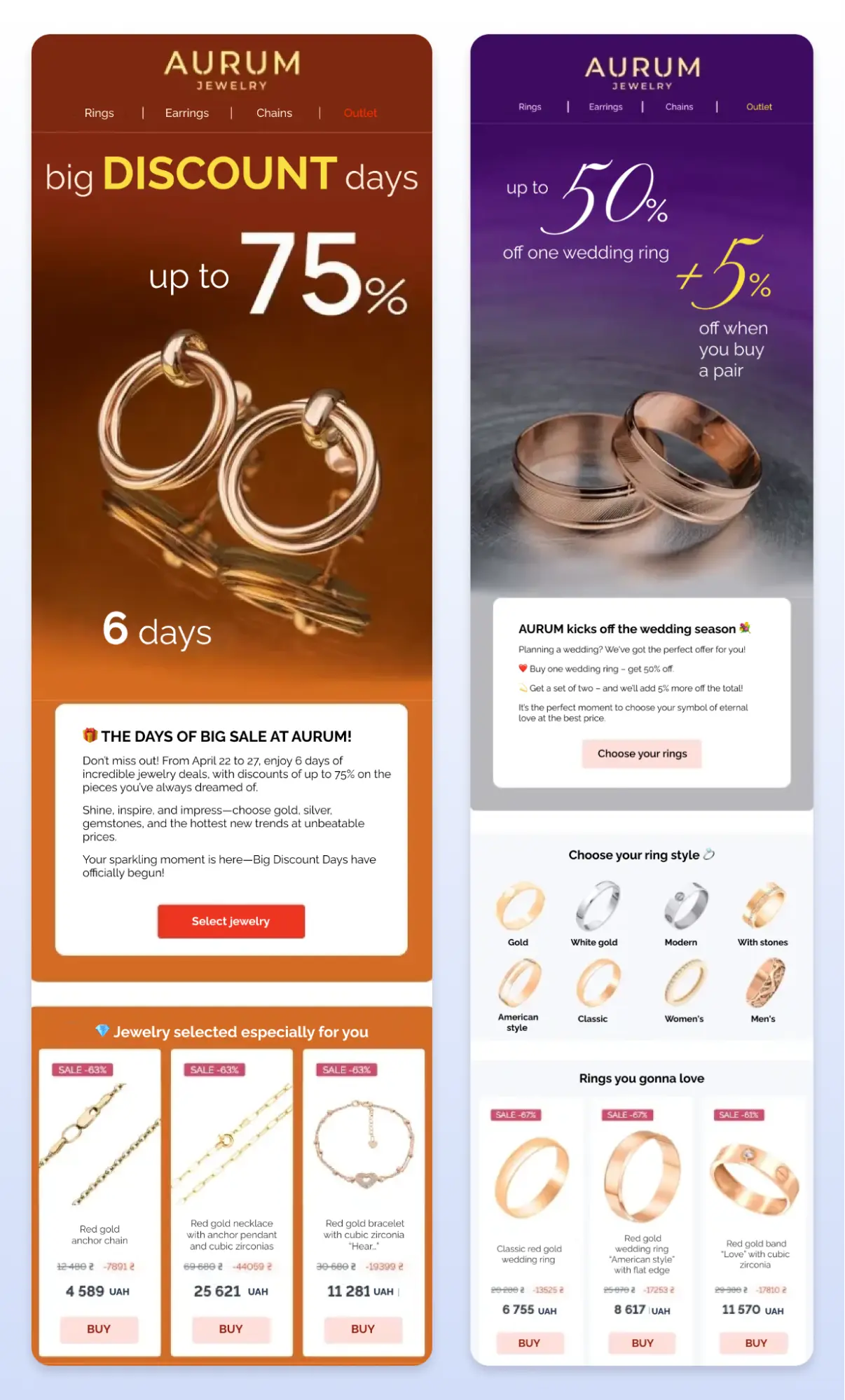
Primarily used in B2C and retail, demographic customer data enrichment includes age range, gender, location, and rarely marital status or number of kids. These details help marketers understand a customer's life stage. For example, knowing a customer's LTV allows a brand to target premium products to high-income shoppers while offering appropriate discounts to budget-conscious segments.
2. Firmographic Data Enrichment
Crucial for B2B and wholesale distributors, firmographic data enrichment provides insight about a prospect's employer. This includes company name, annual revenue, industry vertical, and headquarters location.
3. Device and Channel Data Enrichment
Device and channel data enrichment shows how customers shop and where the traffic originates from:
- Device type (mobile, desktop)
- Operating system and browser type
- Traffic source (Google, Facebook, Instagram, email, etc)
- Location (city, country, time zone)
This allows marketing teams to optimize website layouts for specific devices, personalize messaging by traffic source, and target shipping offers based on geolocation — for example, an EU brand may propose a free delivery across Slovakia if the customer lives there.

4. Intent Data Enrichment
Intent data captures real-time shopping behavior, signaling when a customer is ready to make a purchase. It includes product page visits, category browses, search queries, and recent cart additions. A customer data enrichment strategy utilizes these signals to identify shoppers in an active buying phase, enabling automated systems to trigger timely personalized offers, such as Abandoned Cart or Abandoned View.
5. Psychographic Data Enrichment
Psychographic data reveals customer motivations beyond transactional history. It categorizes users into lifestyle segments (e.g., eco-friendly, budget-conscious) and identifies brand affinities. These insights, combined with demographics, enhance product recommendations. For instance, a woman in her 30s who viewed recycled-material bags would see a suggestion block with similar items — such as bags and dresses, all made from eco-friendly materials.
6. Lifecycle Data Enrichment
Lifecycle customer data enrichment indicates where customers stand in the customer lifecycle and their relationship with a brand (new, repeat, loyal, or at-risk). This segmentation enables lifecycle-based marketing, such as triggering automated re-engagement workflows for shoppers who have been inactive for 30, 60, or 90 days, or a welcome series for new shoppers.
7. Behavioral Data Enrichment
Crucial for ecommerce, behavioral customer data enrichment tracks exact customer interactions through comprehensive customer behavior analysis:
- Purchase history (what they bought, when, how much)
- Website behavioral data (pages viewed, products clicked)
- Cart activity (additions, abandonments)
- Email engagement (opens, clicks, replies)
- Mobile app data and return frequency
This data uncovers true purchase intent, allowing platforms to personalize recommendations based on actual shopping behavior rather than assumptions.
Сustomer Data Enrichment Examples & Use Cases
Here are practical scenarios demonstrating how companies apply customer data enrichment to solve everyday business tasks.
1. Simplifying Lead Capture
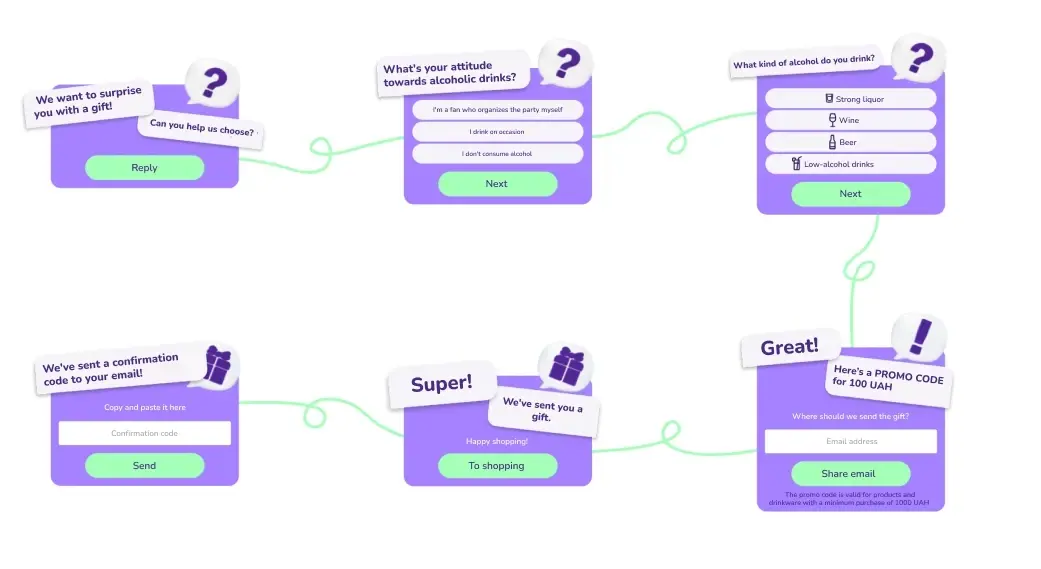
Extensive signup forms often reduce conversion rates, as users hesitate to fill out multiple fields for a simple discount. To solve this, brands use customer data enrichment to shorten forms, requesting only an email address. The system then automatically tracks web behavior to enrich that email with location and audience insights, building a complete profile over time without causing friction at the initial touchpoint. If you collect first-party customer data through your website, maintaining an up-to-date privacy policy helps explain those practices to users.
2. VIP Customer Targeting
Retailers often struggle to separate high-value buyers from average shoppers in large databases. Through customer data enrichment, marketing teams segment buyers using customer analytics (such as LTV or AOV). This allows them to create exclusive campaigns and offer premium product recommendations specifically to the VIP segment.
3. Tailoring Content to the Audience
Content creation requires an understanding of audience preferences. When brands enrich their subscriber lists utilizing zero-party data and first-party insights, they gain a deeper understanding of shopper demographics. This reveals whether an audience is predominantly eco-friendly or convenience-driven, allowing content managers to align their strategy with actual customer values.
4. Advancing Customer Support and Service
Enriched customer data gives support teams immediate access to purchase history, loyalty program status, and past interactions. This context eliminates the need to ask customers repetitive questions, ensuring faster ticket resolution and highly personalized service.
Tools for Сustomer Data Enrichment
Selecting the appropriate data enrichment tools depends on the company's industry focus, business model, and existing software infrastructure, including your choice of the best ecommerce CMS.
1. Yespo
Yespo is an omnichannel Customer Data Platform (CDP) that executes data unification and immediately activates it for personalized marketing across email, SMS, App Inbox, Web/Mobile Push notifications, and other channels. Rather than just storing data, Yespo actively executes customer data platform enrichment through behavioral monitoring, data integrations, and automated workflows.
Key features include:
- Connects to external data sources like Google Sheets and BigQuery to add offline sales data or call orders to customer profiles.
- Captures behavioral data from unregistered visitors and merges it with their permanent profile the moment they register or log in.
- Unifies data from multiple platforms rather than storing it in separate databases, ensuring seamless customer profile management and creating structured, unified profiles.
- Feeds enriched profiles into AI to deliver accurate, personalized product recommendations to subscribers.
Yespo utilizes web tracking scripts and mobile SDKs to continuously update profiles with viewed items, price preferences, and geolocation data, enabling instant, triggered campaigns.
Build 360-degree customer profiles without data silos
2. Acxiom
Acxiom specializes in consumer customer data enrichment for the ecommerce and retail sectors. The platform utilizes second-party data and third-party insights to append spending categories and lifestyle indicators to existing customer databases.
Key features include:
- Enriches basic contacts with detailed demographic data.
- Enables retailers to match premium products with high-LTV while offering appropriate incentives to budget-conscious groups.
3. Klaviyo
Klaviyo is a marketing automation platform that incorporates robust data enrichment tools focusing on ecommerce behavior. It automatically tracks user actions and utilizes this data to power segmentation.
Key features include:
- Monitors product views, cart activity, and overall purchase frequency.
- Assigns customer statuses (e.g., VIP, churn risk) based on enriched behavioral data.
- Powers personalized email campaigns and automated revenue-recovery flows.
For fast-growing brands outgrowing basic features, exploring Klaviyo alternatives often leads to adopting comprehensive CDPs.
4. OneSignal
OneSignal provides customer data enrichment by capturing behavioral data, location information, and device details from web and mobile applications.
Key features include:
- Utilizes real-time web tracking and mobile SDKs to capture browsing behavior.
- Automatically adds viewed products and cart activity to user profiles.
- Uses enriched data to power targeted mobile and web messaging.
5. Feedonomics
While Feedonomics focuses primarily on product feed management, it performs crucial product data enrichment for ecommerce catalogs. The platform automates data cleansing, standardizes SKUs, and adds missing product attributes.
Key features include:
- Uses AI to normalize taxonomy and enrich product descriptions.
- Ensures accurate and complete product information across various sales channels.
- Improves product searchability and SEO performance.
How to Use CDP for Data Enrichment
A Customer Data Platform (CDP) functions as the central engine for managing a solid customer data infrastructure. It operates as the single source of truth, collecting raw data from websites, mobile apps, and backend systems via APIs or Webhooks.
The main advantage of this architecture is that customer data platform enrichment occurs seamlessly within one system. Instead of merely collecting attributes, the CDP instantly categorizes audiences into deep customer segments based on real-time behavior and purchase history.
Furthermore, the system leverages AI to analyze this enriched data for predictive segmentation, automatically identifying users who are highly likely to convert or at risk of churning.
Once these profiles are enriched and segmented, the CDP instantly triggers a personalized response through omnichannel orchestration. For example, when a customer abandons a cart, the system can send an email featuring those specific products alongside a targeted mobile push notification—without requiring manual data transfers between separate marketing tools.
Final Thoughts
The success of an enrichment strategy depends not on following trends, but on a business's actual needs. Evaluating current data gaps, campaign complexity, and plans for scaling personalization is essential. For some companies, capturing real-time behavioral data is key; for others, appending missing demographics or tracking intent signals across multiple channels takes priority.
However, accumulating information is only the first step. A massive database alone does not drive sales if the data remains inactive. Ultimately, customer data enrichment is most effective when combined with an omnichannel Customer Data Platform and enterprise marketing automation, which turn raw insights into personalized communication.
If you want to do more than just manually collect fragmented data across separate platforms — if the goal is to build an effective sales and marketing system around unified profiles — the Yespo CDP team is always here to help you find the perfect solution and set it up in a way that boosts your revenue growth.


