Content
14 August 2026
721
14 min
5.00

What Is First-Party Data? A Practical Guide to Personalization and Privacy

Yana Bozhko
Content
For years, the marketing community relied on ad platforms, third-party cookies, and external data providers to learn more about its users. That approach is losing ground: privacy laws are becoming stricter, browsers' ability to track people is being reduced, and consumers are demanding more control over how they are monitored and used. As these changes reshape the nature of digital marketing, first-party data has emerged as one of the most valuable assets a business can build its strategy on.
Today, first-party data is much more than an analytics tool — it gives businesses better knowledge of their customers, more meaningful segmentation, and stronger brand recall, while building personalization and trust. If responsibly gathered and transparently used, it enables brands to offer relevant experiences without sacrificing a customer's privacy. This guide explores what first-party data is, why it's gaining significance in 2026, and how you can develop a first-party data strategy that balances privacy with personalization.
Key Takeaways
- First-party data: data that can be obtained directly from business-controlled sources such as its website, mobile apps, CRM, emails, and customer interactions.
- It is usually provided by your audience and, as such, is much more accurate and reliable than information accessed via external sources.
- Audiences can be segmented, and recommendations, lifecycle marketing, and promotions can be built with first-party data.
- To succeed with a first-party data strategy, it's crucial to gather fine-grained information that's relevant and meaningful to your customers, trusted by them, and collected transparently.
- The best first-party data programs align with customer expectations around privacy and improve the customer experience.
What Is First-Party Data?
First-party data is data that businesses gather themselves, directly from consumers interacting with their brand. It's collected and managed through a company's own channels and properties, such as its website, mobile app, CRM, email campaigns, customer support (live chat), loyalty programs, and purchase history.
In other words, first-party data is any data you gather directly from your customers. Businesses can see what their own customers are doing and build customer insight without paying a data broker for it, using the actual interactions that take place on their own platforms.
Some forms of first-party data include shopper subscriptions to newsletters, browsing history, abandoned shopping carts, purchase habits, and engagement with loyalty programs. Product reviews and survey responses, by contrast, are information that customers intentionally choose to share with a brand, making them zero-party data rather than first-party data. First-party data is collected through customer interactions and provides businesses with insights into customer behavior, helping them make marketing decisions.
For instance, if a customer repeatedly returns to the same product section before purchasing a specific item, they're likely interested in buying. Likewise, by observing when and where a recipient tends to open emails, marketers can get a better understanding of what that recipient is looking for. These everyday interactions can be turned into valuable customer intelligence for businesses.
Why Is First-Party Data Important?
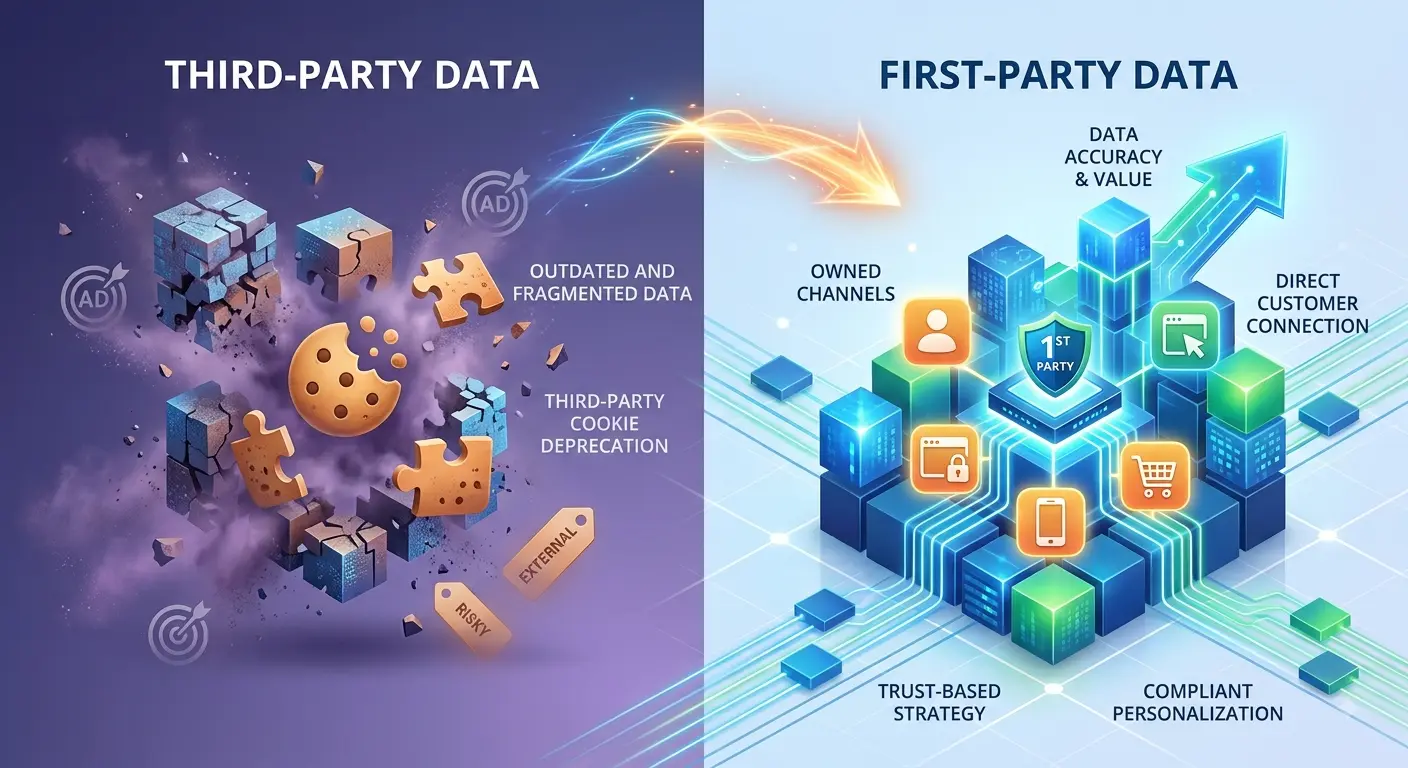
Digital marketing has changed considerably in recent years. Third-party cookies are now blocked by default in browsers such as Safari and Firefox, privacy regulations continue to evolve, and businesses can no longer rely as heavily on third-party data to build and understand their audiences.
Information companies collect from their own sites, apps, and customer interactions is in high demand for understanding customer behavior. First-party data is usually more accurate than third-party data, since it's based on real customer interactions rather than inferred or purchased signals.
Instead of designing marketing campaigns around borrowed audience data, companies can build them around their own customers' data. This leads to better segmentation, personalization, and more effective marketing overall.
Another reason first-party data is valuable is that it's collected directly from customer interactions, which makes it reliable and trustworthy. Customers are generally willing to share information when they understand what it's being used for and what they get in return. Over time, this transparency builds stronger customer relationships — through personalized recommendations, special offers, or a smoother shopping experience.
Piwik PRO has also noted this shift: brands are increasingly building analytics and personalization around owned audience data rather than earned or borrowed signals. This makes first-party data a necessity for brands that want to deliver personalized experiences while staying compliant with today's privacy regulations.
Benefits of First-Party Data
The ability to deliver more personalized customer experiences is one of the biggest advantages of first-party data. Rather than guessing at what people on an email list want to see — or fitting specific messages into a generalized audience profile — companies can build highly targeted lists, recommend products likely to resonate with each audience, offer better deals, and send emails at the right time, when a real customer is actually looking.
Another benefit is more accurate audience segmentation. According to HubSpot research, refining audience segments remains a top priority for marketing teams looking to boost retention. With first-party data, businesses can segment customers by browsing activity, buying behavior, loyalty, engagement, and product interest. Because these segments are based on actual customer behavior rather than general assumptions, they tend to produce better marketing results.
First-party data is also critical for customer retention. Using data gathered through analytics, companies can send re-ordering alerts, develop loyalty programs, re-engage lost customers, and offer personalized post-purchase interactions based on customers' purchasing patterns, browsing history, and preferences. It's more cost-effective to nurture existing customers over the long term than to constantly find new ones.
There are compliance benefits as well. As DataGuard notes, shifting to direct data collection reduces data protection risks and strengthens overall security. Because first-party data is collected and managed through a company's own systems, businesses have greater control over consent, customer preferences, and data governance — making it easier to stay compliant with evolving privacy requirements and maintain customer trust.
How to Gather First-Party Data
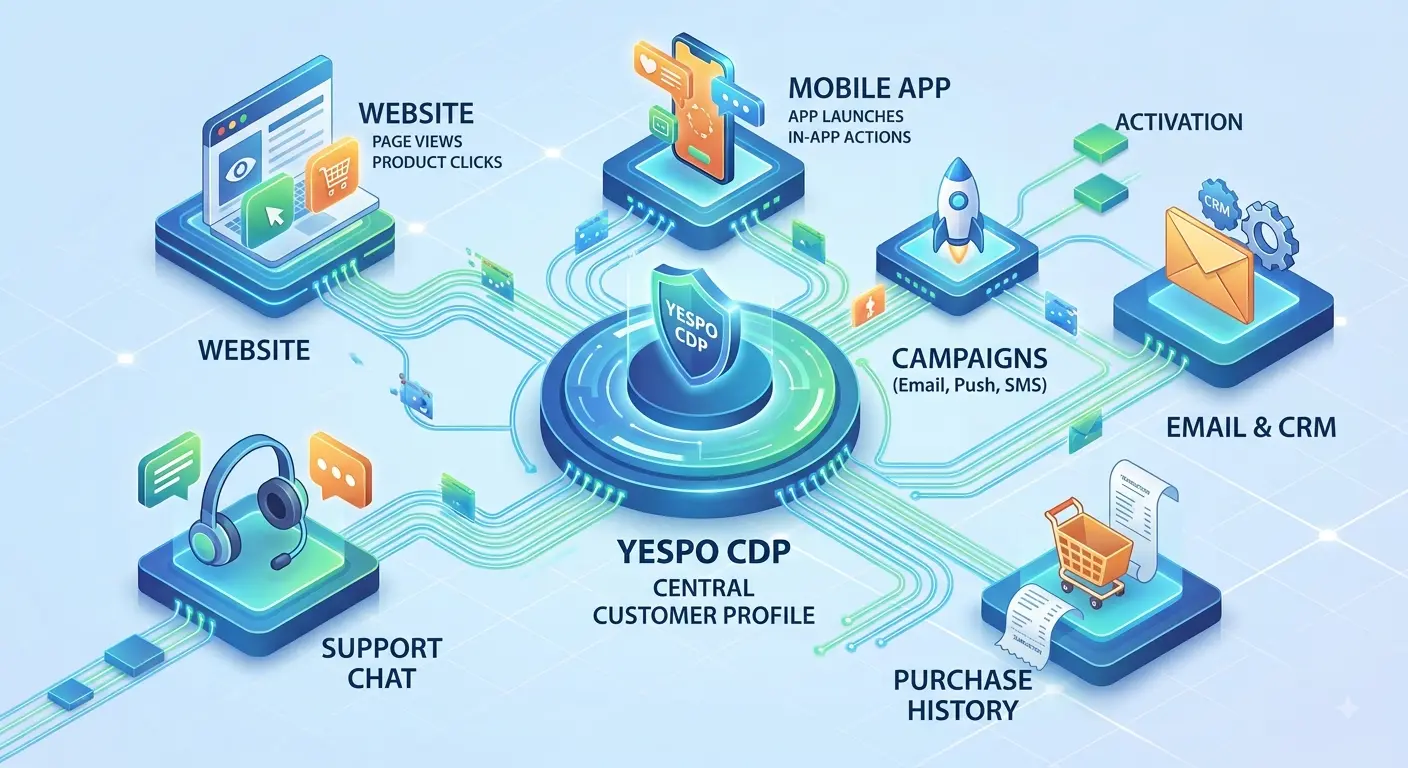
The best way to gather first-party data is to collect it as it happens throughout the buyer's journey, rather than asking customers to hand over everything at once.
Your website is among the richest sources of customer insight. Watching how visitors interact with product pages, search, download resources, use shopping carts, and check out reveals what customers are interested in and likely to buy. Mobile apps can offer the same insights by tracking how users engage with different features and content.
Website interactions, purchase history, app usage, and customer support interactions are all valuable sources of first-party data collected directly from customer behavior. The simplest way to start is with basic behavioral data — browsing and purchase activity — and build customer profiles from there. By contrast, surveys and quizzes involve customers intentionally sharing information with a brand, which makes them examples of zero-party data, not first-party data.
Purchase history is especially valuable since it reflects real purchase decisions. Many businesses use transaction data to make better product recommendations, find cross-selling opportunities, launch loyalty programs, and build stronger lifecycle marketing campaigns. As detailed in comprehensive guides on Osmos, businesses can use transactional data to better understand customer purchases and improve marketing campaigns.
Conversations with customers are also valuable. Questions, complaints, product feedback, and return requests all reveal customer expectations and needs around a product, service, or communication.
But gathering first-party data comes with security responsibilities. To reduce risk, businesses should use secure storage, limit data access to authorized team members, and conduct regular security audits. Staying informed about emerging cyber threats is also essential — resources such as Cybernews offer insight into the latest cybersecurity developments and data protection strategies.
5 First-Party Data Strategies for Balancing Personalization and Privacy
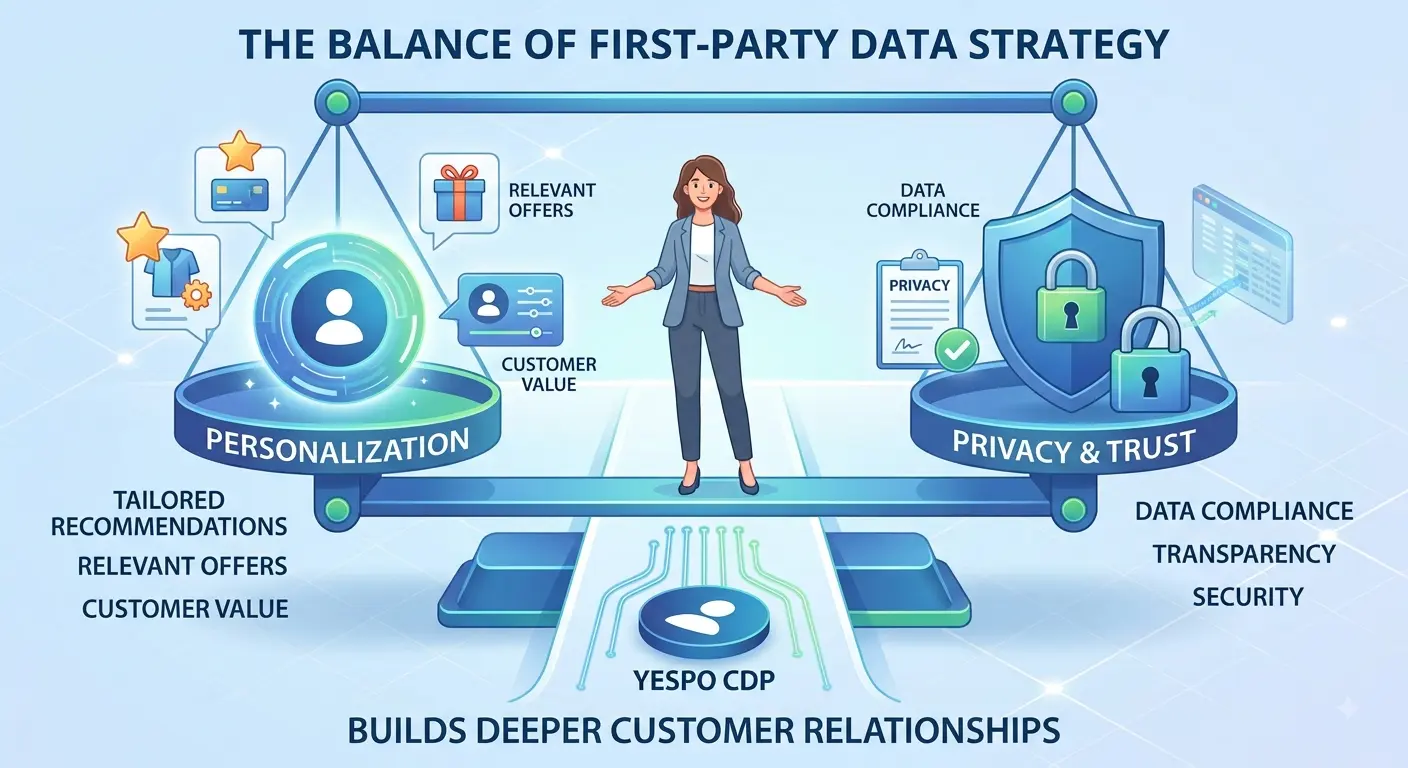
Offer a Clear Value Exchange
People will readily share their information once they understand what they'll get in return. Ideas like recommendations, loyalty bonuses, tailored content, saved preferences, or a faster checkout all give customers a good reason to share information willingly.
Collect Data Gradually
You don't need to collect a mountain of data on day one to build an effective first-party data strategy. Start with core behavioral data — browsing and purchases — then build fuller customer profiles over time by adding information customers share directly, such as survey responses and updated preferences. This makes for a smoother experience and results in higher-quality data overall.
Keep Privacy Communications Simple
Consent requests and privacy policies should be easy to understand. The ICO's guidelines on consent and personal data use are a good example of this kind of clarity. Customers should know what information is being collected and why, and be given a clear way to update or withdraw their consent at any time.
Use Personalization Wisely
Personalization shouldn't overwhelm the customer experience — it should enrich it. Don't make every interaction feel personal; instead, offer customers content and offers that genuinely match their interests. Thoughtfulness is what builds trust and keeps your marketing relevant.
Combine Data Across Channels
The most effective first-party data strategies combine data from web forms, email marketing, purchase history, loyalty programs, mobile apps, and customer service. Together, these sources create an accurate, complete view of each customer — enabling consistent personalization and more reliable reporting.
Make First-Party Data Actionable With Yespo
Collecting first-party data is only half the job — the real value comes from turning it into timely, personalized action. Yespo CDP unifies data from your website, app, email, and other channels into a single customer profile, so you can segment audiences, trigger workflows, and personalize messages in real time. Instead of juggling disconnected tools, marketing teams get one platform to collect, manage, and activate first-party data across every channel. This makes it easier to build the kind of trust-driven, privacy-compliant personalization this guide has covered.
FAQs
Simply put, what is 'first-party data'?
First-party data is information a company collects directly through customer interactions with its own website, app, CRM (customer relationship management), email marketing campaigns, purchases, and customer service.
Why prefer first-party data over third-party data?
Because it comes straight from your own customers, first-party data tends to be more accurate and relevant to your business, and you have full control over how it's collected, stored, and used — unlike third-party data, which comes from external sources you don't control.
What are typical first-party data sources?
First-party data sources include website visits, app activity, purchase history, abandoned shopping carts, email engagement, customer support interactions, and loyalty program activity. Surveys and stated preferences, by contrast, are examples of zero-party data, since customers share that information intentionally rather than it being observed behaviorally.
What do you mean by first-party data marketing?
First-party data marketing means using customer information collected directly through a brand's own channels to improve segmentation, personalization, retention, and campaign timing.
What does it take to have a good first-party data strategy?
A good first-party data strategy collects useful information with appropriate consent, protects customer data, and uses it to improve the customer experience. It should also give customers clear information about how their data is collected and used.
Conclusion
One of the biggest advantages of first-party data is that it reflects real, observed consumer behavior — something borrowed data simply can't offer. It enables personalization, strengthens retention, supports effective segmentation, and gives teams more control as privacy regulations continue to tighten.
The real value of first-party data lies in how well it's used, not how much of it you collect. It's built on gathering relevant data, using it responsibly, and turning it into a better customer experience. Brands that treat first-party data as both a growth tool and a trust responsibility will be far better positioned in 2026 and beyond.


