Content
15 March 2026
25235
18 min
5.00

9 Best Klaviyo Alternatives to Consider in 2026: Features, Pricing, Pros & Cons

Yaroslava Kurta
Content
Is Klaviyo still the undisputed king of email marketing platforms for ecommerce in 2026? On the surface, it's a powerhouse for data management and Shopify marketing automation, with deep Shopify integration. But the story isn't that simple anymore. Limited design flexibility and slow support response times are just the tip of the iceberg. This is especially true for senders with high-volume bulk campaigns, as Klaviyo’s pricing model scales aggressively, with time costing more than it generates.
Fortunately, the market does not stagnate, and as of 2026, we have solid alternatives to Klaviyo. So let's break down what these platforms offer that the industry leader doesn't.
9 Best Klaviyo Alternatives Summary
|
Tool |
Best for |
Key Features |
Free Planㅤㅤㅤㅤ |
Pricing |
|
Yespo |
Omnichannel ecommerceㅤㅤㅤㅤㅤㅤㅤㅤㅤ |
9 channels (Email, SMS, Viber, Web Push), AI Recommendations, Built-in CDP |
YES |
From €28/mo |
|
Drip |
DTC Brands |
Ecommerce CRM, Visual Workflows, Shopify Deep Sync |
NO |
from $39 per month |
|
Braze |
Enterprise / Mobile Apps |
Real-time data streaming, In-app messaging, Canvas journeys |
NO |
Custom ($60k+/yr) |
|
Campaign Monitor |
Agencies / Beginners |
Drag-and-drop builder, Link review tool, Template library |
NO |
From $11/mo |
|
Brevo |
Budget Optimization |
Unlimited contacts, CRM, SMS, WhatsApp |
YES |
Starter from about €9–10/month, Business from around €18/month; pricing mainly based on email volume, not contacts. |
|
Iterable |
High-growth B2C |
Cross-channel (Mobile Push, In-app), A/B testing, Data warehousing |
NO |
Custom ($20k+/yr) |
|
Salesforce Marketing Cloudㅤㅤㅤㅤㅤㅤㅤ |
Large Enterprisesㅤ |
Deep CRM integration, Multi-cloud stack |
NO |
Custom ($20k+/yr) |
|
Customer.io |
SaaS / Tech Products |
API-first CDP, Liquid templating, Event-triggered workflows |
NO |
From $150/mo |
|
HubSpot |
B2B / Lead Gen |
All-in-one Marketing Hub, CRM, SEO tools |
YES |
From $20/mo |
What Are Real Klaviyo Pain Points?
Klaviyo might be a big name, but a dive into user reviews on popular SaaS directories reveals common frustrations. So, what’s pushing growing brands to look for an alternative?
- Pricing scales aggressively. You end up paying for every contact in your database, even the inactive ones you never email.
- Effective use often requires a dedicated specialist.
- Slow response times and limited technical support for lower-tier plans.
- The visual editor lacks flexibility and is cumbersome, often requiring custom HTML/CSS to achieve the look marketers want.
- Focuses primarily on Email and SMS, missing opportunities in Mobile Push or Messengers. And yet, it has issues with email deliverability.
- Setup is not easy. Some options are confusing and not intuitive.
These combined issues, as well as a rigid, Shopify-centric ecosystem with issues with other integrations, are why so many growing brands are now exploring the market for a more balanced solution among Klaviyo alternatives.
9 Best Klaviyo Alternatives & Competitors to Consider in 2026: A Full Review
Before choosing the best Klaviyo alternative, you need to understand your main goal. Is custom email design a high priority for your brand? Does it have trouble with deliverability? Or you have a market where people mostly use popular messengers (like Telegram or Viber) that Klaviyo doesn't support. We’ve handpicked the best services depending on different needs.
1. Yespo
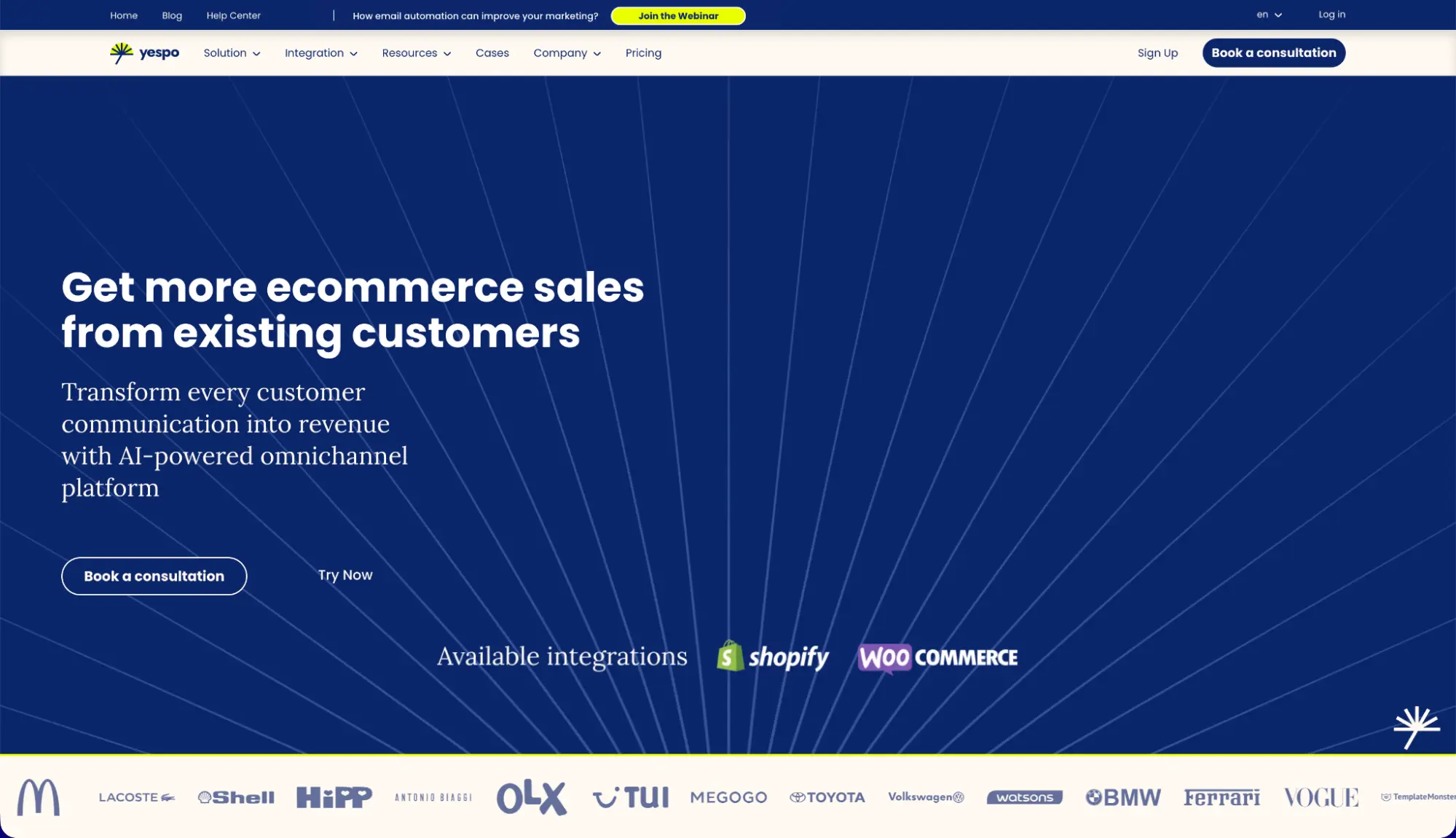
If you need to bring all your customer conversations into one place, Yespo acts as a complete Customer Data Platform (CDP). It’s a great choice for businesses feeling boxed in by Klaviyo's channel limits. The platform gives you a more affordable, user-friendly way to manage the entire email marketing customer journey and handle complex workflows without the typical headaches.
Key features
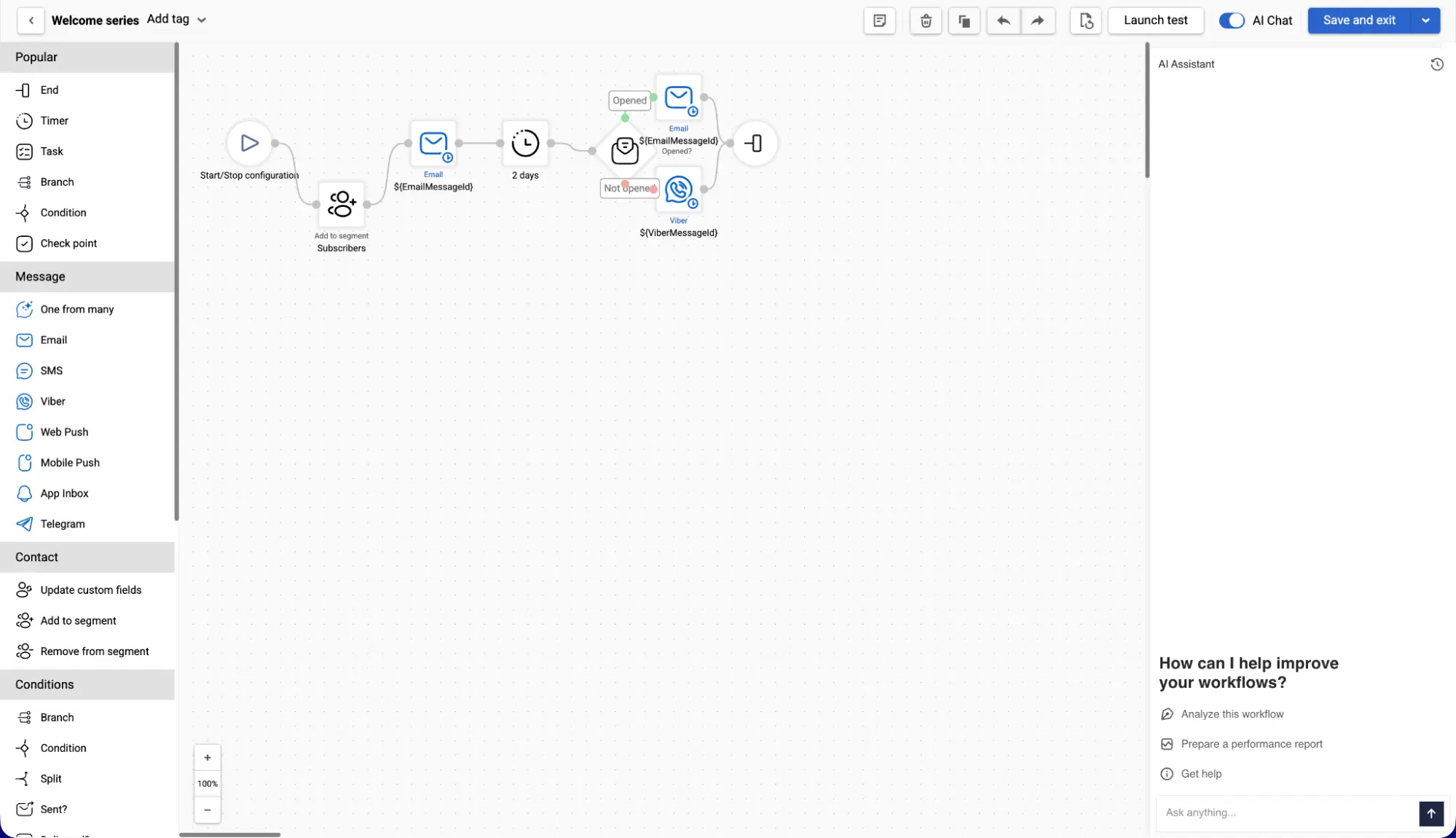
- Unifies Email, SMS, Web Push, Mobile Push, Viber, Widgets (pop-ups), and Telegram bot into a single workflow for seamless omnichannel orchestration.
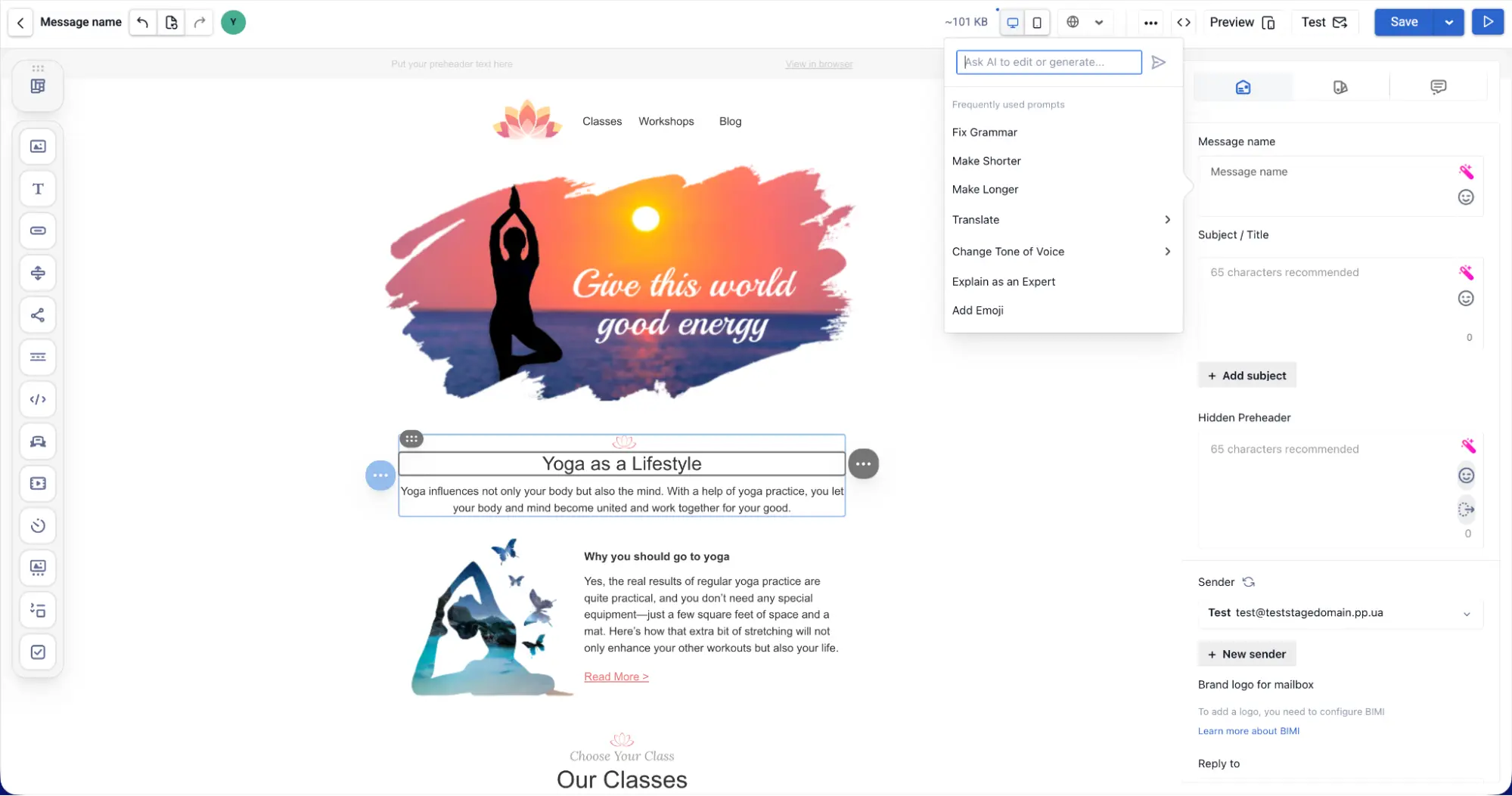
- Offers easy drag-and-drop editors, allowing users to create sign-up forms, logic flows, and high-converting email marketing campaigns quickly.
- Uses built-in AI algorithms to track user behavior and automatically serve up personalized product recommendations in emails and on-site.
- Provides dedicated support for domain warm-ups and sender reputation.
Pros
- Ensures cost-effective scaling compared to Klaviyo.
- Includes advanced CDP capabilities for deep segmentation (Behavioral, RFM, Cohort, Predictive, and LTV analysis).
- Integrates with the Stripo email editor (1600+ email templates).
- Provides personal Customer Success Manager support.
- Features deep AI integration.
Cons
- Has fewer native one-click integrations than Klaviyo (Shopify, WooCommerce, Horoshop supported).
- Requires an initial setup time to maximize CDP value.
Pricing
Free plan available (up to 5,000 contacts). Paid plans start at €28/mo for the Email channel (pricing depends on the channels you select), and the Extended CDP plan starts at €65/mo.
2. Drip
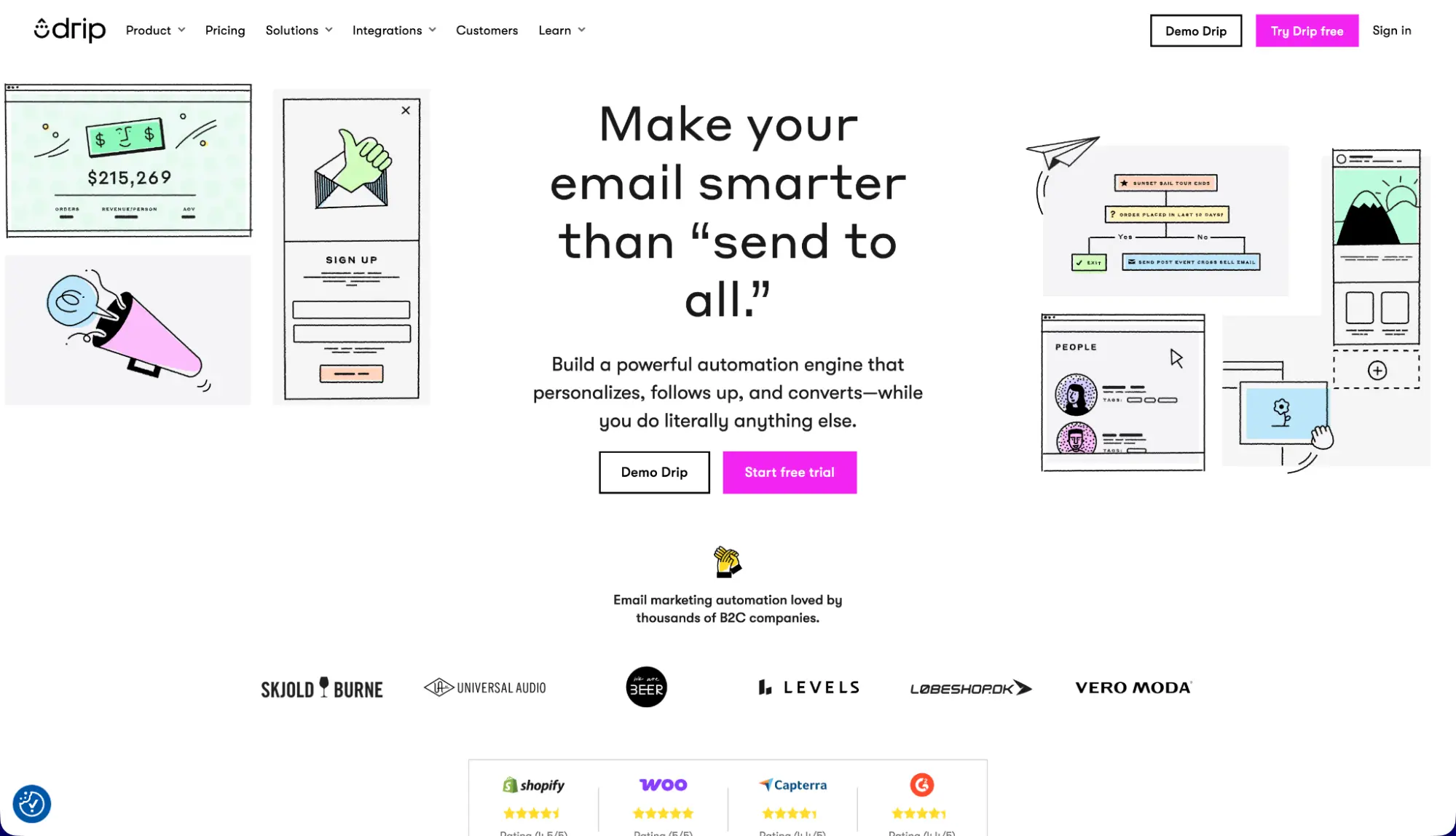
Drip positions itself as an “ecommerce CRM” and offers powerful segmentation similar to Klaviyo but with a cleaner, more intuitive interface.
Key features
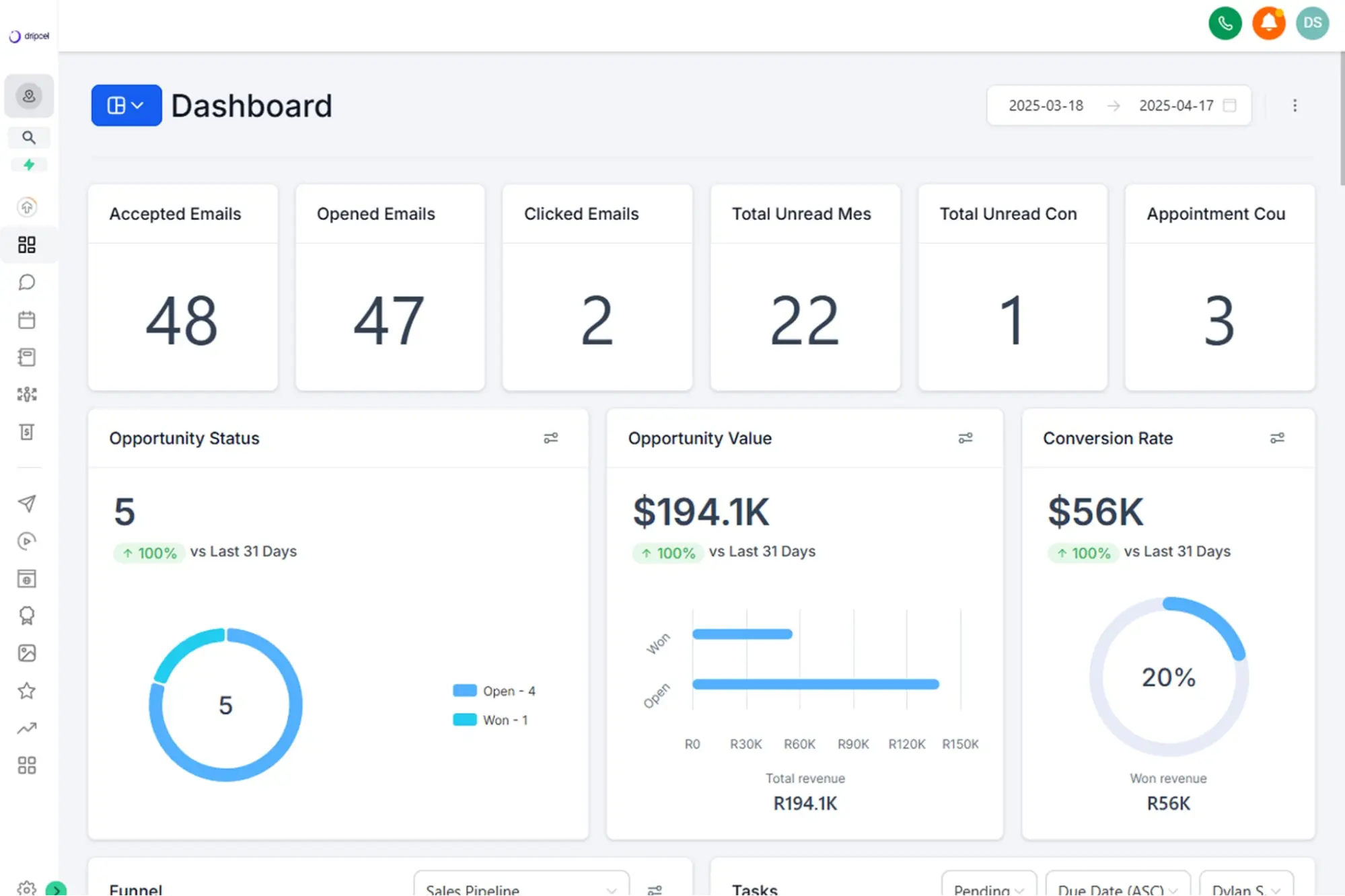
Drip is great at capturing granular behavioral data – as product views or add-to-cart events – and letting you act on it immediately. The platform uses this data to drive targeted retention strategies, helping you improve customer retention and increase ecommerce sales using ready-made automation playbooks.
- Captures granular behavioral data (like product views) to drive retention strategies.
- Provides access to pre-built, visually mapped automation flows for welcome series, abandoned carts/browses and post-purchase series.
- Syncs with popular ecommerce CMS solutions, including Shopify, WooCommerce, and BigCommerce.
- Displays revenue attribution for each email or workflow via clear dashboards.
Pros
- Features a less cluttered interface than Klaviyo for faster onboarding.
- Offers live human support compared to ticketing systems.
- Unlocks all features on every plan, avoiding gatekept automation.
Cons
- Lacks support for Web Push, Viber, or advanced mobile messaging – strictly Email/SMS focused.
- Offers a less flexible email builder for complex custom HTML designs.
- Has limited native one-click integrations.
Pricing
Pricing kicks off at $39/mo for 2,500 contacts, scaling up as your list grows.
3. Braze
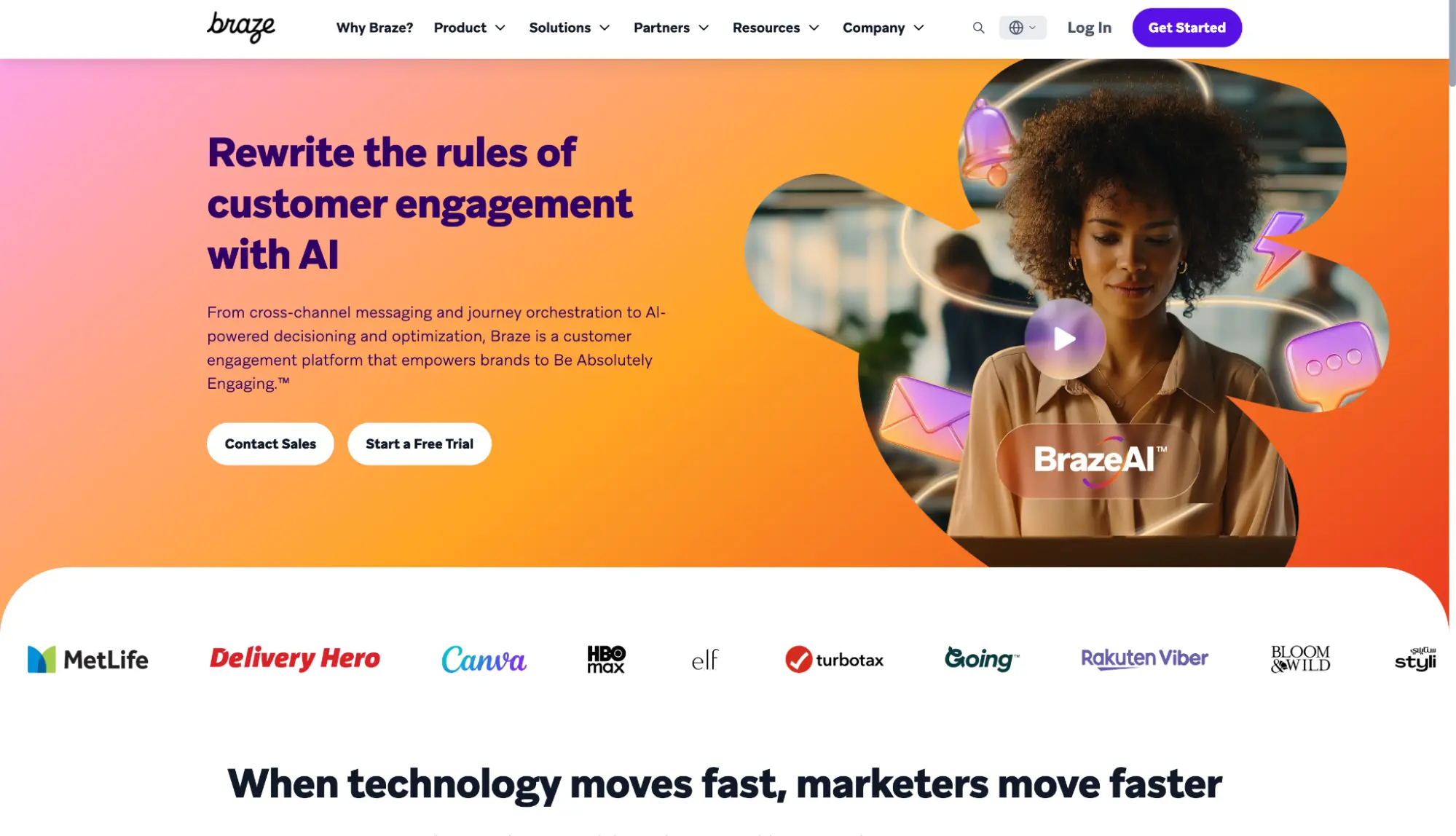
Braze is all about speed. Klaviyo often checks for data on a schedule, while Braze processes high volumes of behavioral signals in real time. This real-time capability makes it the go-to choice for brands that rely heavily on their mobile apps.
Key features
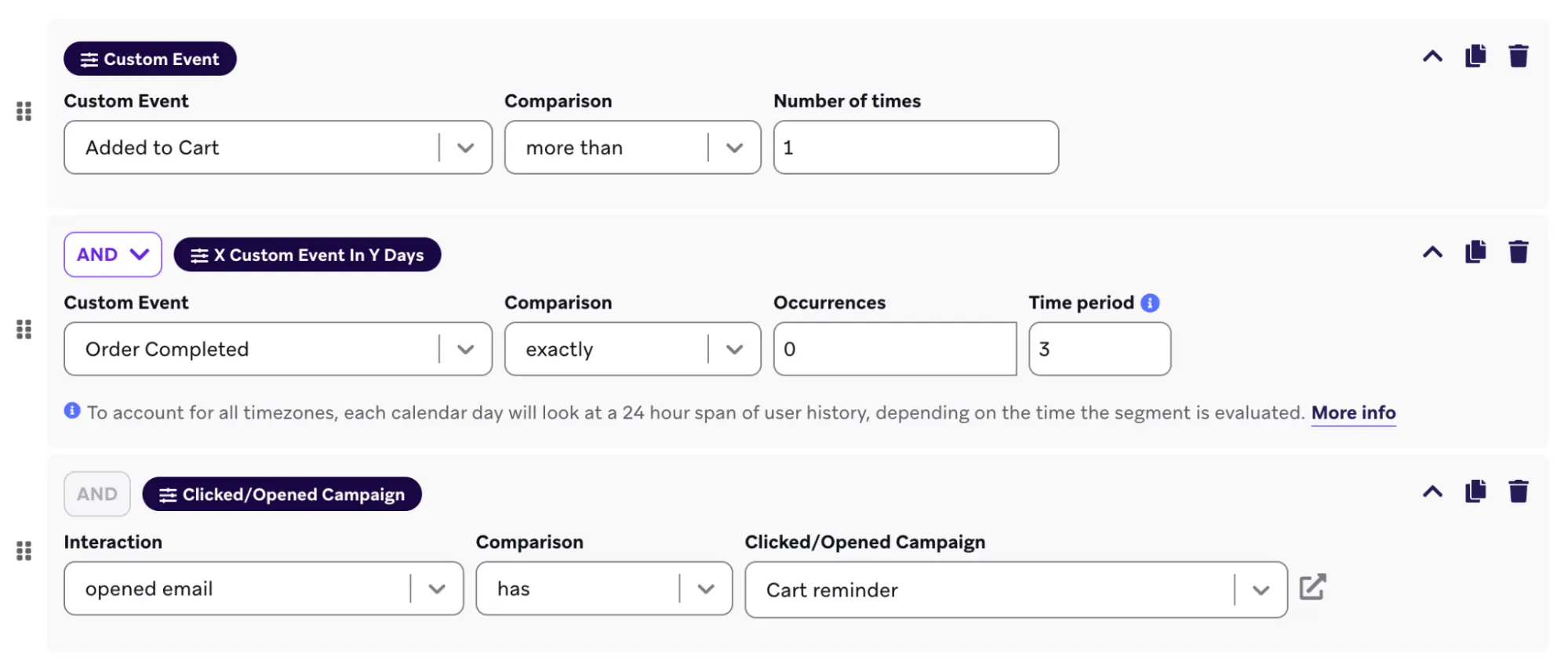
- Maps complex customer journeys across In-App, push notifications, Email, and SMS.
- Triggers messages based on real-time actions within seconds.
- Includes a Mobile SDK for rich push notifications and In-App modals.
Pros
- Handles massive enterprise volume without breaking a sweat or suffering downtime.
- Suits businesses that rely heavily on a mobile app ecosystem.
- Provides control groups and multivariate testing for precise impact measurement.
Cons
- Requires a dedicated team of developers for implementation and maintenance.
- Incurs high annual contract costs ($60k+), putting it out of reach for SMBs.
- Lacks built-in loyalty programs, requiring third-party tools.
Pricing
Custom enterprise quotes only.
4. Campaign Monitor
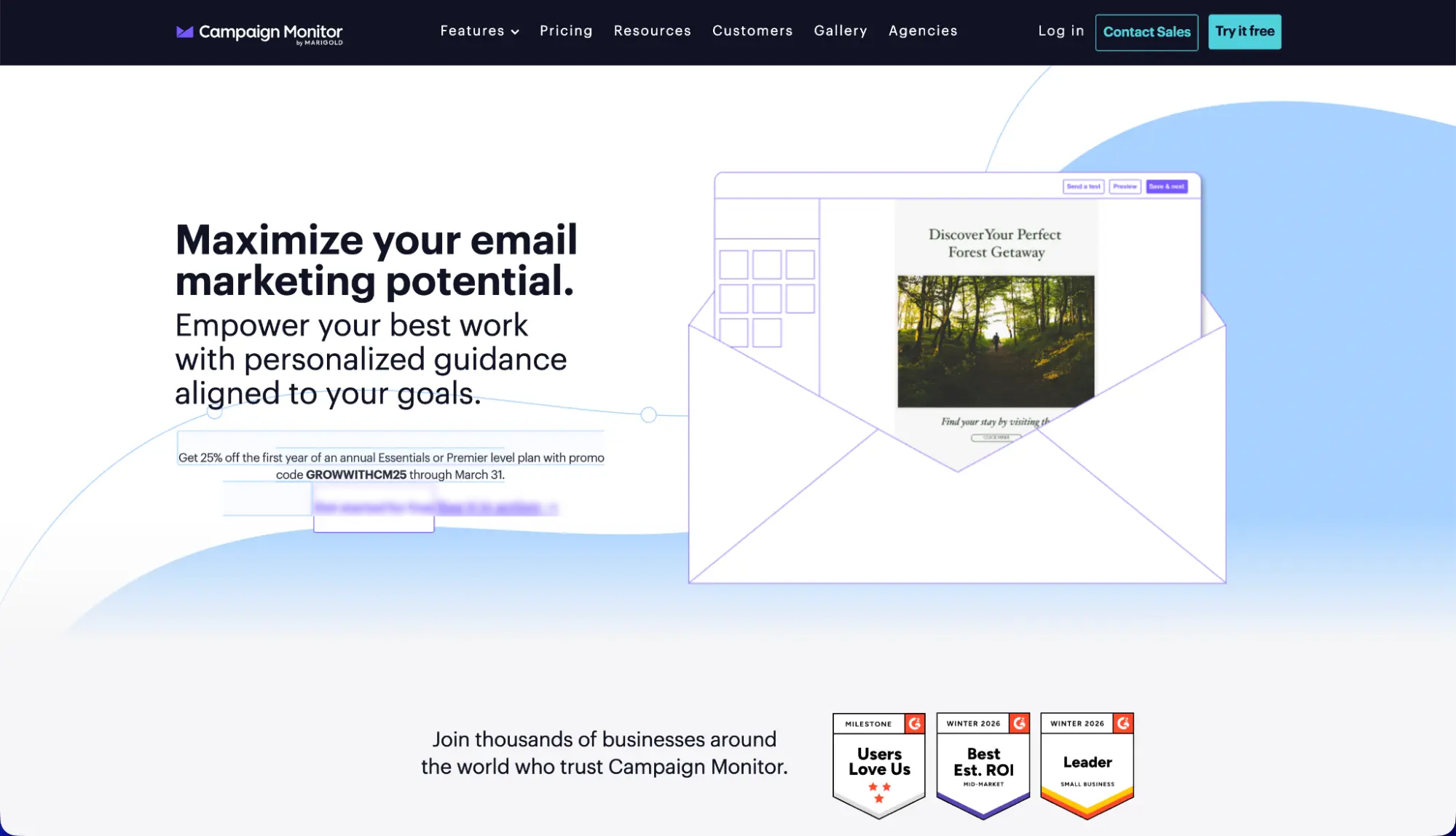
If visual quality matters more to you than complex data crunching, Campaign Monitor is a strong contender. It prioritizes aesthetics and simplicity, making it a popular choice among agencies, non-profits, and design-conscious brands where visual presentation is a key priority.
Key features
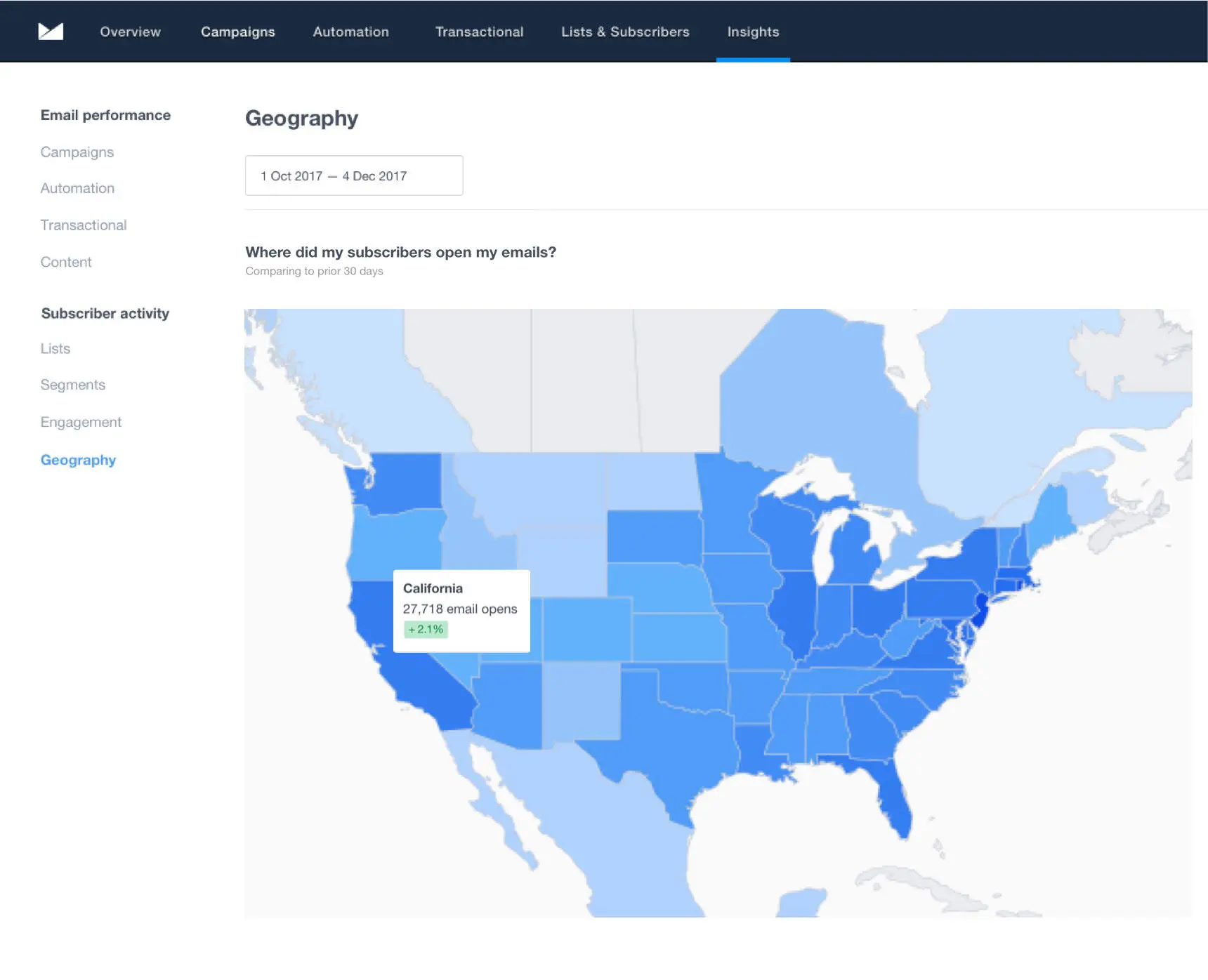
- Features a drag-and-drop email editor to create polished emails without code.
- Includes a Link Review tool that scans for broken URLs before sending.
- Provides dedicated client dashboards and multi-account management for agencies.
- Filters out bot-generated clicks from reports automatically.
Pros
- Requires virtually zero learning curve, making it perfect for non-tech teams.
- Includes a library of high-quality designs optimized for all devices.
- Ensures high reputation for uptime and deliverability (over 99%).
Cons
- Lacks deep ecommerce triggers found in Klaviyo.
- Misses advanced revenue attribution or predictive modeling features.
- Restricts SMS marketing to specific countries (US, CA, AU, UK).
Pricing
Plans are tiered into Lite (basic), Essentials (unlimited sends), and Premier (advanced support). High-volume lists (50k+) will need a custom quote, but unlimited users are included in all plans.
5. Brevo
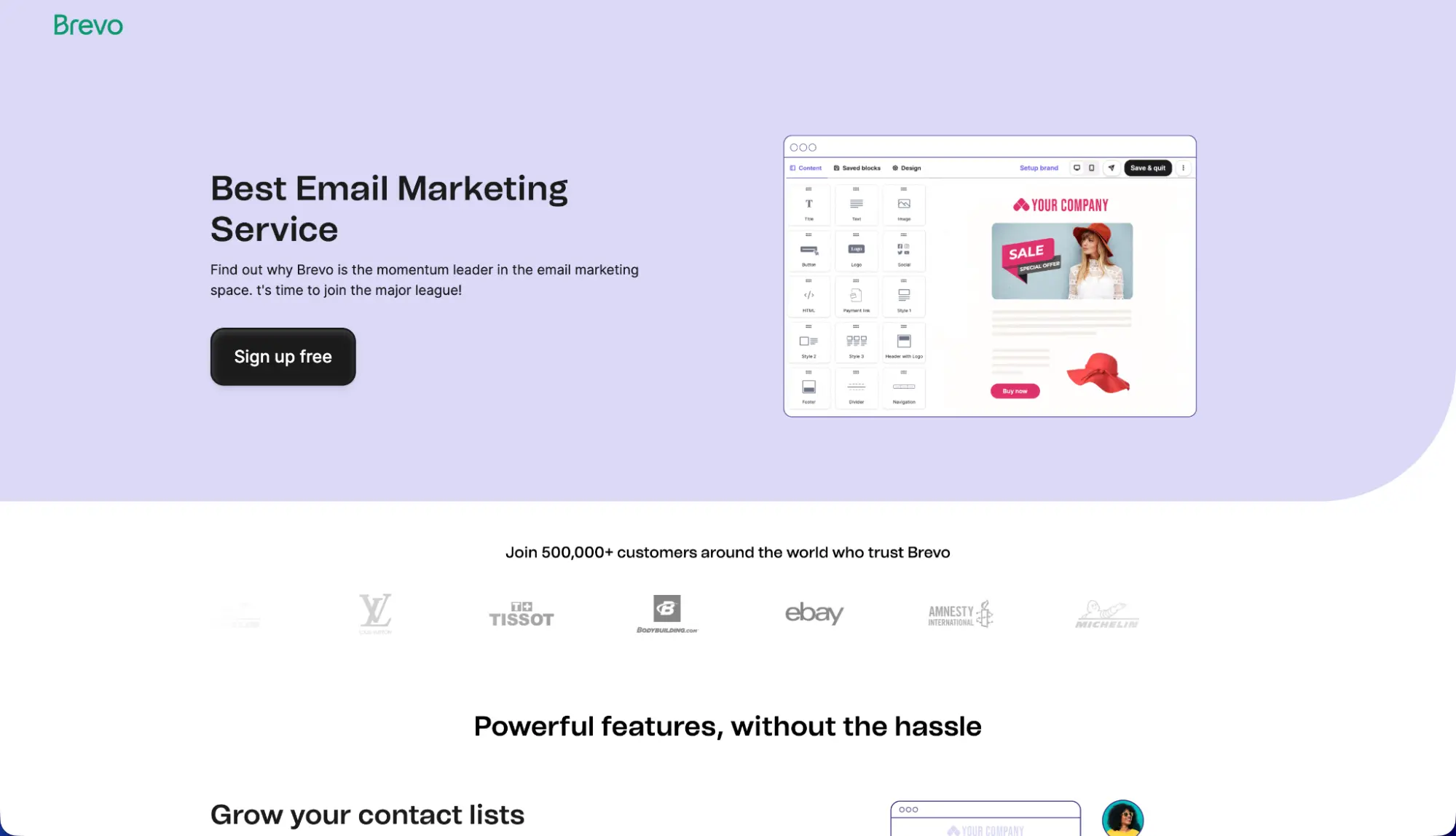
Brevo flips the standard pricing model: you pay for the number of emails sent, not the number of contacts stored. This makes it a cost-efficient option for businesses with large, low-engagement lists.
Key features
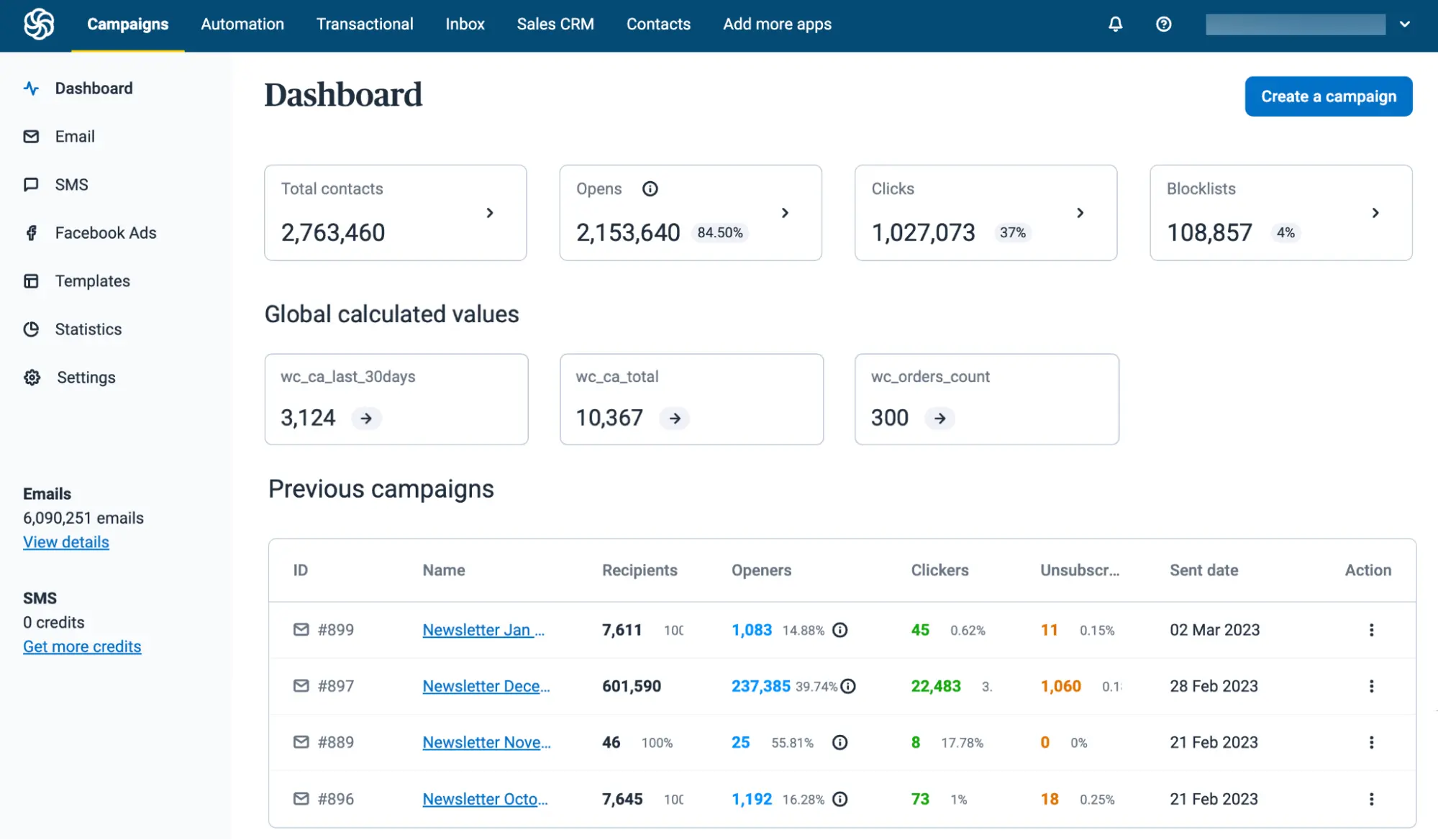
- Unifies Live Chat, Social DMs (Instagram/Facebook), and WhatsApp conversations in one inbox.
- Includes a built-in Sales CRM to track deals alongside marketing efforts.
- Boasts industry-leading deliverability (99.9%) for transactional emails.
Pros
- Allows keeping millions of inactive contacts (such as seasonal shoppers) on the list without incurring penalties.
- Costs 70–95% less than Klaviyo for similar mailing volumes (for lists ranging from 10k to 100k+ contacts).
- Blends B2B and B2C capabilities, providing a sales CRM and tools to power direct marketing campaigns via email, SMS, and WhatsApp.
Cons
- Lacks native syncing with multiple ecommerce platforms like BigCommerce and WooCommerce, supporting feeds mostly via API or plugins.
- Charges separately for add-ons like SMS, WhatsApp, and removing the Brevo logo, which can complicate budgeting.
Pricing
Brevo’s model is based on email volume, not the size of your contact list. You can start with a Free plan (300 emails/day) or jump into the Starter plan for around €7/mo. If you need marketing automation, the Business tier starts at 18/mo. Note that overages and specific add-ons are billed separately.
6. Iterable
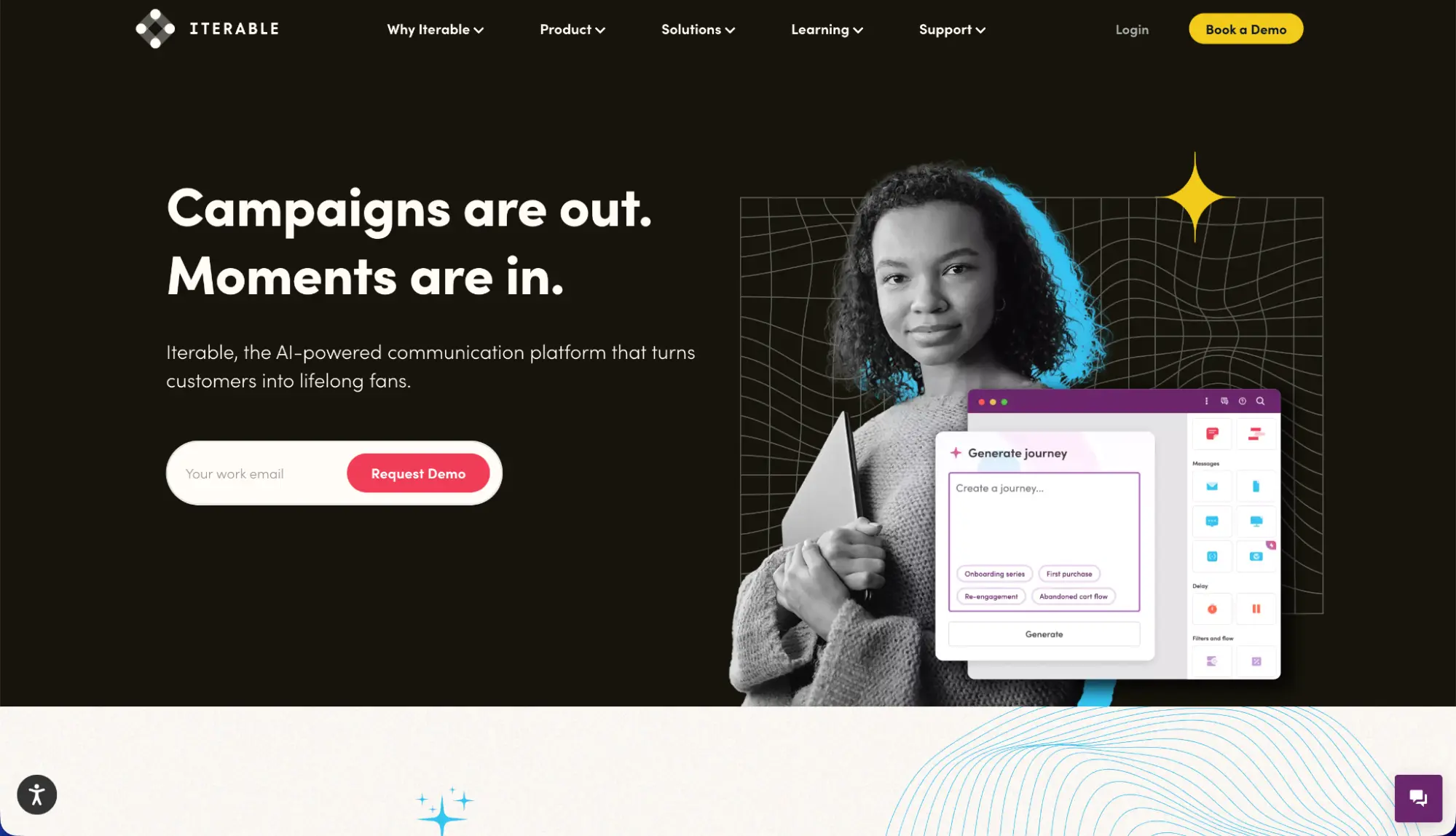
Iterable is built for high-growth, tech-savvy brands like DoorDash or Zillow. It acts less like a standard marketing tool and more like a raw data pipeline, giving developers the freedom to build custom data models that more rigid platforms may struggle to support.
Key features
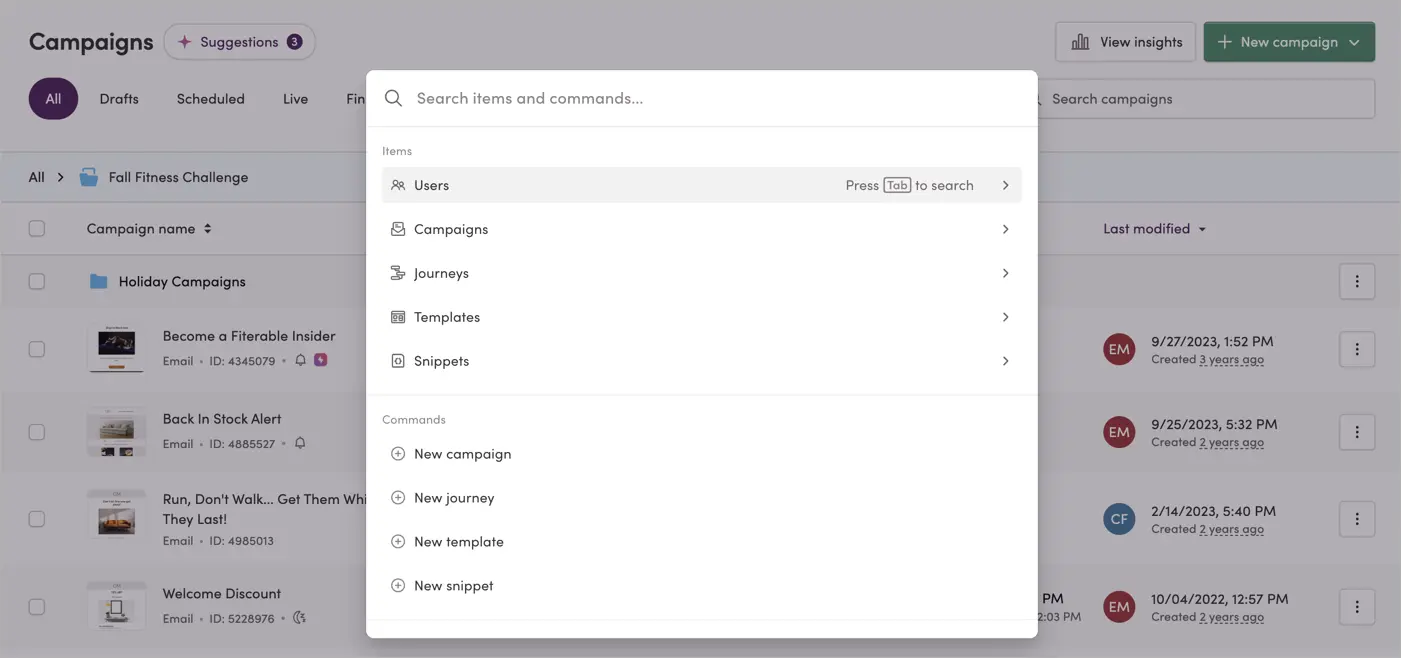
- Visualizes complex user journeys spanning Email, SMS, Mobile Push, and In-App messages.
- Ingests data via API from any source (e.g., video) to trigger campaigns.
- Includes "Catalog," a personalization engine for real-time product recommendations.
- Enables sophisticated A/B tests on messages or entire workflows.
Pros
- Adapts to non-standard business models better than rigid ecommerce tools.
- Supports mobile and web push notifications natively.
- Targets high-volume B2C senders specifically.
Cons
- Lacks transparent pricing (requires lengthy sales negotiation).
- Requires engineering resources to set up data pipelines.
Pricing
Expect a custom quote, typically starting around $20k+ annually.
7. Salesforce Marketing Cloud
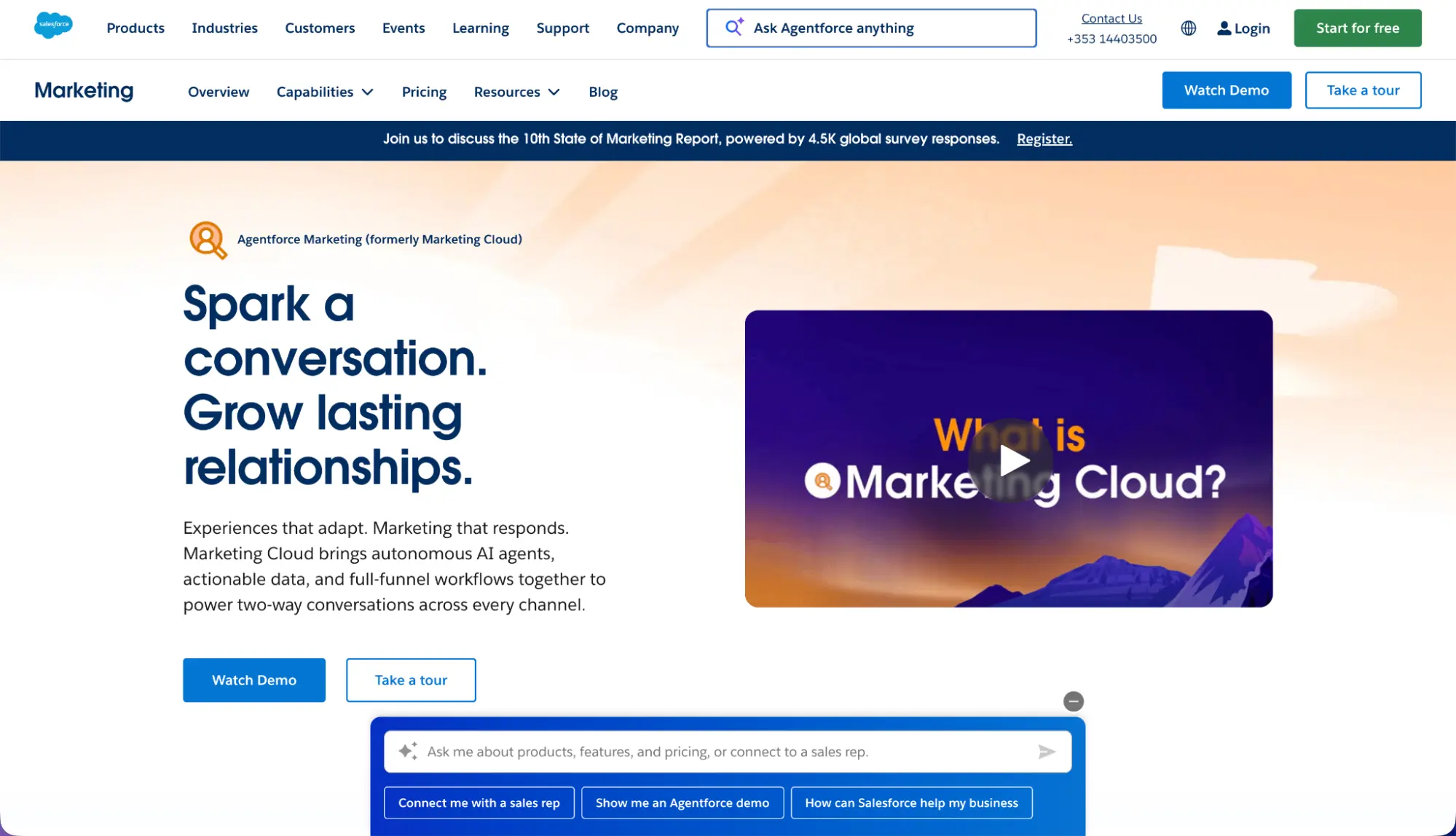
For large organizations already deep in the Salesforce ecosystem, Marketing Cloud is one of the most established enterprise customer engagement platforms. Its real power isn't as a standalone tool, but in how seamlessly it integrates with the main Salesforce CRM. This tight connection allows massive brands to create a single, unified customer profile that pulls in data from sales, service, and marketing teams.
Key features
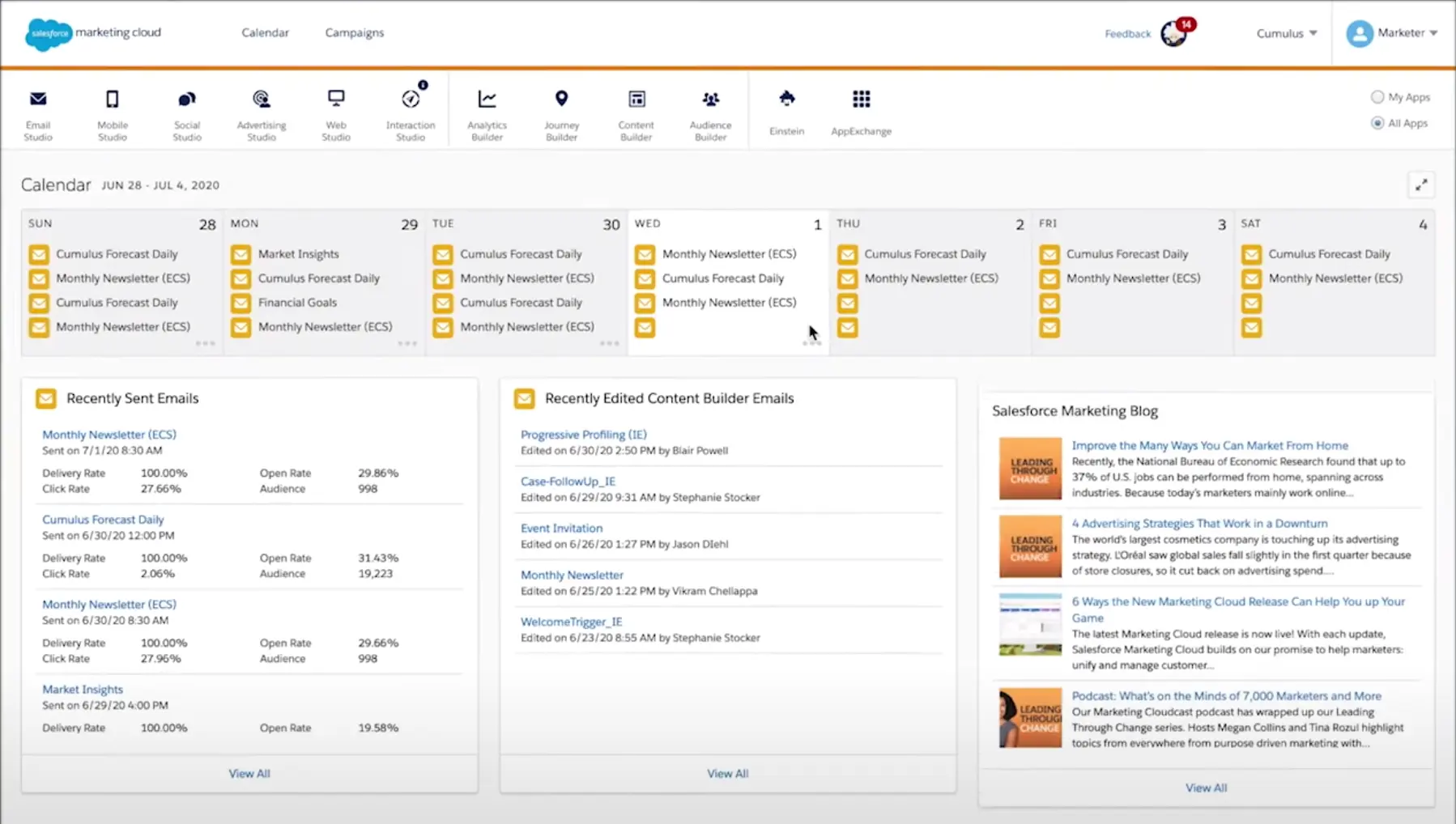
- Automates complex customer lifecycles across Sales, Service, and Marketing clouds.
- Uses predictive scoring to identify "at-risk" customers or "high-value" leads.
- Allows custom integrations with proprietary tech stacks via an extensive API.
Pros
- Offers unmatched control over every specific step of a customer journey.
- Suits global corporations managing millions of records.
- Integrates seamlessly if the company already runs on Salesforce.
Cons
- Has a steep learning curve with an interface that can feel dated.
- Requires months for implementation and expensive consultants.
Pricing
Custom enterprise quotes (often start at $20,000–$35,000 for mid-tier setups).
8. Customer.io
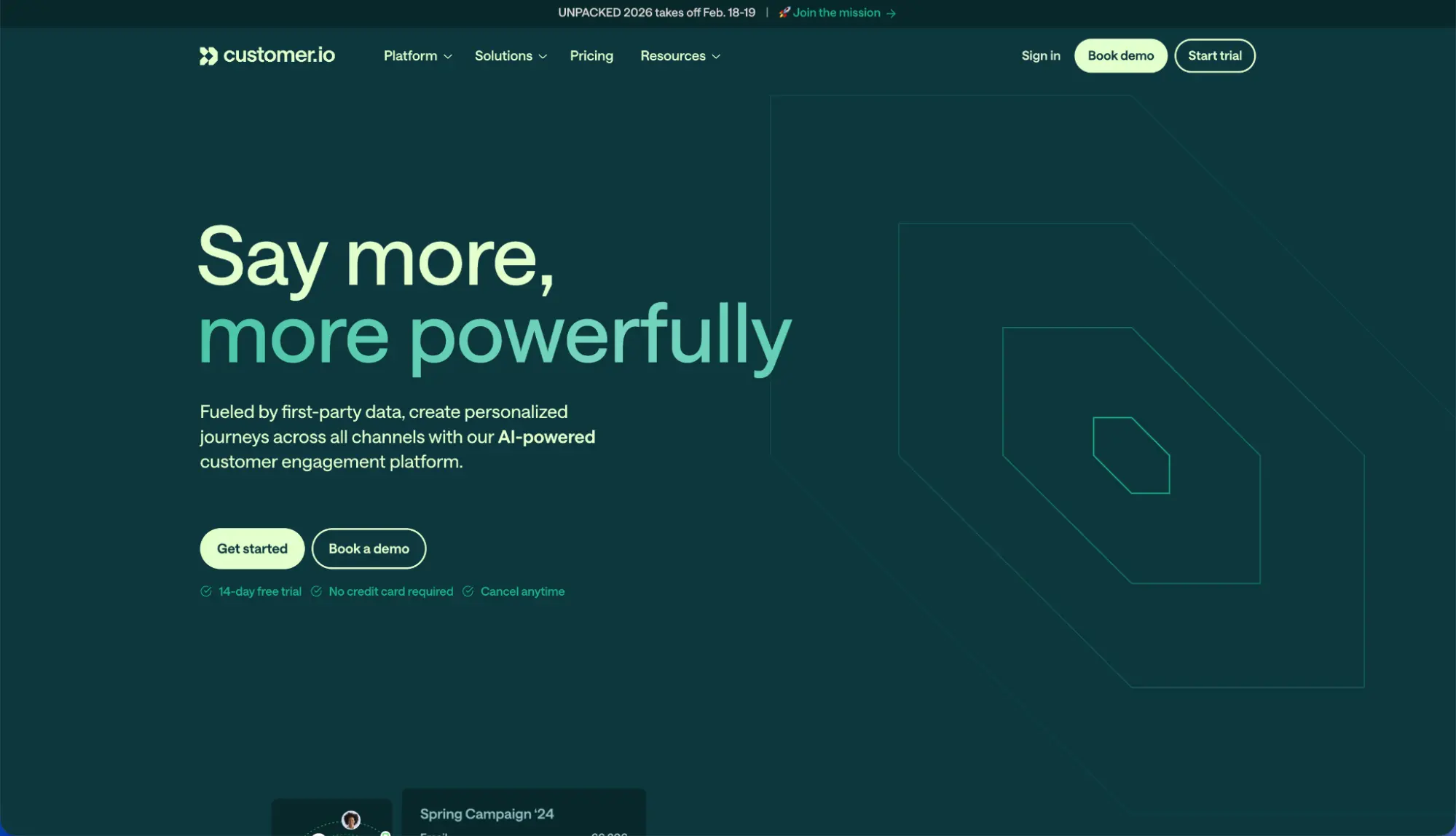
Customer.io is a powerful, API-first marketing automation platform built for tech-savvy teams who want granular control over their data. While Klaviyo is known for its out-of-the-box ecommerce features, Customer.io is a favorite among SaaS companies and product-led growth teams that need to trigger messages based on complex, custom events within their application.
Key features
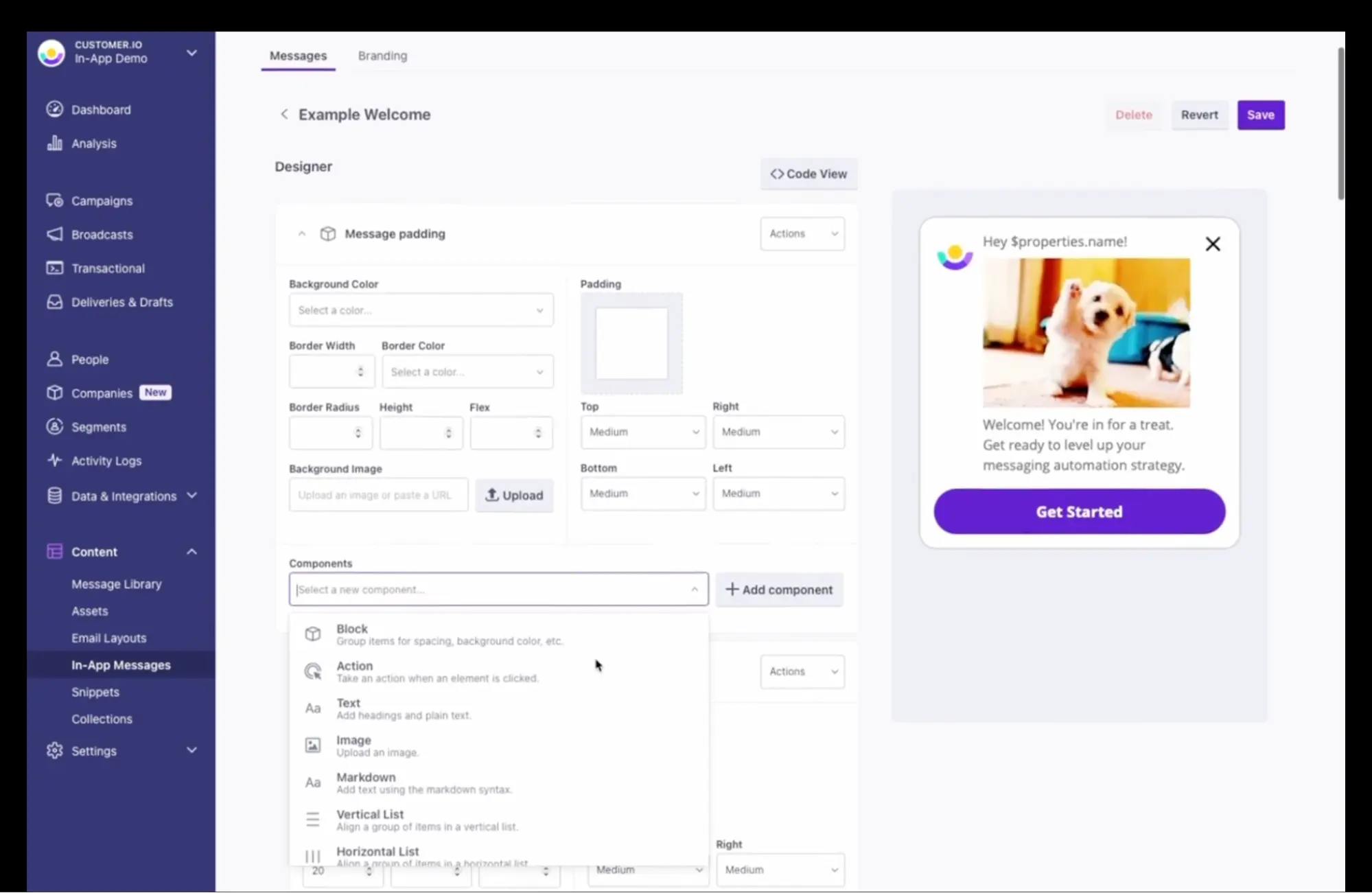
- Automates campaigns using event-based triggers from any custom backend action.
- Allows advanced dynamic content rendering using code-based logic.
- Syncs directly with your database, treating your backend as the single source of truth.
Pros
- Suits onboarding flows and retention in software products perfectly.
- Prioritizes an API-first approach valued by developers.
- Provides robust tools for managing user attributes and consent.
Cons
- Requires knowledge of Liquid template language and HTML.
- Offers fewer visual analytics compared to Klaviyo.
Pricing
Starts at $150/mo.
9. HubSpot
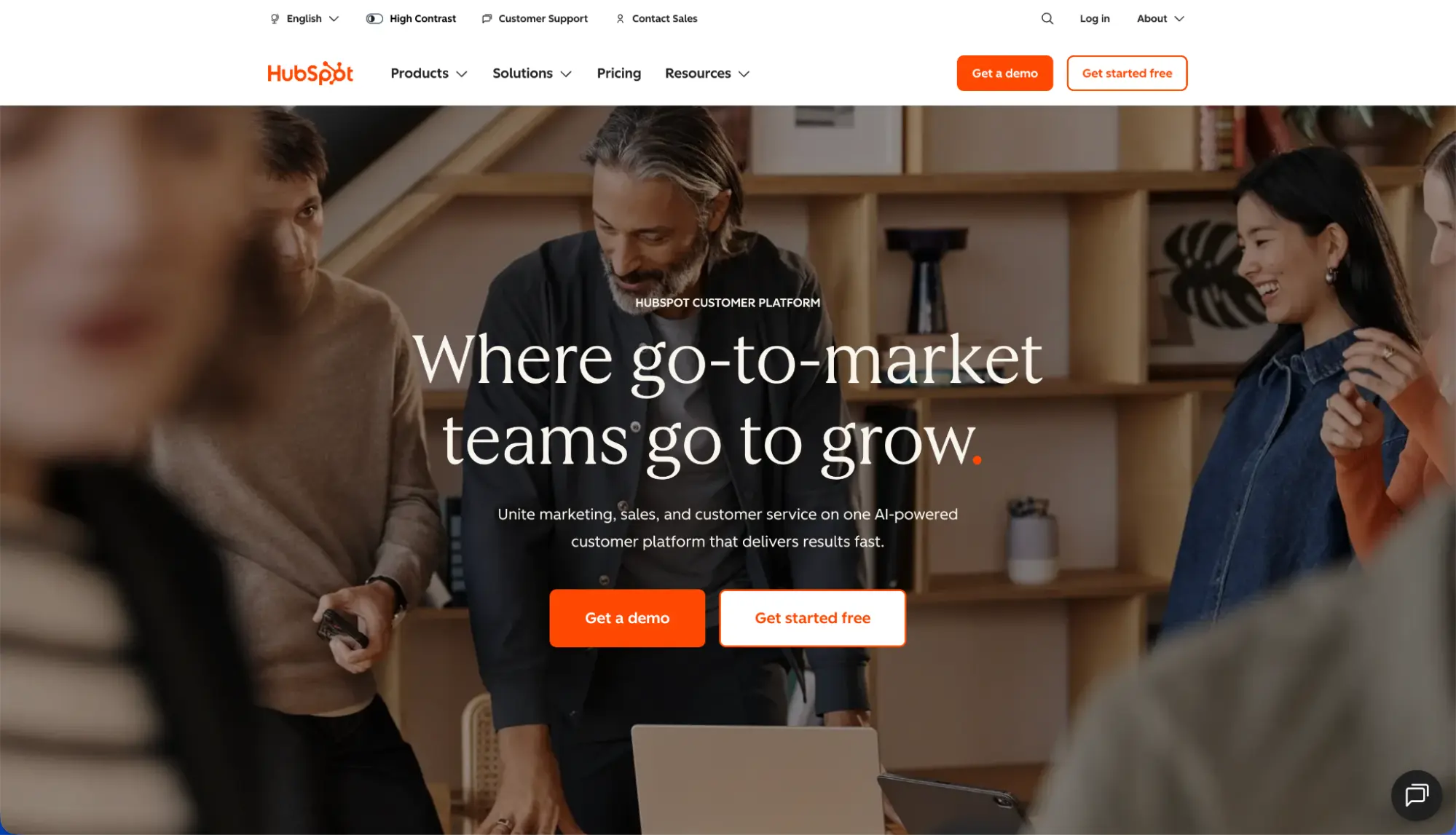
HubSpot is a world-renowned all-in-one Marketing Hub that places a powerful CRM at the center of your strategy. While Klaviyo is laser-focused on ecommerce transactions, HubSpot is built for "Inbound Marketing", attracting leads through content, social media, and ads, and then nurturing them through a longer sales cycle.
Key features
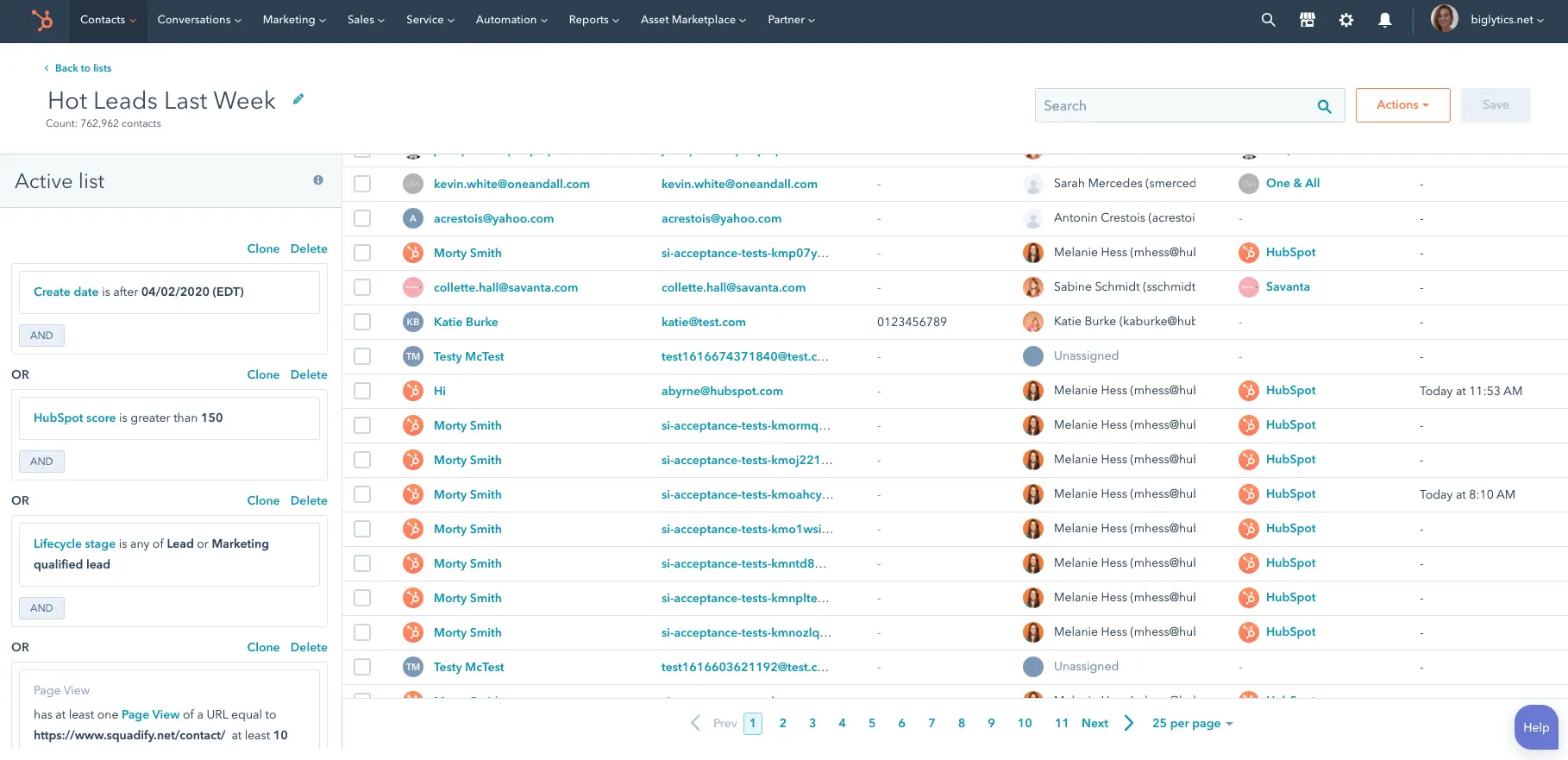
- Combines email, SEO, ad management, landing pages, and social media in one dashboard.
- Personalizes website content and emails based on the lead's CRM status.
- Automatically notifies sales reps when a lead opens an email or visits a pricing page.
- Connects with almost every tool imaginable (1,600+ integrations).
Pros
- Eliminates the need for separate tools for landing pages and automation.
- Serves as an excellent entry point for small businesses.
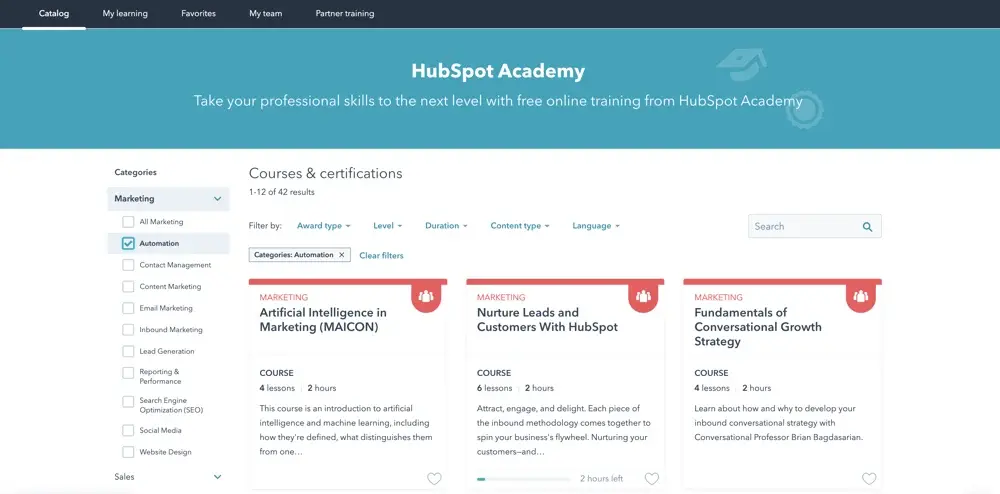
- Provides extensive training resources via HubSpot Academy.
Cons
- Scales costs significantly (moving tiers can result in 10x price increases).
- Lacks the deep product feed integrations of Klaviyo.
Pricing
Free tools available. Starter plans from $20/mo; Pro plans jump to $800/mo.
Which Klaviyo Alternative is the Best? Our Top 3
Based on feature parity, scalability, and support quality, three platforms stand out as strong Klaviyo alternatives for 2026.
1. Yespo: The Best All-in-One Omnichannel Solution
Yespo offers a strong balance of cost efficiency and functionality. It solves the "Klaviyo trap" of high costs and limited channels. By integrating 9 channels (including low-cost options like Web Push and Mobile Push) and offering a built-in CDP with personal support, it provides a comprehensive omnichannel automation toolkit for retail brands looking to move beyond simple email marketing.
2. Drip: The Best for Ease of Use
For teams that find Klaviyo too complex or cluttered, Drip offers a streamlined alternative. It retains the essential Shopify deep-data integrations you need, packaged in a user-friendly interface that simplifies automation setup and reporting.
3. Brevo: The Best for Budget Optimization
If your primary concern is the cost of storing a large contact list, Brevo is a suitable choice. Its volume-based pricing model lets you maintain a massive audience (e.g., for newsletters or seasonal sales) without the penalty fees Klaviyo charges.
Final Thoughts: What to Look for in Klaviyo Alternatives?
Klaviyo is a powerful tool, but modern ecommerce requires more than just Email and SMS. To gain a real competitive advantage in 2026, look for a platform that upgrades your capabilities, not just lowers your bill. Prioritize these four factors:
- Ensure the platform is omnichannel. Reaching customers outside the inbox is increasingly important for growth.
- Avoid pricing models that penalize growth. Look for predictable costs based on active usage rather than total database size.
- Choose a provider with direct access to expert support teams, not just chatbots or documentation.
- Advanced features lose value if they require coding. The interface must allow marketers to launch campaigns independently without developers.
Ready to upgrade your marketing stack? Start with a free trial of Yespo to see how an omnichannel CDP can transform your customer retention strategy.