Content
23 June 2026
868
13 min
5.00

Direct Marketing as a Performance Function — Not a "Newsletter Department"

Anna Shchur
Content
The typical approach to direct marketing in ecommerce still comes down to mass sends, with send frequency remaining the main lever for managing the channel. But direct marketing has a far broader impact on business metrics and contact base management — if you treat it as a performance function rather than a communication channel.
Since 2020, the Prom.ua team has been developing direct and retention marketing, using Yespo CDP to automate communications and work with customer data. Over that time, we've built up a collection of cases where these tools drove measurable changes in business metrics — from conversion to LTV — rather than simply delivering reach.
This will be a series of articles detailing case studies on the evolution of direct marketing tools over several years and their measurable business impact.
First case: mobile app installs
In 2021, Prom.ua began driving mobile app installs through direct marketing channels: email, SMS, Viber. The goal — reach tens of thousands of installs per month without breaking the channel economics.
In 2026, direct marketing channels generate the highest number of installs and are the lowest-cost paid acquisition channel for mobile app installs.
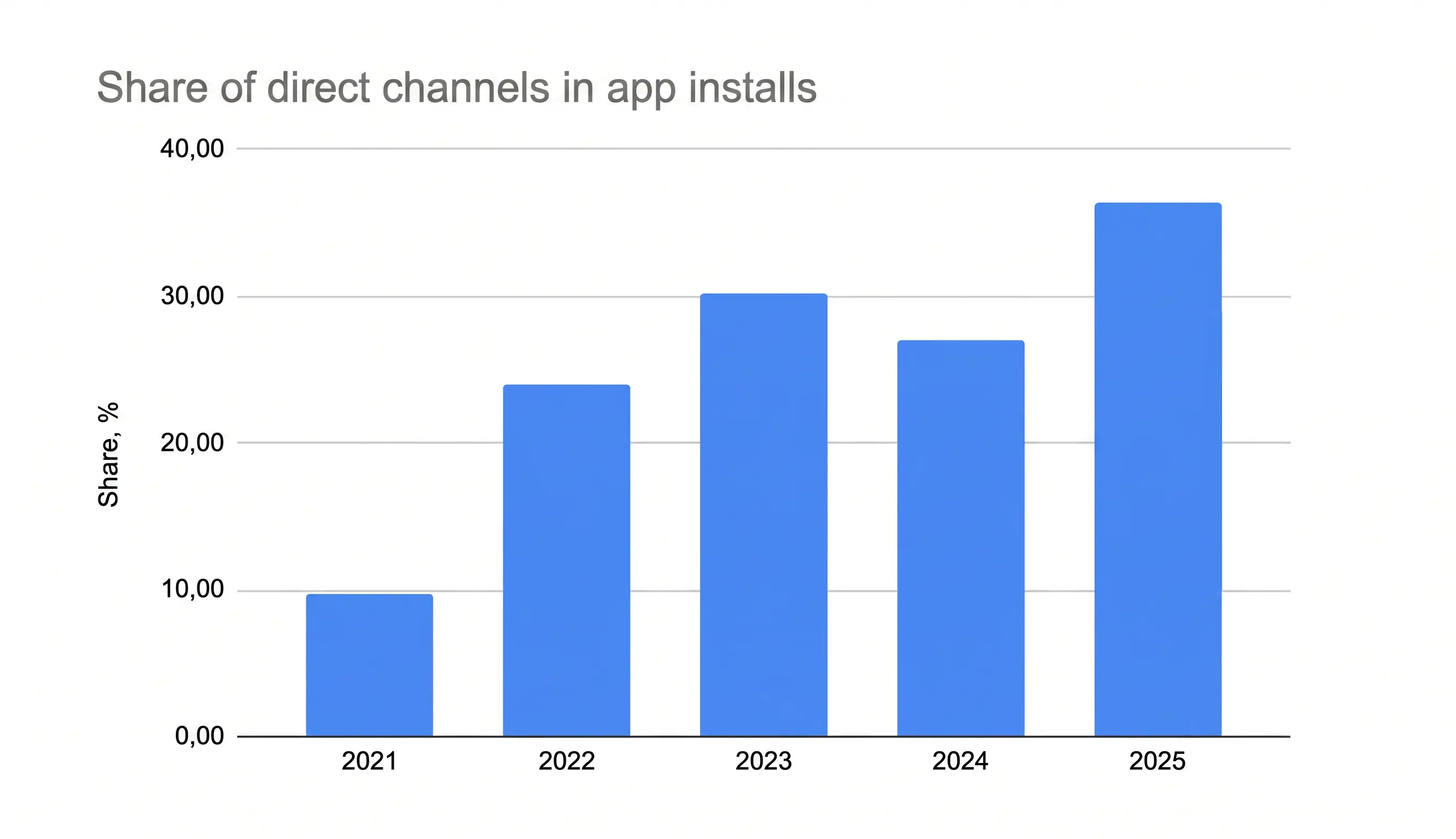
How do you drive app installs?
We started by testing promo sends via email and Viber. We tested direct "download the Prom mobile app" calls to action as well as contest mechanics tied to installs.

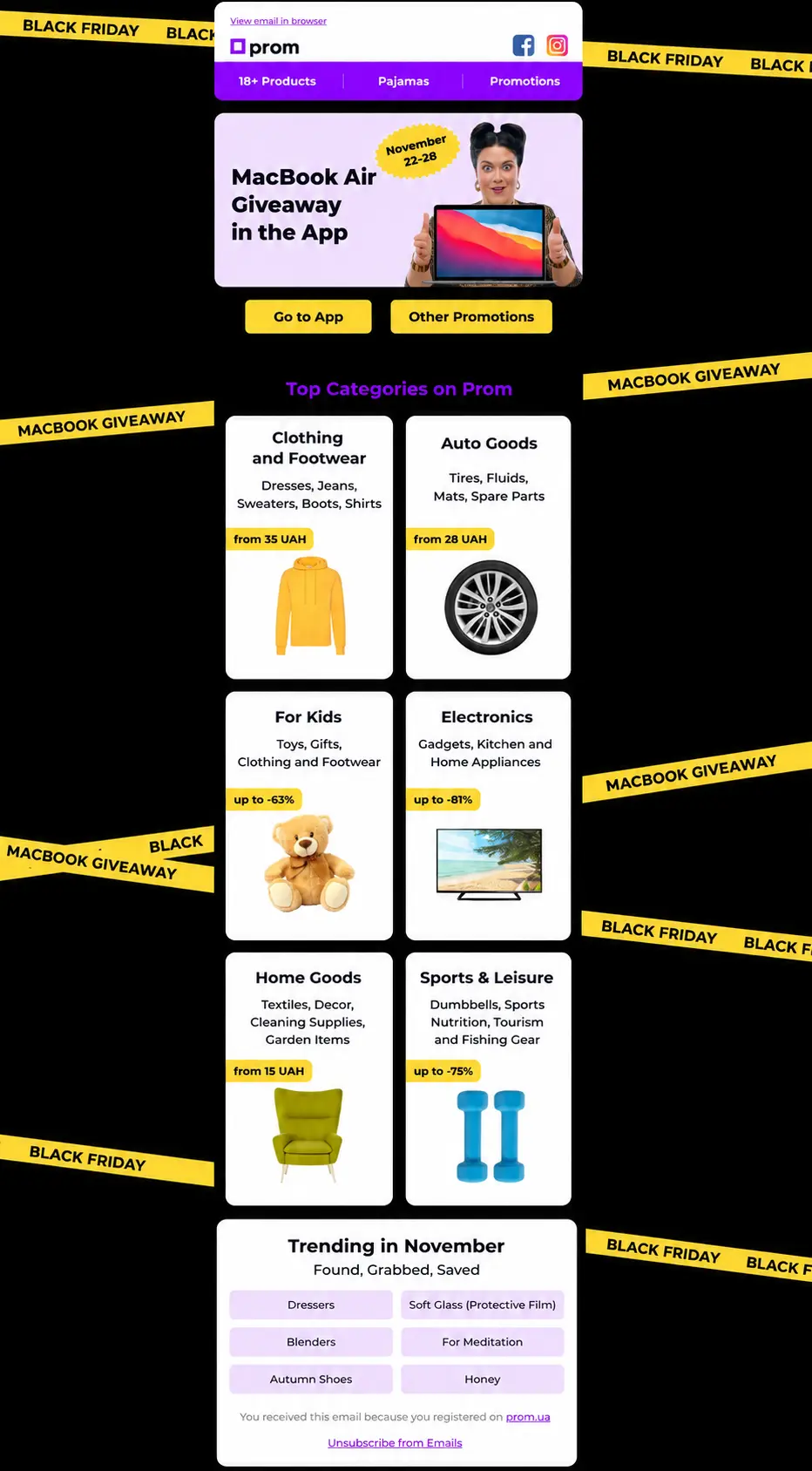
But promo campaigns delivered a low install volume — only in the hundreds. Our goal was to generate tens of thousands of installs per month. To do that, communication had to be recurring, reach a high volume of users, and go out at the exact moment when installing the app had genuine value for the buyer.
The core hypothesis was straightforward: installs are driven not by promo campaigns but by triggers with high immediate value for the user.
| Order status | Note | Value of the app for the buyer |
| Placed. Cash on delivery | Receive an instant notification when the seller moves the order to "Accepted" status — instead of manually checking the order status in their account | |
| Paid. Online payment | If the order is placed but not paid, we cannot communicate about the app install — we need to help the buyer complete payment first | |
| Accepted by seller | A critical order status for the buyer when placing an order on a marketplace | Receive an instant notification when the seller ships the order |
| Shipped/delivered by seller | Receive a push with the tracking number | |
| Buyer sent a question to the seller in chat | Receive an instant notification when the seller replies |
Understanding the value the app delivers to users helped us craft CTAs for Viber messages and SMS. Here are the results we achieved:
- 150,000+ installs per month;
- conversion from delivered message to install — 2–6%;
- CPA per install 2× lower than paid channels.
After the first successful iteration, we moved to scaling:
- launching new campaigns;
- increasing budget up to the breakeven threshold;
- systematic A/B testing;
- shutting down underperforming campaigns.
All install campaigns were launched through Yespo CDP, which provided reliable message delivery and straightforward analytics.
For scaling, we established a ceiling CPA per install. The logic mirrors retention marketing:
The cost of retaining a customer must be lower than the cost of acquiring a new one.
Accordingly, the CPA per install from direct marketing channels must be lower than CPA from paid channels. That became our scaling threshold.
In parallel, we worked on two goals: finding new reasons to communicate (moments when buyers most need fast updates from the app) and improving conversion on existing campaigns.
We developed a set of hypotheses and tested different CTAs through A/B tests.
In the "Order accepted by seller" message, we began notifying buyers about the status change without specifying that the status was "accepted." This increased conversion from delivered message to install by 84%. We created curiosity — we informed buyers that the status had changed, but didn't reveal what the new status was. That gave them an additional reason to download the app. With the same number of messages sent, we started generating nearly 1.8× more installs at a lower cost.
| When we send | Conversion, % | Growth, % |
| Order status change: Variant A accepted | 3.15 | — |
| Order status change: Variant B accepted | 5.79 | 184 |
For each install campaign (a transactional order-processing message with a link to install the app), we generated multiple CTA hypotheses. Some tests had no effect on conversion, some hurt results — but certain hypotheses delivered meaningful gains, from 10% to 84%. That's why it's important to generate a sufficient volume of hypotheses, prioritize them, and test them.
Important
For campaigns that generated fewer installs, we ran A/B tests with a 50/50 split (50% received the old message, 50% received the new one). For campaigns generating higher install volumes, we tested more cautiously. Initially, 20% of users received the new message version. If we saw conversion increase, we expanded to a 50/50 split. Once the trend held positive, we moved 100% of the audience to the winning version.
Why test new messages through an A/B test?
Because conversion can be affected by many factors: seasonality, changes in other campaigns, paid ad activity, and product changes. Comparing the same campaign with a different CTA at different points in time doesn't reflect the real picture. Both CTA variants need to be tested under identical conditions.
Three months after launch, install volume and conversion started to decline. By six months, campaigns had plateaued — conversion dropped, CPA per install rose, and metrics stabilized at a steady level.
This is a typical pattern for new trigger-based communications. In the first months, most buyers from the core and loyal segments install the app, and from then on, the triggers primarily target new or less active users.
At this stage, we reviewed all installed DM campaigns by channel and switched off campaigns that were no longer economically viable — even if they had generated significant install volume in earlier months.
The most expensive installs came from SMS campaigns. We turned them off due to negative ROI. But it's important to analyze not just the average cost per install by channel, but each campaign individually — you shouldn't turn off all of them, only the ones that don't pay out.
Set up omnichannel automated workflows specifically for your business — with support from the Yespo team.
How do you get more installs?
Mobile app users made repeat purchases more frequently than visitors on the mobile web or desktop. That made growing installs a key priority for Prom.ua.
At the same time, we could see that not all buyers in the core and loyal segments had migrated to the app. In 2023, we conducted research to answer two questions:
- Why do core and loyal buyers who have the Prom.ua app installed still make purchases through mobile web?
- Why aren't buyers installing the app?
For the study, we identified a segment with no Prom.ua app installed.
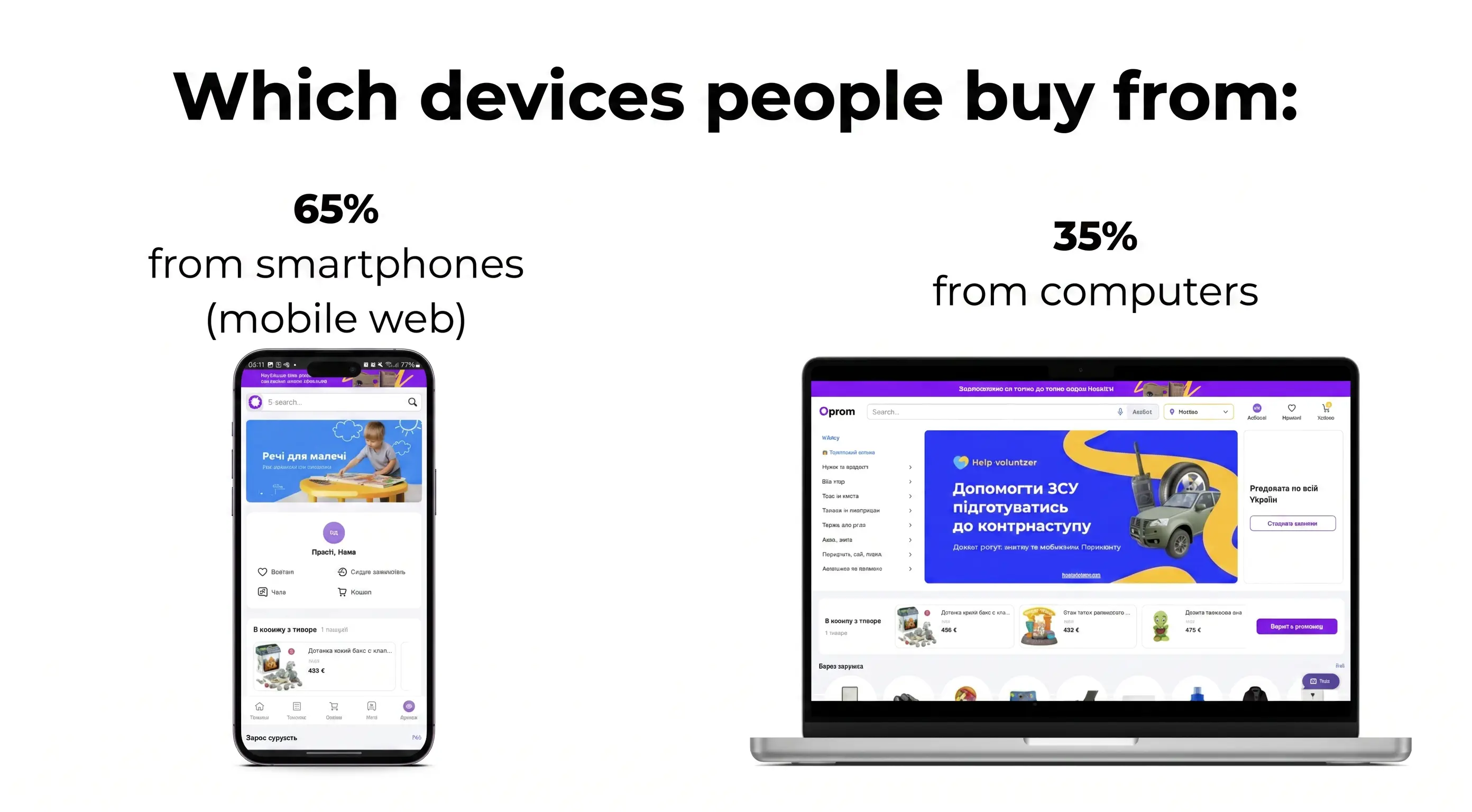
Why they don't use the app:
67% of respondents don't have enough storage on their phone, so they don't install shopping apps — but they actively use messengers.
Based on the research findings, we defined the following goals:
- Optimize budget: stop sending install messages to users who don't install mobile apps at all.
- Motivate mobile web users to install the app.
- Find an alternative communication channel for buyers who don't install mobile apps, to reduce spend on transactional communications via Viber and SMS.
Budget optimization for SMS and Viber
SMS and Viber are the most expensive channels in direct marketing, and their costs keep rising. That's why regularly looking for ways to optimize campaigns and reduce spend on these channels matters.
How Prom.ua optimizes budget:
- Reduced the frequency of install messages for core and loyal segments. These buyers have placed 5+ orders over the year. They've each received 1–5 install communications per order and haven't responded — so we reduced their message frequency. This allowed us to optimize the cost of installs from DM channels without reducing install volume.
- Tested a new communication channel: a chatbot with transactional messages in a messenger. If a user doesn't install mobile apps but does use messengers, we communicate in messengers. So we decided to test a Telegram chatbot. That experiment was unsuccessful, and I'll cover it in a separate case. There are businesses where Telegram and Viber bots work and generate ROI — but this wasn't our situation. After several rounds of improvements and optimization, the channel didn't pay out and didn't meet the goals we needed it to.
Omnichannel approach
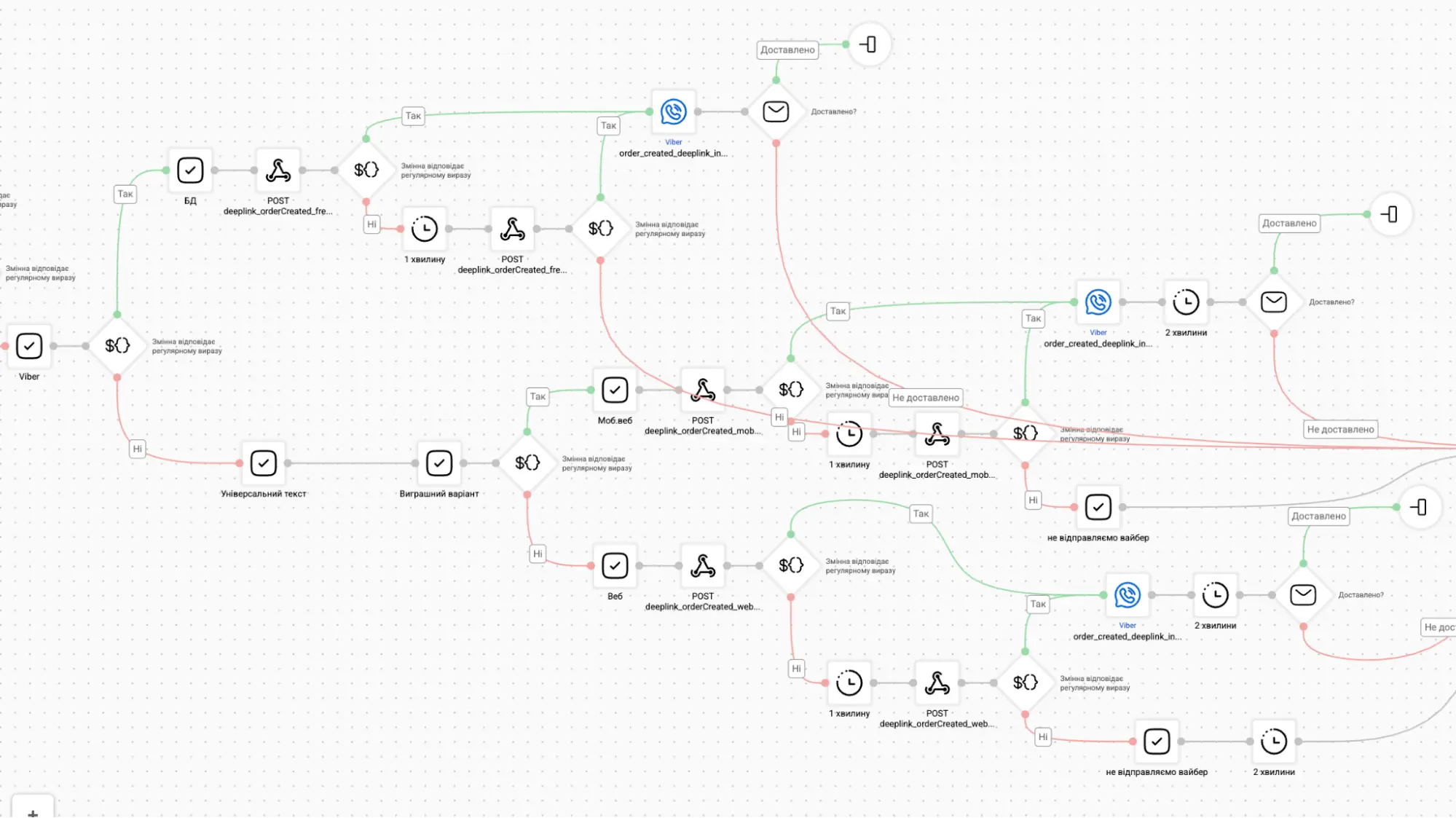
In our transactional campaigns, we use cascading omnichannel logic: push notifications first, then Viber for users without the app, and finally SMS for users who didn't receive Viber. This cascading structure lets us maximize audience reach and ensure delivery to every user through their most accessible channel. Using workflows configured in Yespo CDP, the system automatically selects the channel based on user status and the delivery outcome of the previous message.
Not sure where to start? Book a free consultation — we'll show you how this works in your specific niche.
2025 experiments
Improving direct marketing results requires a constant flow of new hypotheses and A/B tests. This has to be a regular practice. To close out, here are a few examples of A/B tests and hypotheses we ran for install campaigns in summer 2025.
2025 hypotheses that worked
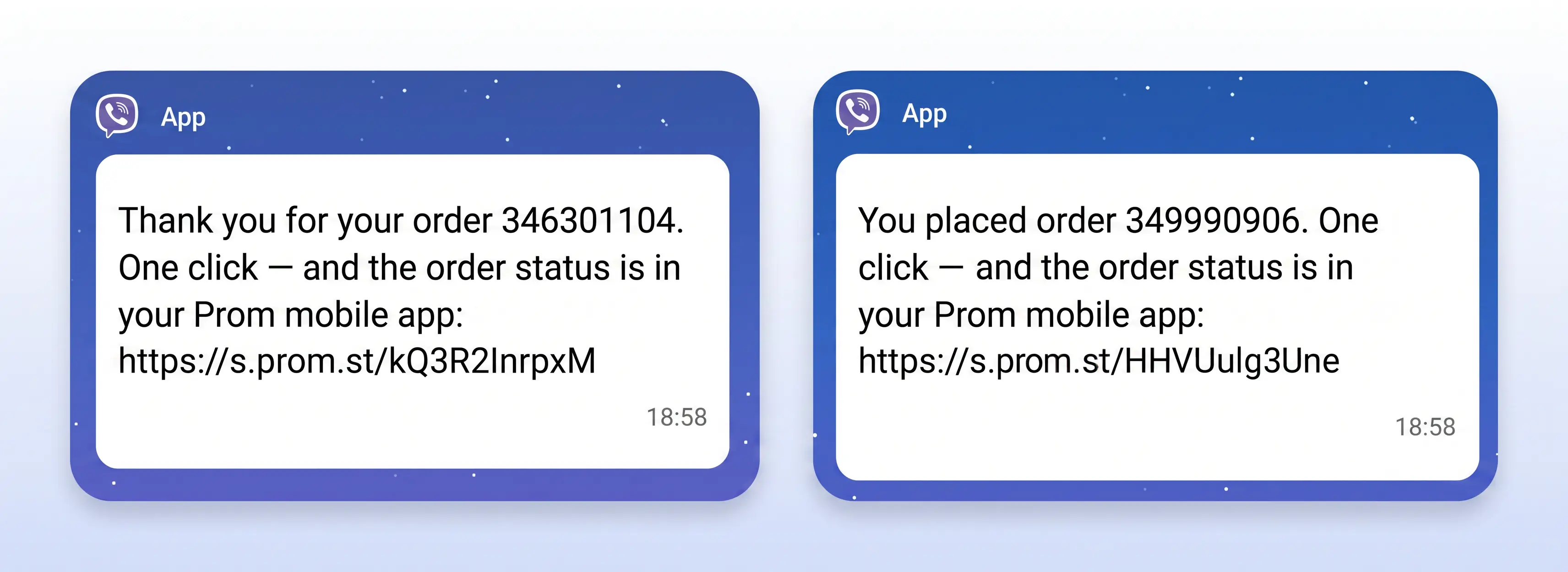
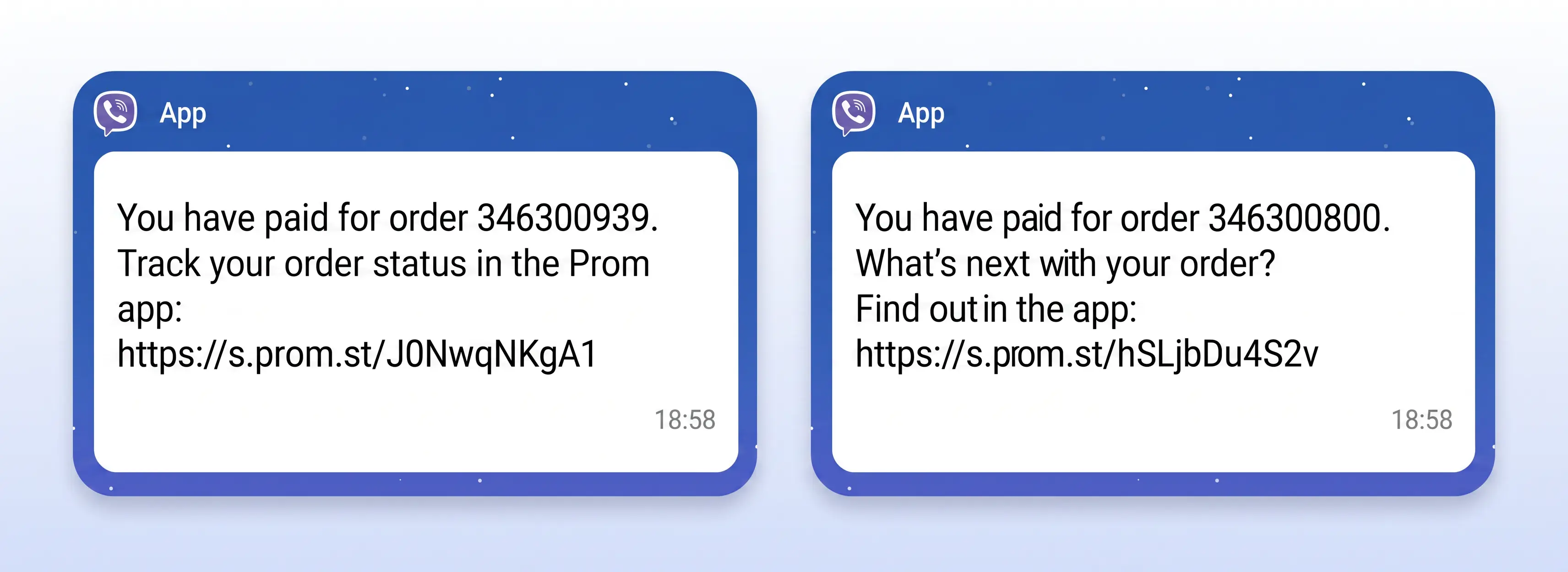
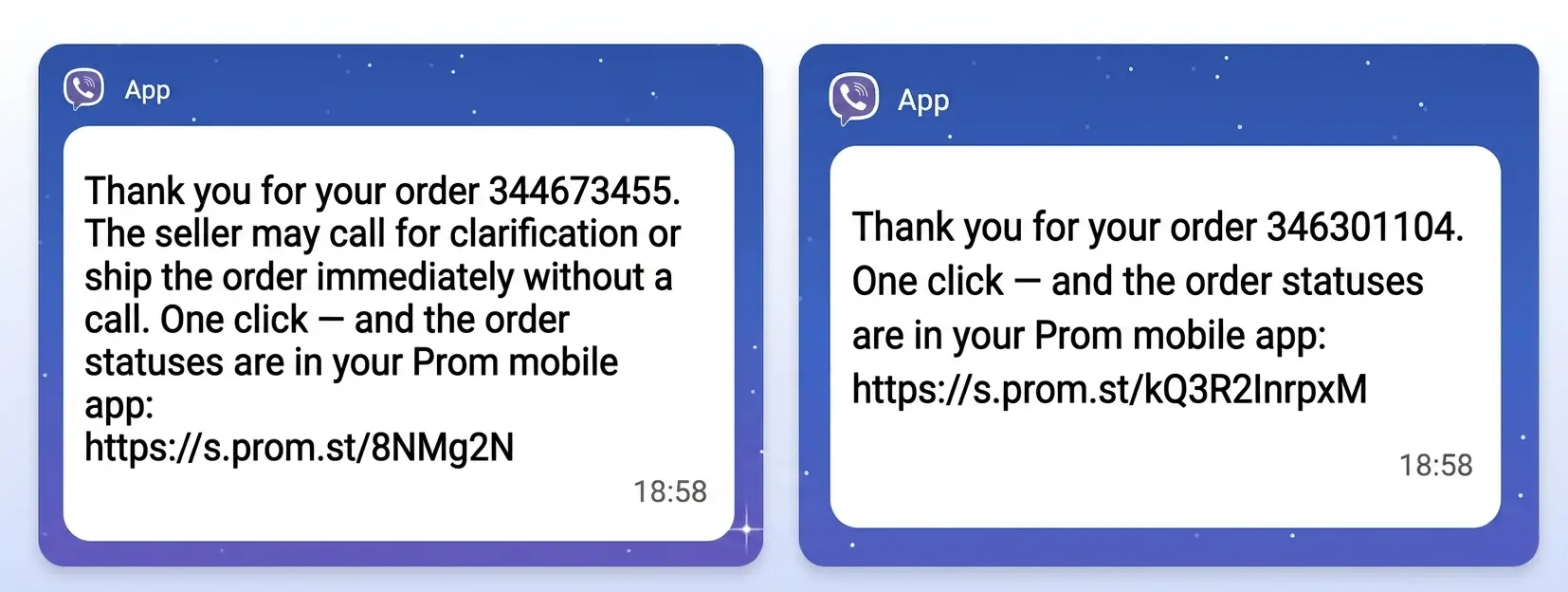
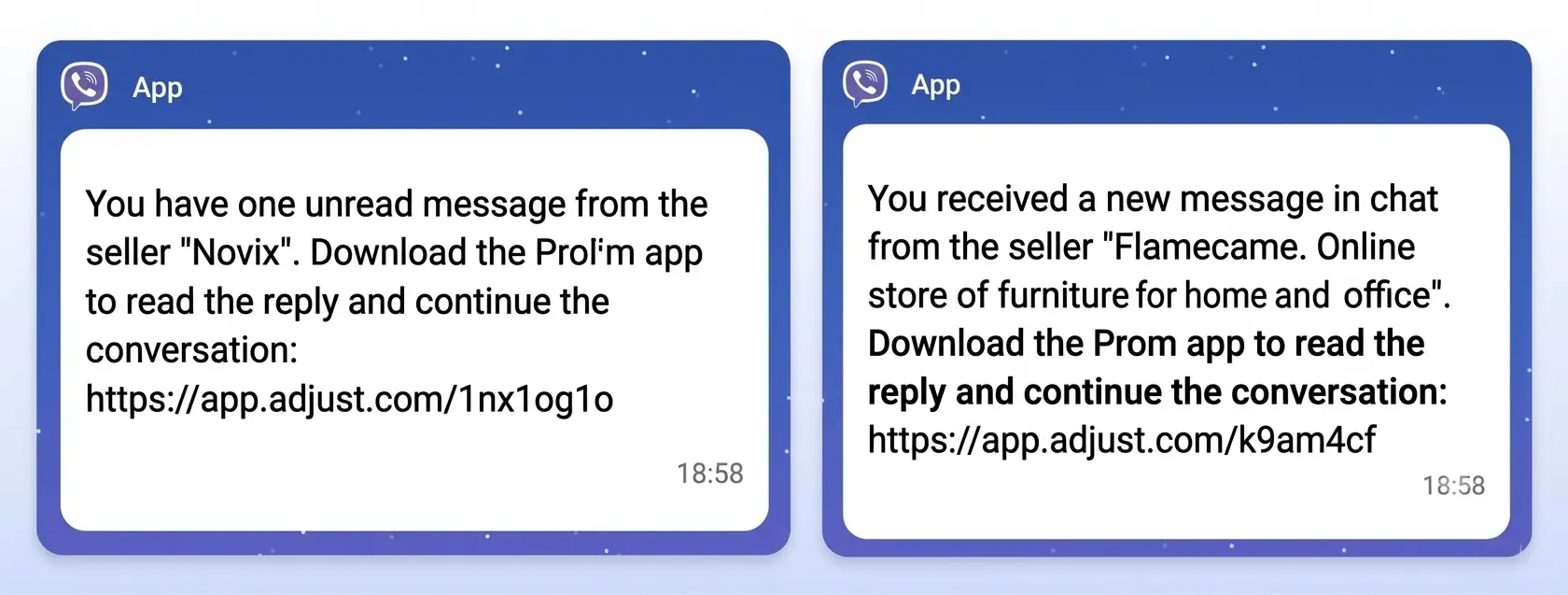
Hypotheses that didn't work
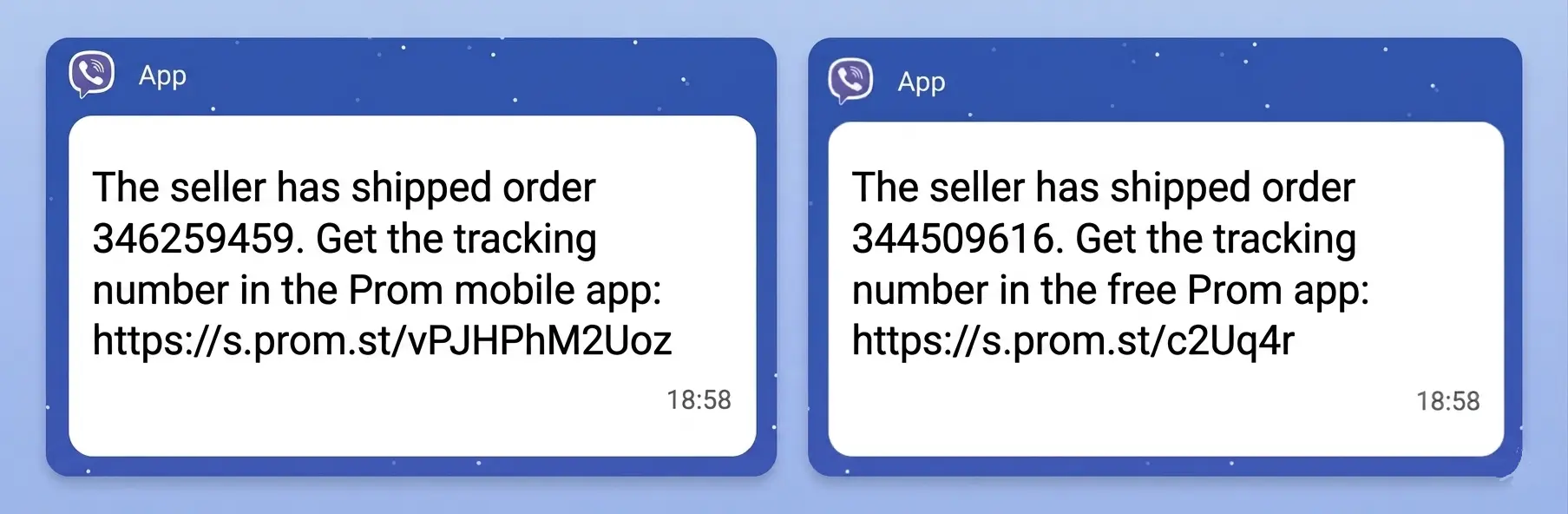
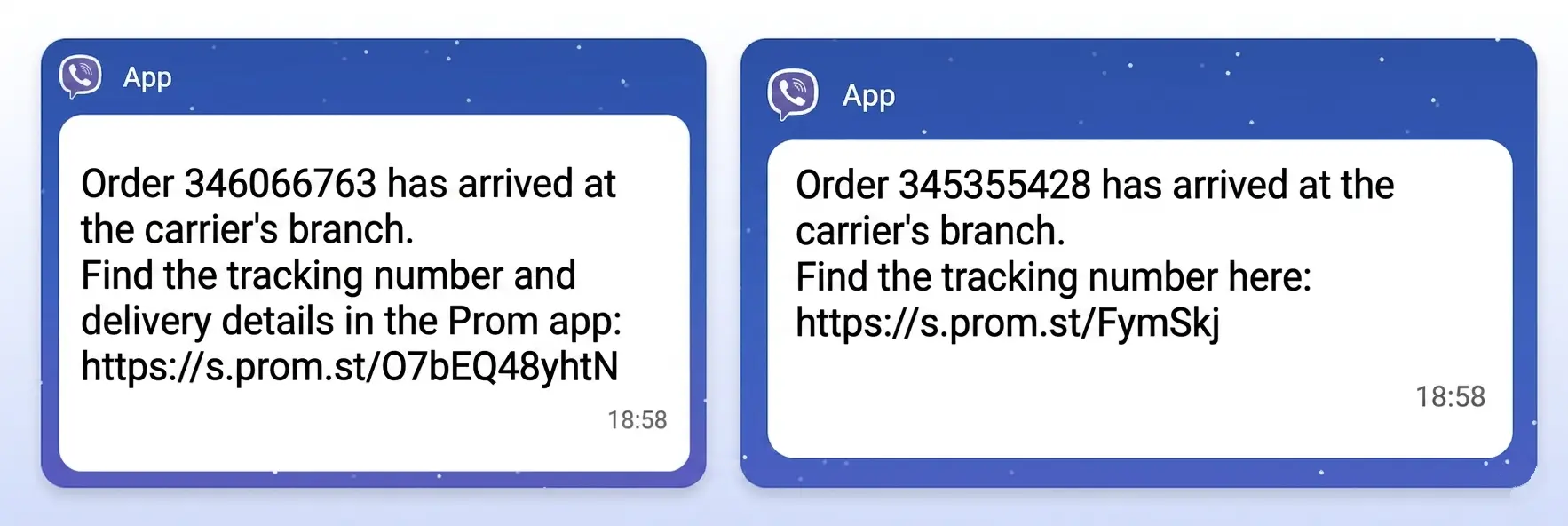
How SMS in Latin script delivered +240% installs at lower conversion
In the markets where Prom operates, SMS communication has an important technical nuance: messages sent in Cyrillic (e.g., Ukrainian) are priced differently from those in Latin script. Due to character encoding limits, the same message in Cyrillic can require multiple SMS segments — and therefore cost up to twice as much as a Latin-script version. This creates a non-obvious optimization opportunity, even in such a basic channel as SMS. Next, we explore how a simple switch in the alphabet significantly reduced the cost per install and improved campaign performance.
In recent years, we hadn't used SMS to drive installs, as campaigns had become too expensive compared to Viber and weren't generating ROI. But SMS in Latin script costs half as much as SMS in Ukrainian. On one hand — who sends SMS in Latin script in 2025? On the other — the price is half.
For reference: – SMS in Ukrainian: UAH 0.91 for 70 characters (×2) – SMS in Latin script: UAH 0.91 for 160 characters
We can't fit within 70 characters, so we end up paying double for SMS — and correspondingly get a higher cost per install. Using Latin script meant paying for one message instead of two, which cut the cost per install by nearly half.
So we decided to retest install campaigns via SMS and measure the cost per install and the conversion difference between Cyrillic and Latin script messages.
Result: Latin-script SMS have a 45% lower cost per install. And while conversion dipped by 8%, install volume grew by 240%. That's why in an A/B test you always need to look at the full funnel — not just one metric.
Takeaways
Direct marketing can address a range of business goals: generating orders, installs, and reviews. But its effectiveness can't be assessed without clearly defined performance metrics.
Trigger-based communications aren't a "set it and forget it" exercise — they're a continuous process of optimization, testing, and scaling.
That's why direct marketing at Prom.ua has operated as a performance function for five years: year over year, we grow the channel's share of installs, optimize CPA, and increase its incremental impact on the business.
To deliver the cases described above, we used Yespo CDP as our unified communications management platform: we configured a cascading delivery logic (push → Viber → SMS), segmented audiences based on behavioral data, tested message variants, and analyzed results.
In the next article, I'll share another direct marketing case from Prom.ua — along with approaches that help drive systematic impact on business metrics.
If you want to understand how to launch or optimize similar campaigns for your business, the Yespo team is ready to help. Book a free consultation to identify the growth opportunities in your direct marketing.