Content
06 November 2026
37
14 min
0.00

How ZARAGOZA Revived Email Marketing and Grew Its List by 20% in One Month

Mariia Natarova

Viktoriia Holiachenko
Content
| Goal |
|
| Solution |
|
| Resources |
|
| Results |
|
For an online store, a long pause in email marketing means that simply resuming campaigns isn't enough. During that time, the domain loses its current sending history, and a contact list that hasn't received communications for a long time requires an especially careful return to regular emails.
In the ZARAGOZA case, we show how the team brought email back to systematic work step by step.
About the Project
ZARAGOZA is an online store of underwear and loungewear for the whole family, operating since 2010. The range includes products for women, men, and children, so the store serves a broad audience with diverse needs.
The brand builds its communication around a comfortable, clear choice. ZARAGOZA wants customers to return because of predictable quality, a clear size chart, and a positive customer experience.
Goal
ZARAGOZA already had a website integration with Yespo CDP and an accumulated contact list, but after a long pause, email marketing wasn't being used systematically. The team needed to assess the channel's technical status and list freshness, safely return to regular sends, resume work with existing contacts, and launch a steady inflow of new ones.
Solution
The work began with technical preparation of the channel and the list. Then the team focused on restoring domain reputation and audience engagement, and in parallel launched systematic collection of new contacts and a post-subscription communication workflow.
Preparing the Email Channel for the Relaunch
Before returning to regular campaigns, the team checked whether the technical infrastructure, contact list, and sender domain were ready.
Checking the Integration and the List
ZARAGOZA set up the integration of its Horoshop-based online store with Yespo CDP about two years ago, so before restoring the email channel, the team checked whether up-to-date contact and order data was being passed to the system reliably.
Please note
Yespo CDP has ready-made integrations with popular ecommerce platforms, including Horoshop and WooCommerce. They let you pass contacts, orders, and other data to the system without custom development.
Separately, customer information was updated. Part of it was already coming in through the Horoshop integration, and data for the last year was imported into the CDP in CSV format.
During import, Yespo matches new records to the contacts already in the system by the selected identifier. If a matching contact already exists, its data is updated without creating a duplicate.
Setting Up Web Tracking
The next step was setting up web tracking in Horoshop. The basic integration let the team pass contact and order data to Yespo CDP, and web tracking added visitor behavior information to profiles.
Once it was connected, the system began receiving events for product and category views, items added to the cart, and orders placed. They can be used for behavioral segmentation, content personalization, and launching automated workflows, for example, after a category view or an unfinished purchase.
I Want to Track User Behavior on My Site
Creating a Master Template
After the technical preparation, the team moved on to the first email communications. For promo and triggered emails, they created a responsive master template to maintain a consistent visual style and avoid building every campaign from scratch.
It sets the basic email structure, brand style, content layout principles, CTAs, and product blocks.
Checking Domain Authentication
Before starting the warm-up, the Yespo team checked the sender domain's technical settings. It turned out that ZARAGOZA had no DMARC record, so the specialists prepared a technical brief, and the client added the record following the instructions. After that, the remaining authentication parameters were verified.
Note
DMARC helps mailbox providers check whether an email was really sent on behalf of the stated domain, and sets rules for messages that fail authentication.
Correct domain settings reduce the risk of domain spoofing and help maintain stable deliverability. At the same time, authentication alone doesn't guarantee that an email won't land in spam: mailbox providers also take into account the sender's reputation and audience response.
Domain Warm-Up and Reputation Recovery
After the technical preparation, the team could return to sending, but gradually. Because of the long pause, they increased volumes step by step and monitored audience response and mailbox providers' signals.
Building the Warm-Up Plan and Monitoring Metrics
After more than two years of no email communication, the list had no recent history of opens, clicks, or other email interactions to rely on when building the first segments. So one of the main reference points was buyers from the last six months: an audience that already knew the brand and was more likely to respond to the return of communication.
The agency's marketer prepared a warm-up plan with a gradual volume increase and constant metric monitoring.
Note
Domain warm-up is a gradual increase in the number of emails sent from a new or inactive domain. This approach lets mailbox providers evaluate the sender's behavior gradually and helps reduce deliverability risks. Learn more about domain warm-up in the Yespo knowledge base.
During warm-up, the team followed the volume ramp recommended by Yespo: up to 1,000 emails on the first day, up to 2,000 on the second, up to 4,000 on the third, and up to 7,000 on the fourth.
At the same time, the team monitored audience response and mailbox providers' signals to decide whether the next send volume could be increased. They used two main data sources:
- Google Postmaster Tools: to track domain and IP reputation, spam complaint rates, and technical errors, so risk signals for deliverability could be spotted in time
- Yespo analytics: to monitor Open Rate, unsubscribes, Hard Bounce, and Soft Bounce, in order to assess audience response and segment quality at each stage of the warm-up
Adjusting the Warm-Up Plan
By the third day, it became clear that the warm-up pace needed to be reconsidered: spam complaints had appeared among Gmail users, Open Rate began to decline, and domain reputation worsened.
The team paused sending for two weeks, analyzed the signals, and adjusted the plan going forward.
After the pause, communication resumed at low volume, starting with contacts who had already interacted with previous emails. These subscribers were more likely to respond positively to new sends.
The audience was then expanded gradually. When forming segments, the marketer kept to a proportion of 80% active contacts and 20% inactive or new ones. This approach helped maintain stable engagement metrics while gradually bringing in a wider part of the list.
As a result, domain reputation was restored to a high level.
Creating Content to Support Engagement
After sending resumed, the team gradually expanded communication beyond promos. They added educational and brand content to the campaigns so that ZARAGOZA stays useful and interesting to the audience not only when there's another promotion.
In educational emails, the team shares tips on choosing underwear, caring for products, features of materials, and other recommendations. Brand emails introduce the audience to ZARAGOZA's history, approach to quality, and values.
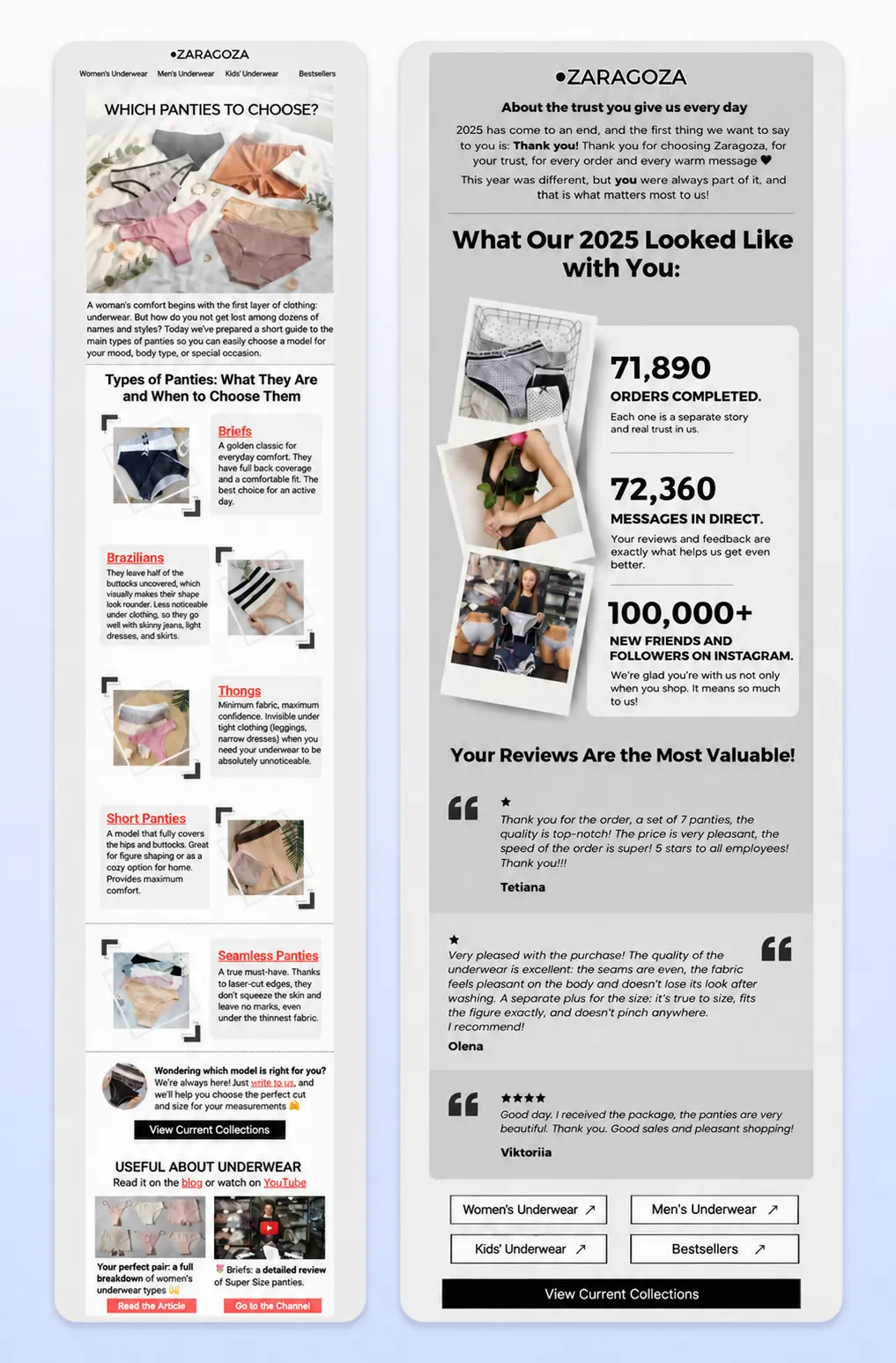
Both emails generated noticeable audience engagement even without a focus on promotional offers.
Collecting Contacts and Building the Subscription Workflow
In parallel with the domain warm-up, the team systematically collected new contacts from website traffic and built a post-subscription communication workflow.
Setting Up Subscription Forms
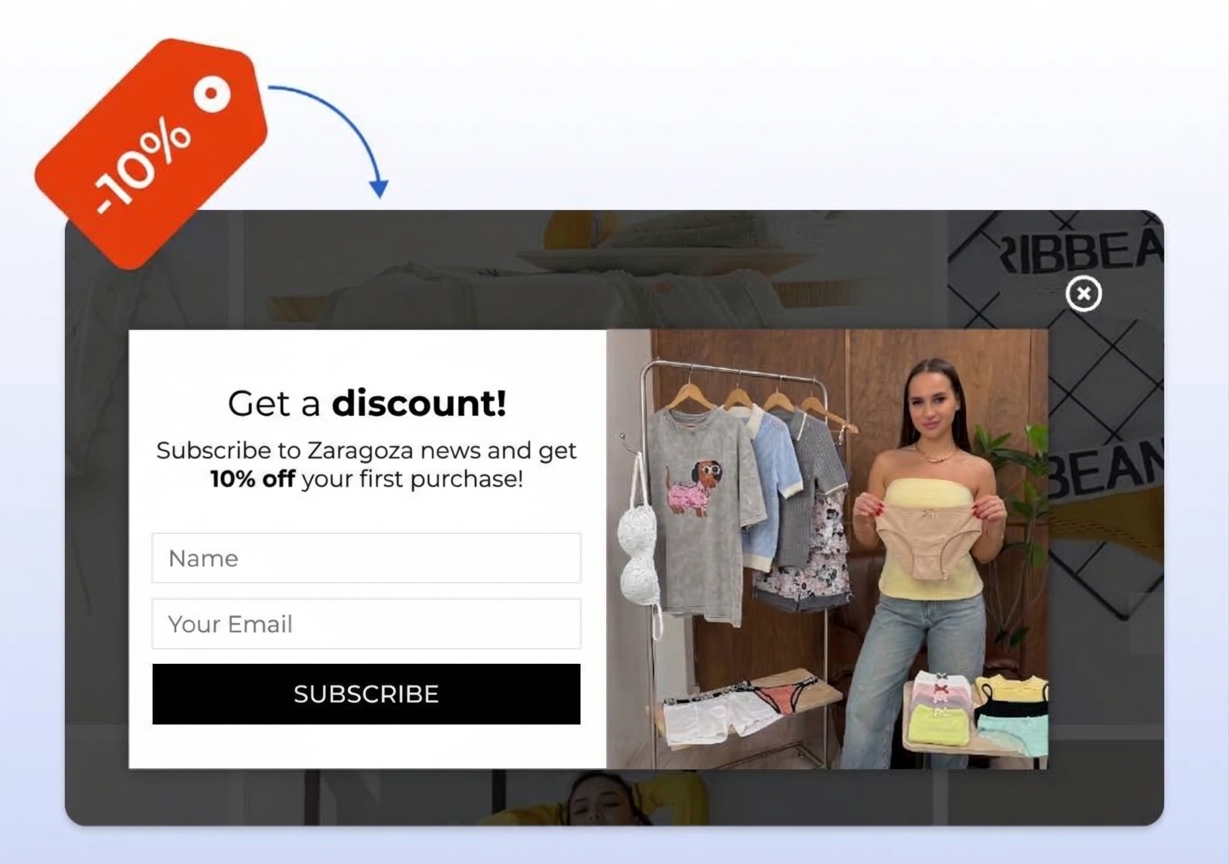
To collect new contacts from site traffic, the team set up several subscription formats:
- A static form in the footer
- A pop-up form
- A separate button that opens the pop-up
The static form stayed available in the footer at all times, while the pop-up caught users' attention as they interacted with the site. The separate button was added so as not to overload the user experience with pop-ups. If a visitor closed the pop-up or wasn't ready to subscribe yet, the form didn't disappear for them for good: they could come back to it later.
An additional incentive to subscribe was a personal promo code for 10% off the first order.
Confirming Contacts via Double Opt-In
For all subscription forms, the team set up Double Opt-In so that only confirmed contacts would enter the list. After filling out the form, the user received an email to confirm their email address.
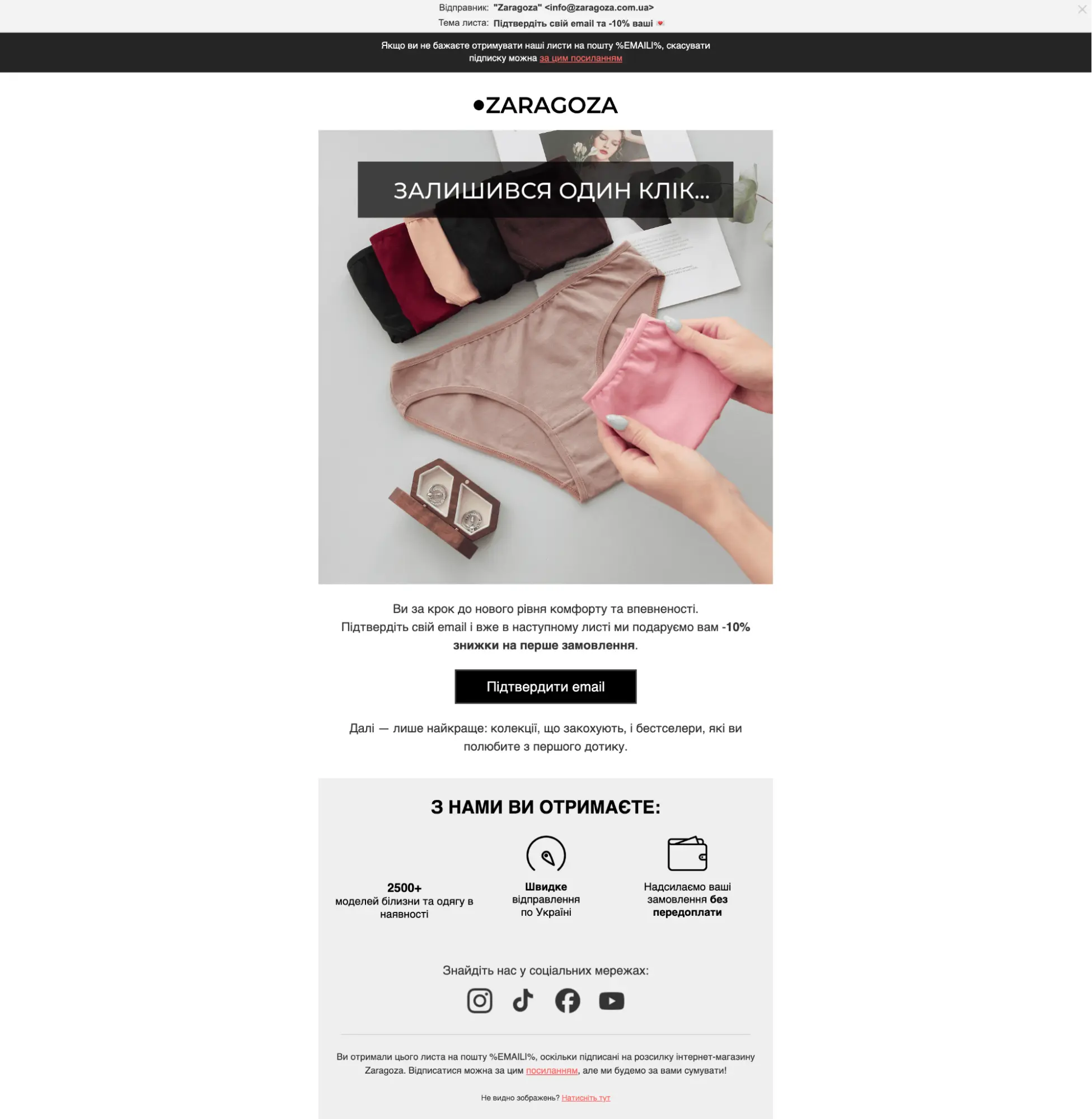
Double Opt-In helps filter out mistyped and nonexistent addresses and reduces the risk of unwanted sends. For ZARAGOZA, this was especially important while restoring domain reputation.
The workflow was built like this:
- Right after filling out the form, the user received an email asking them to confirm their address
- After confirmation, the address was added to the list as verified
- If the user didn't confirm their email within one day, they automatically received a reminder
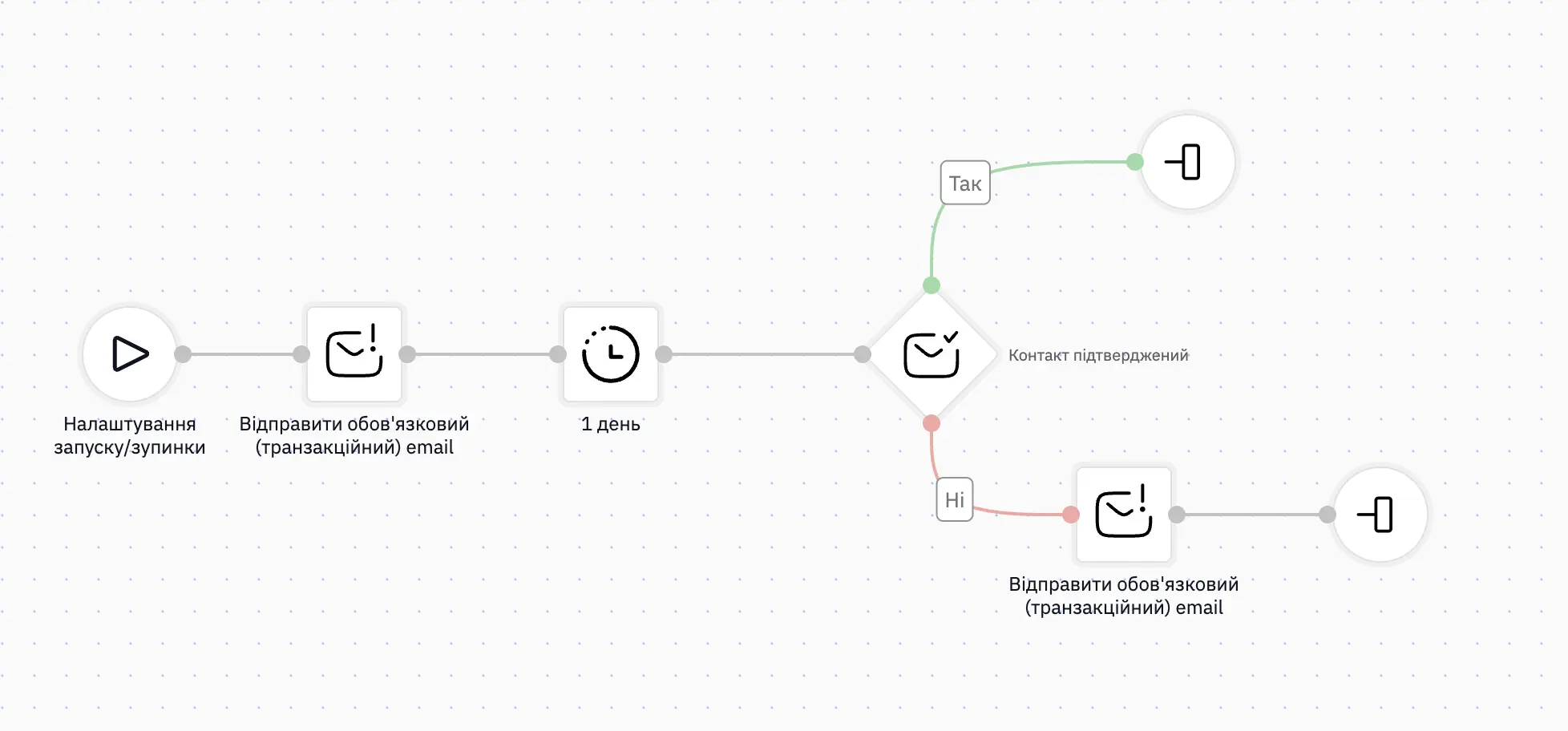
The reminder brought back users who hadn't completed their subscription after the first email and increased confirmed contacts without extra traffic acquisition costs.
I Want to Create Complex Workflows with the AI Assistant
Launching and Testing Welcome Communication
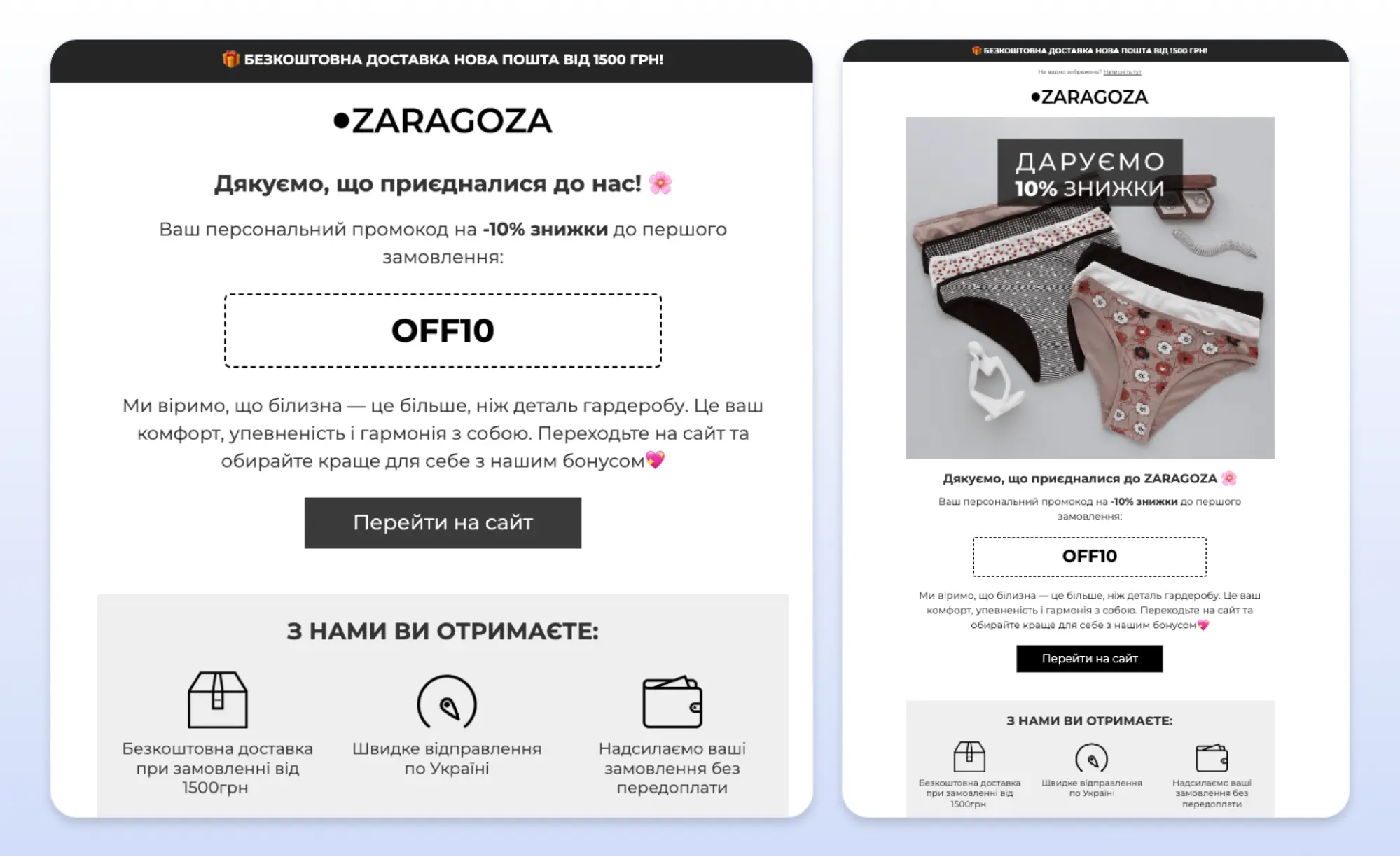
After subscription was confirmed, the user automatically received a welcome email with a personal promo code for 10% off the first order.
One of the first hypotheses for optimizing the welcome communication was the email's visual design: the team tested whether a banner with products and discount information would affect CTR and the number of purchases.
New subscribers were randomly split into two groups. One received an email with text and a promo code, the other a version with an additional banner.
After the welcome communication, subscribers joined ZARAGOZA's regular campaigns: promo, brand, and educational.
Results
The email marketing relaunch produced several measurable results as early as the first stages. In the first month alone, the email list grew by 20% thanks to subscription forms, and the share of active contacts reached 24%.
Over the first three months, the main pop-up form brought in 4,712 new contacts:
- 4,360 from mobile devices
- 352 from desktop
The form's overall conversion rate was 3.7%: 3.6% on mobile devices and 8.1% on desktop.
Over the same period, the separate pop-up button received 5,304 clicks, and its CTR was 1.2%. This showed that some users are ready to come back to subscribe on their own, even if they didn't interact with the main pop-up right away.
After the warm-up pace was adjusted, domain reputation returned to a high level.
The educational and brand emails also earned opens and clicks without a focus on promo offers:
- Brand email: 36.1% Open Rate and 2.9% CTR
- Educational email: 31.8% Open Rate and 3.35% CTR
In the welcome communication, the team tested two email versions: with and without a banner. The version with the banner showed a higher CTR and a higher number of purchases, but the difference wasn't statistically significant. So the test didn't determine a winner, but it gave a hypothesis for further optimization.
Plans for the Future
The next stage for ZARAGOZA is to expand email marketing automation. The team plans to switch to the Professional plan and increase the number of triggered communications based on user behavior.
There's already enough behavioral data to work more precisely with segmentation and personalization. Next, the team plans to test new hypotheses and gradually expand automated workflows, now relying on how the audience behaves and interacts with communications.
Summary
The ZARAGOZA case showed that returning to email after a long pause takes attention to detail: the state of the list, technical settings, domain reputation, and audience response.
This is especially visible at the warm-up stage. The recommended ramp gives a starting point, but the next steps are determined by actual metrics. In this case, signals spotted in time helped adjust the approach and return domain reputation to a high level.
Now ZARAGOZA has what was missing at the start: a confirmed list, fresh behavioral data, and a working subscription workflow. The next step is to use this foundation for more precise segmentation and more complex automated communications. And if you also want to set up systematic work with your list without the risks, fill out the form below, and our experts will choose a business growth strategy that works specifically for you.