03 November 2025
1749
10 min
0.00
Food Delivery Service Case Study: How to Boost Sales with Omnichannel Abandoned Cart Trigger

Vladyslava Prykhodko

Ivan Diulai
| Challenge | Increase sales and overall profit. |
| Solution |
|
| Results |
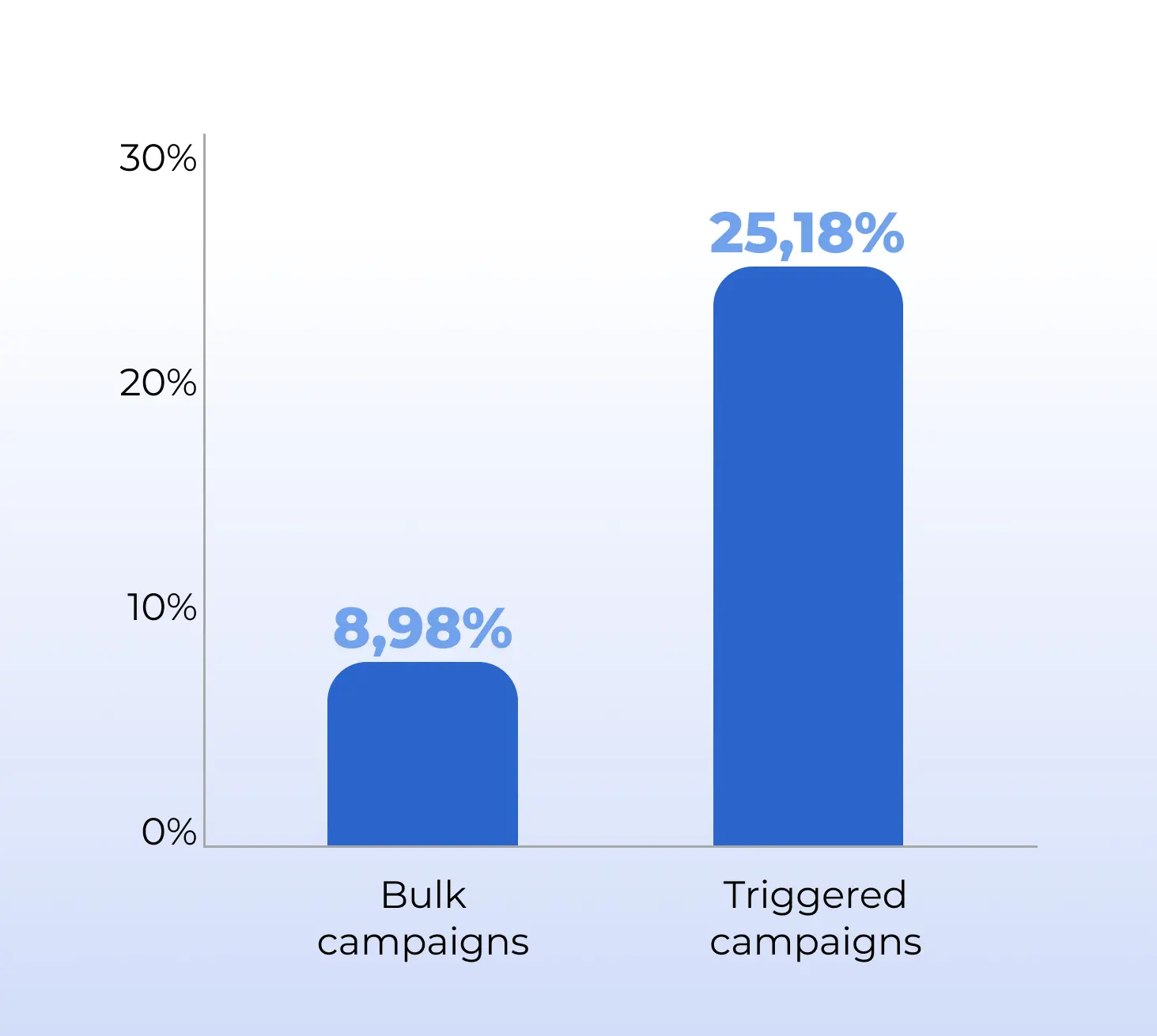
Compared to mass campaigns, triggers received:
|
| Audience | Consumers of online grocery ordering services from various large grocery chains |
| Resources |
|
About the Project:
The client is a Ukrainian food delivery service.
- Format: Online platform + mobile application.
- Services: Home grocery delivery and in-store pickup.
The company provides ordering and delivery solutions in partnership with major grocery retail chains across Ukraine.
The client has been working with eSputnik since 2019. They actively use email, mobile push notifications, App Inbox, and Viber for communication. They plan to launch web push notifications in the near future.
The service is especially popular among busy people, young parents, and during seasonal illnesses and quarantines, when visiting the supermarket in person can be risky.
Challenge
Despite having a large and active user base and operating nationwide, the client had not yet implemented any trigger-based communication flows.
The core idea was to focus on launching one powerful omnichannel trigger — Abandoned Cart — across three subprojects. Each had its own specifics, but the overall logic and structure remained consistent.
To address the client’s goal, we decided to target users who added products to their carts but didn’t complete their purchases. Our task was to turn those abandoned carts into successful conversions.
Solution
Work on the Abandoned Cart trigger focused on developing an omnichannel communication flow with messages delivered across multiple touchpoints: email, mobile push notifications, Viber, and app inbox. This approach enabled us to reach the broadest possible audience at the most convenient moment for each user and gently guide them back to completing their purchase.
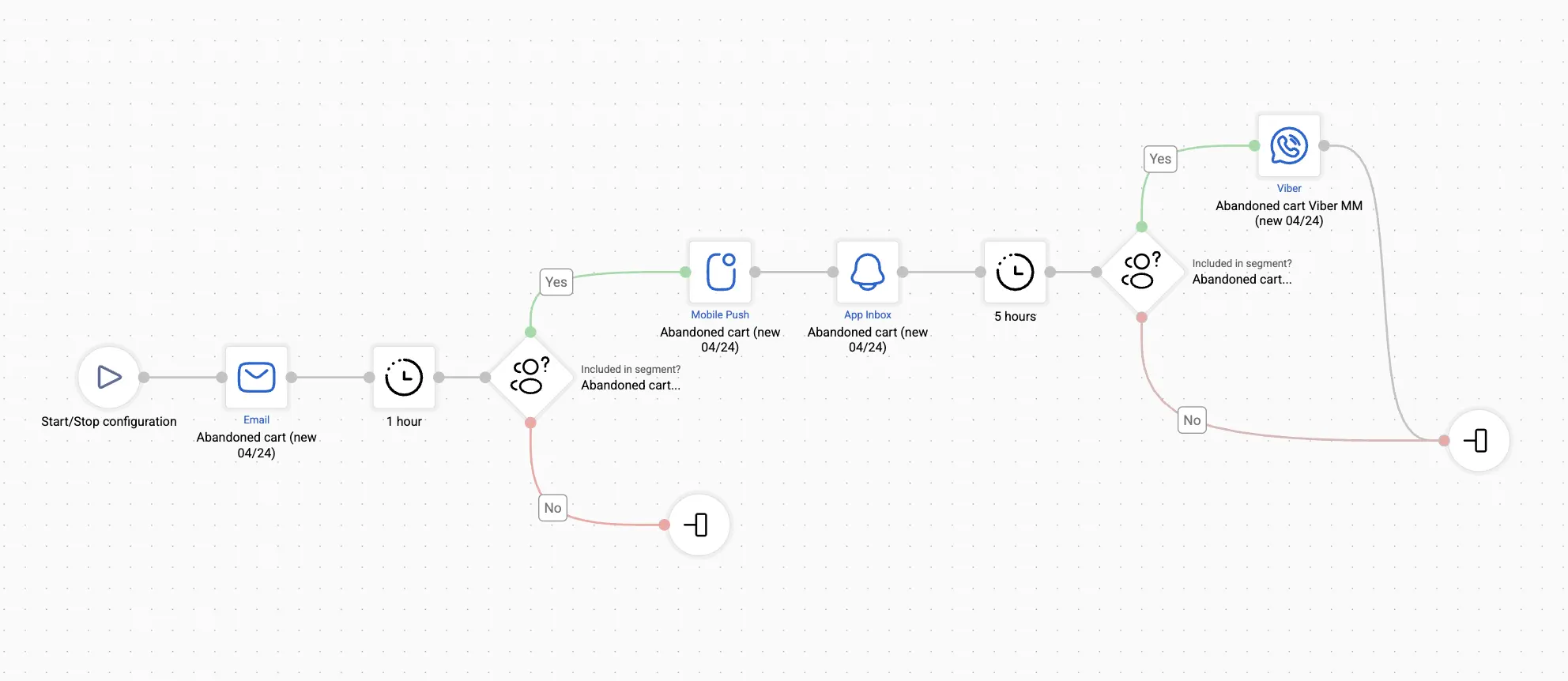
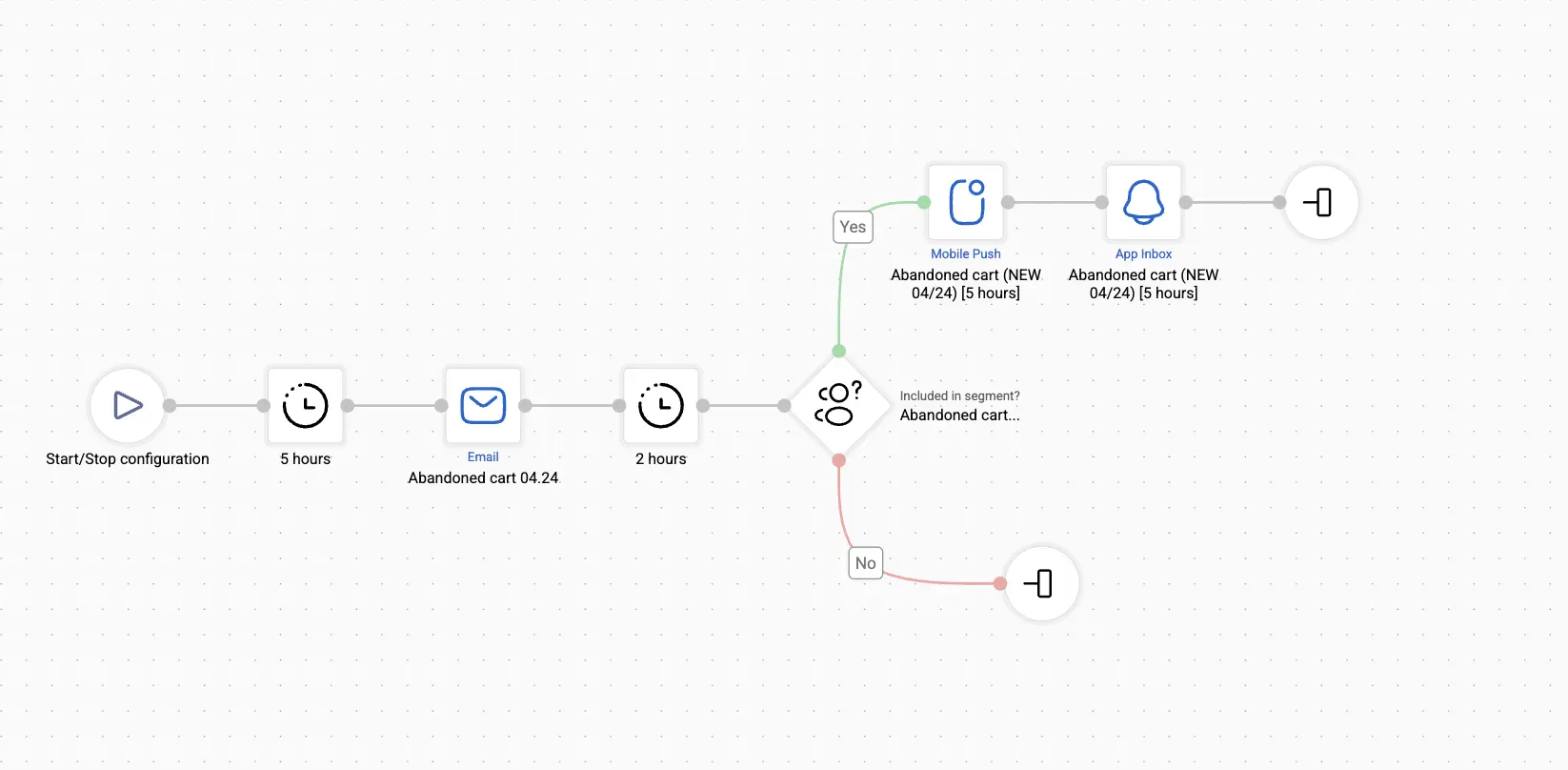
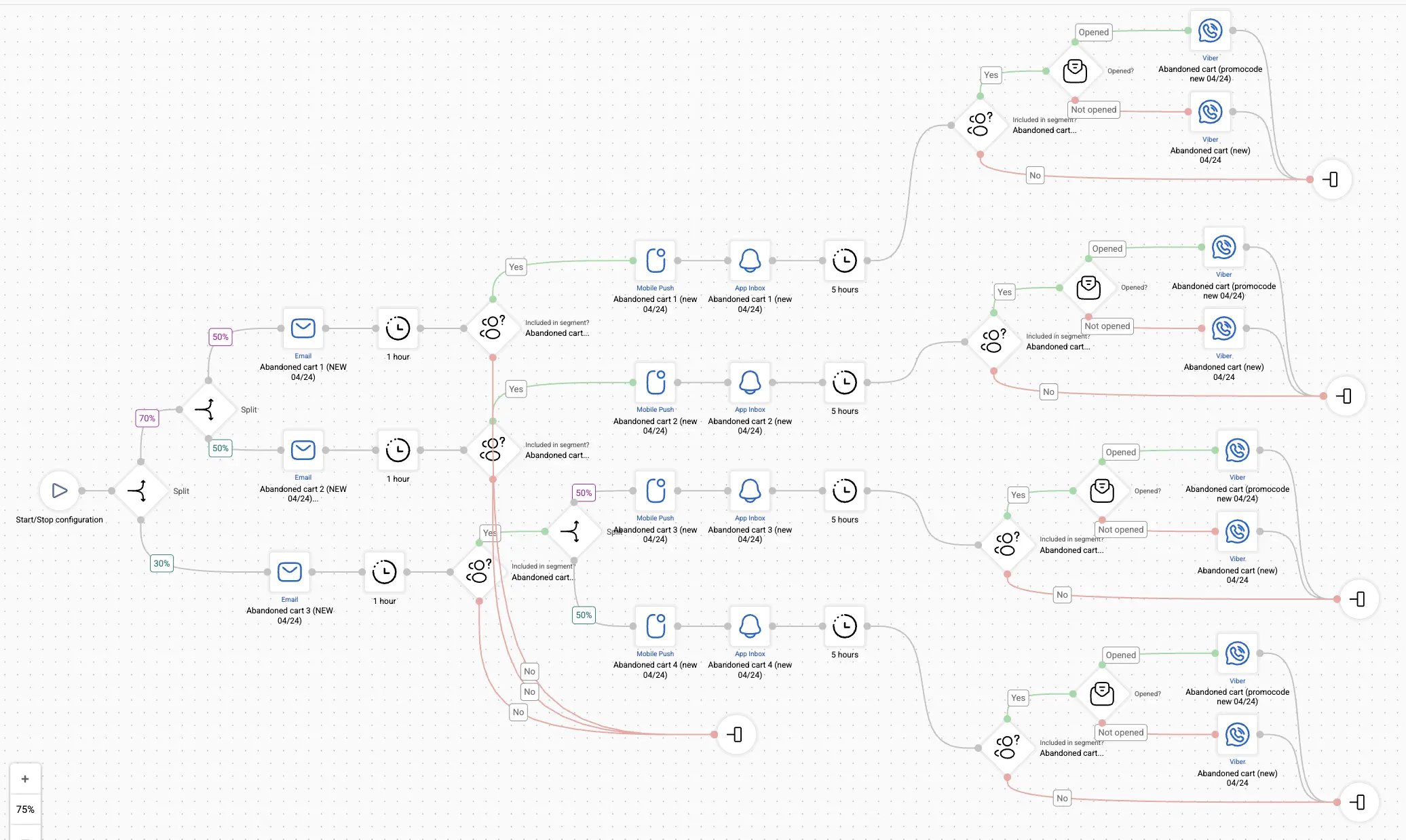
Learn how to create a workflow in our guide.
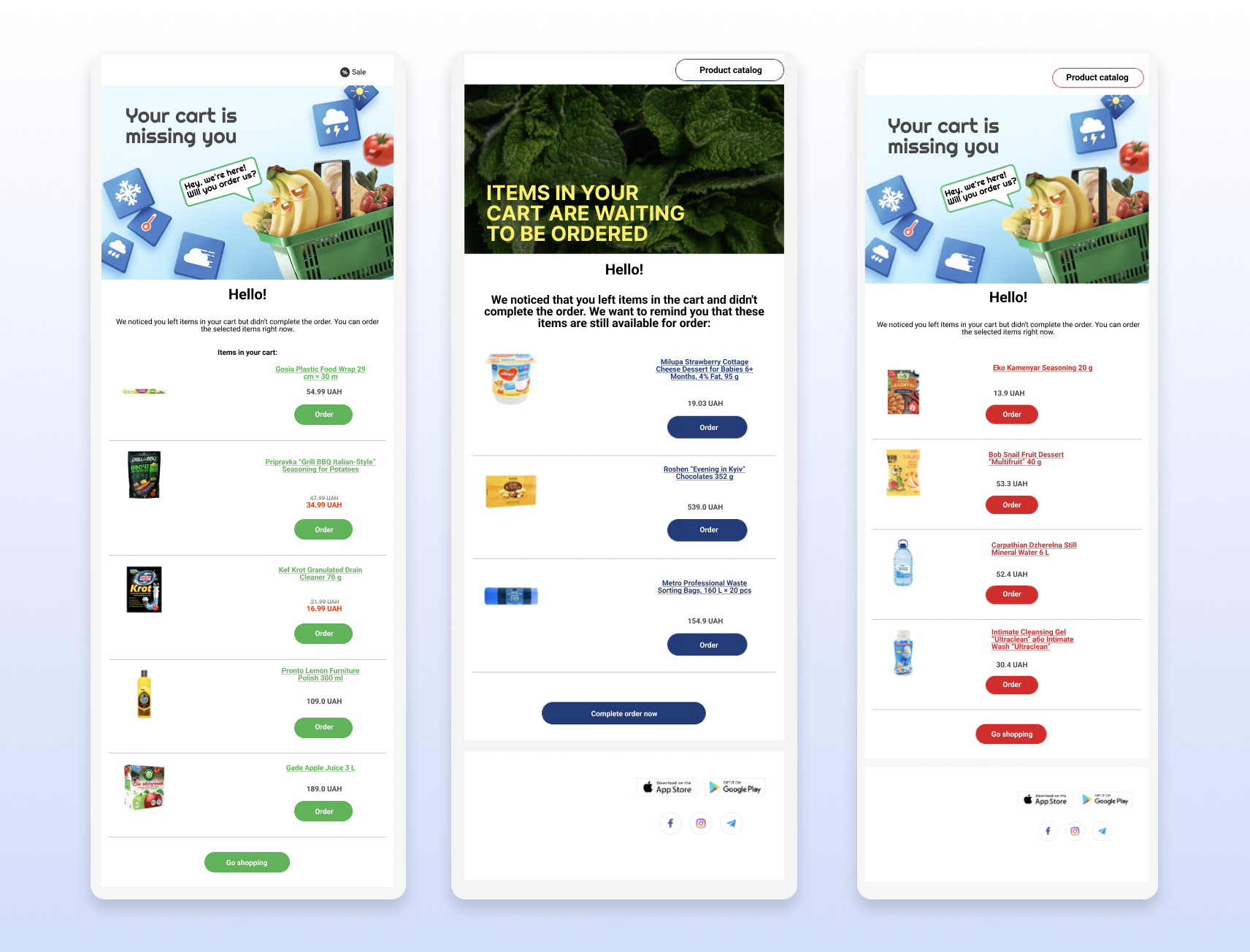
The first step in the Abandoned Cart trigger workflow is an email message. The emails are simple and easy to understand for users, featuring a main banner that encourages them to view the products, a list of the products themselves with links and prices, and a main button that calls for action.
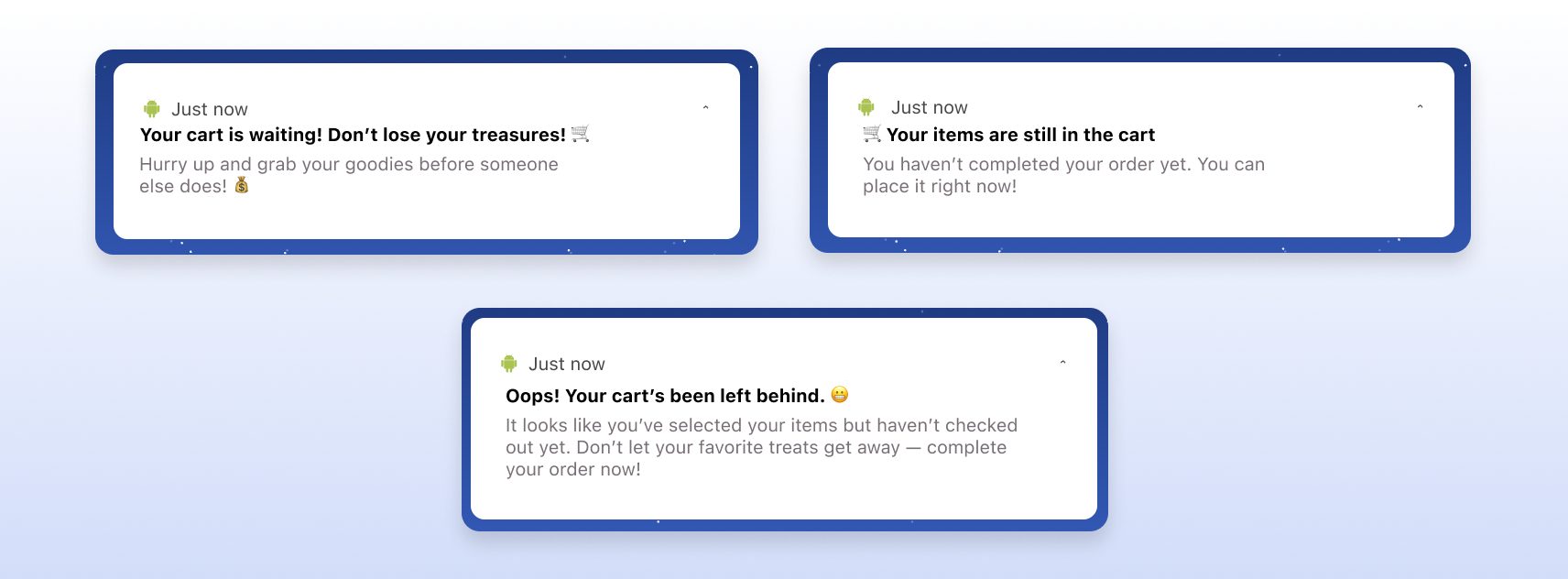
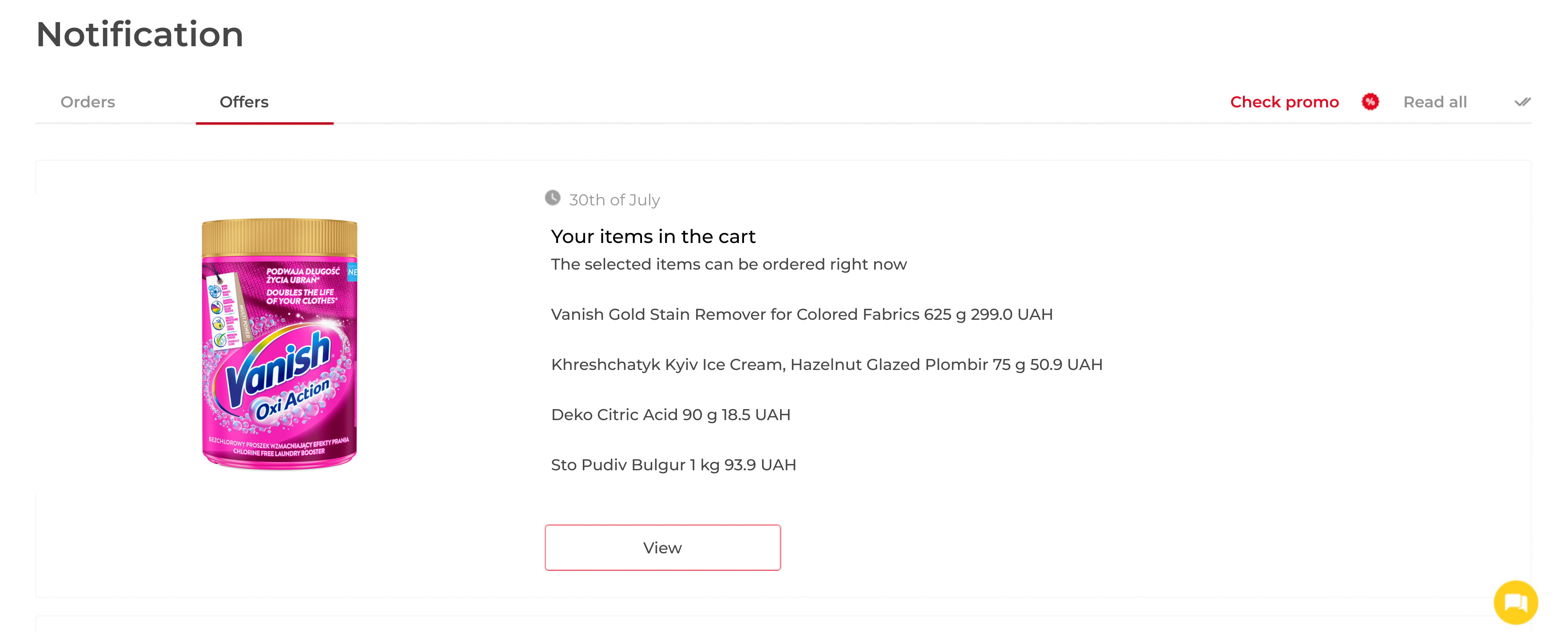
After a short period of time (1–2 hours), we check whether the customer has completed the purchase. If not, a Mobile push notification is sent in parallel with an App Inbox message to strengthen communication, remind the user about the items left in the cart, and maintain visibility across multiple touchpoints. This increases the likelihood that the user will return and complete their order.
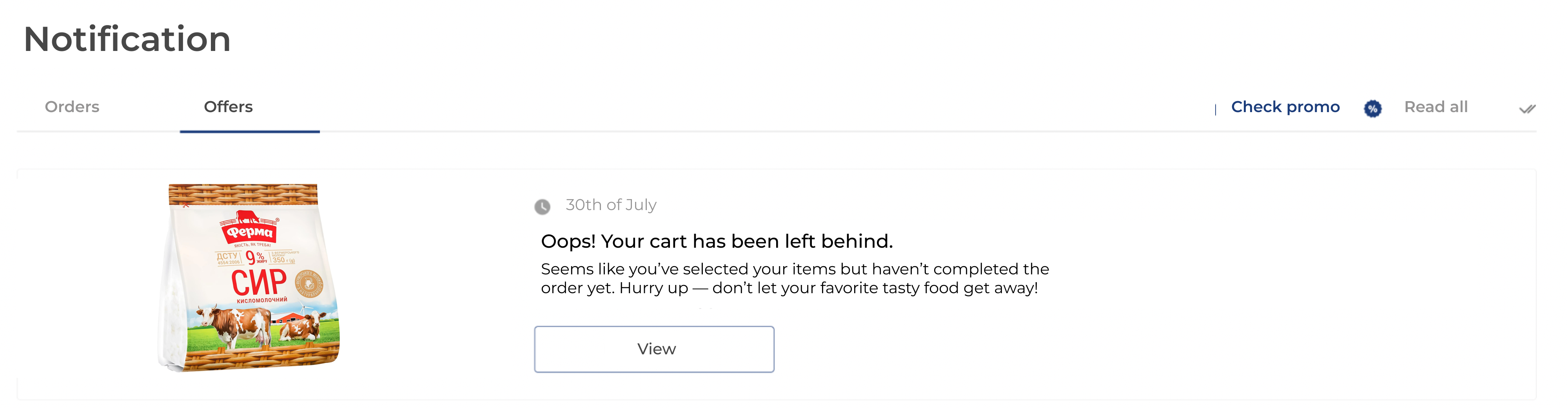
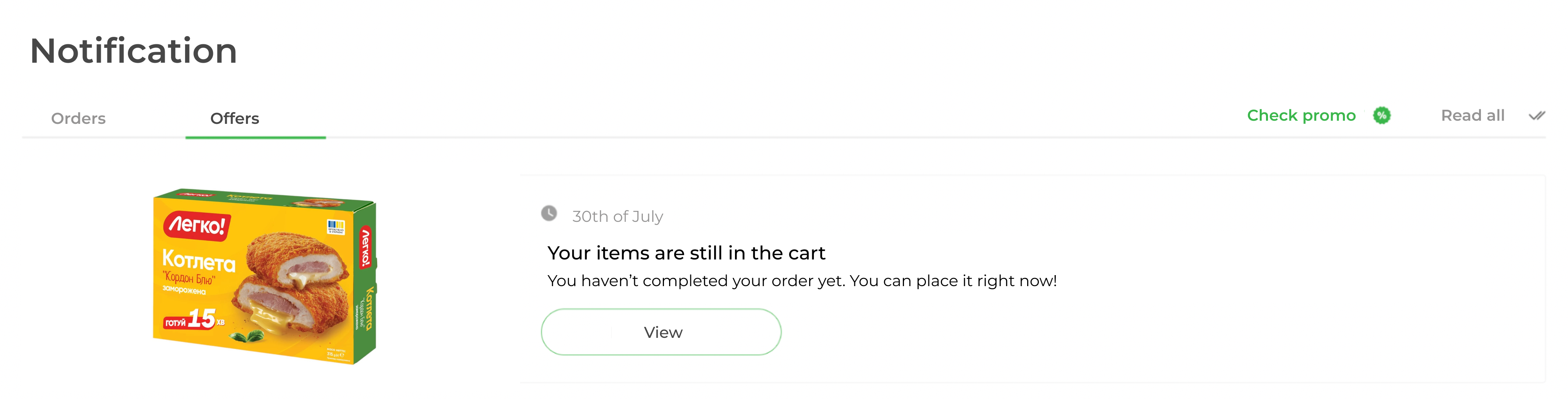
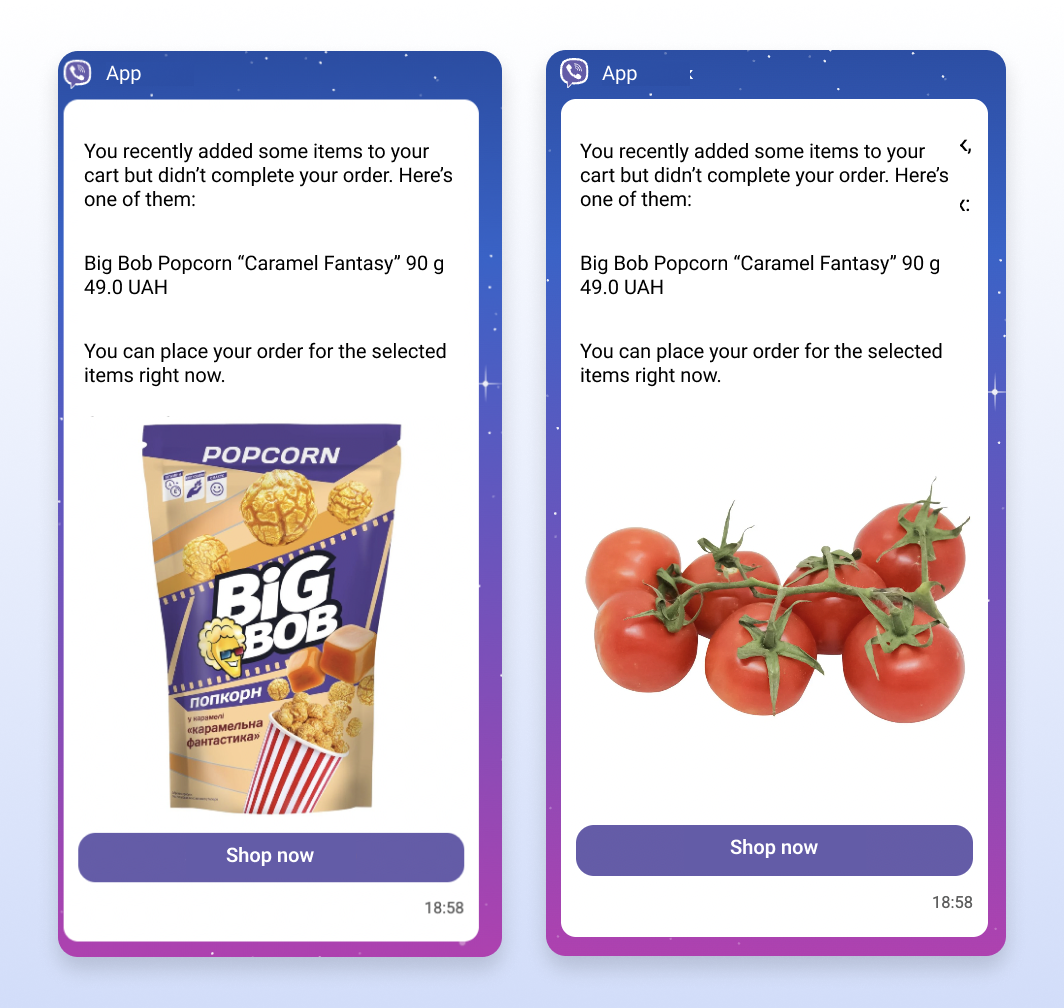
After verifying that an order had been placed and waiting for a specified period, a Viber message was sent to the user. This step was implemented in only two out of three projects.
Learn more about omnichannel marketing by following this link.
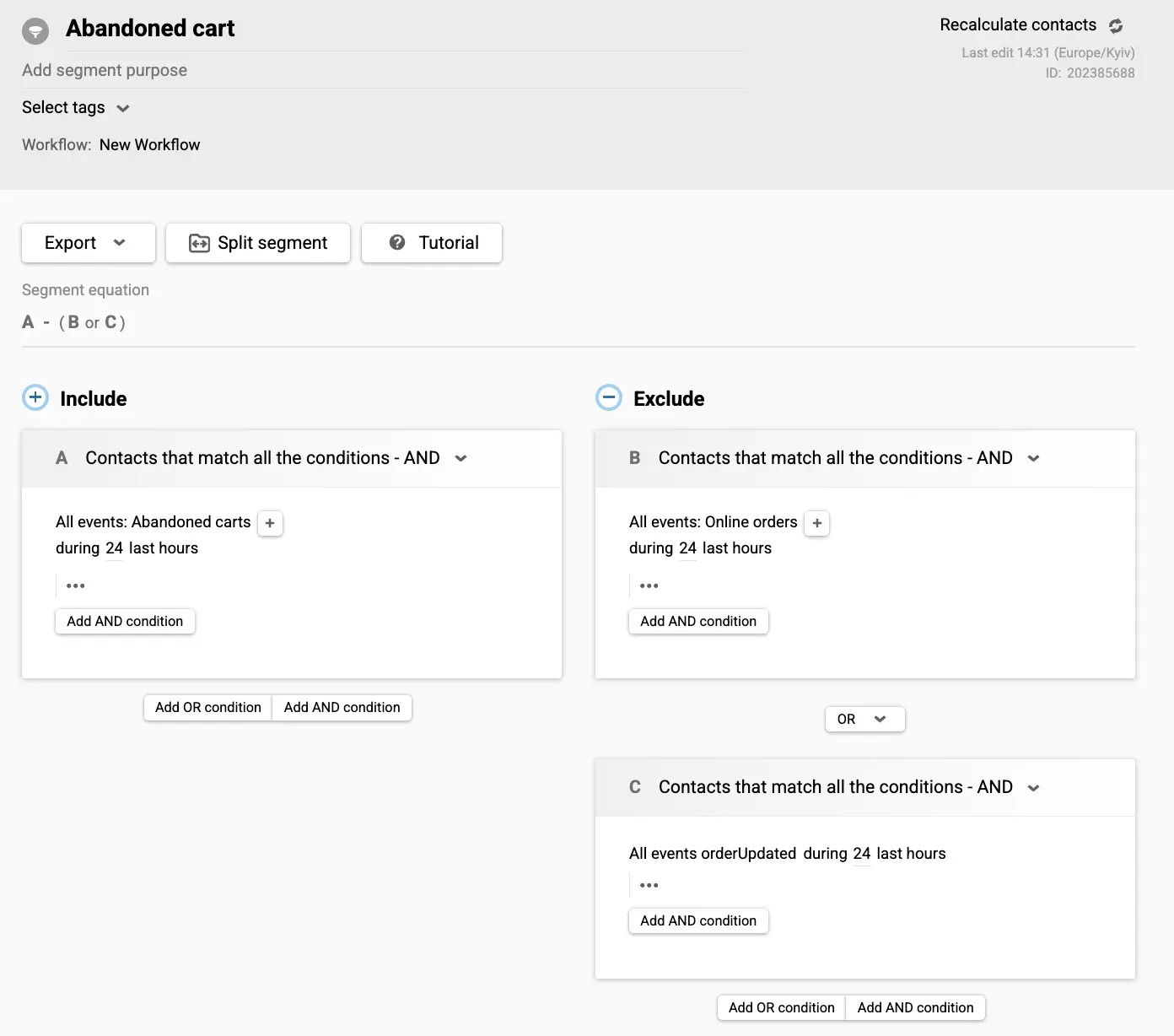
We pre-segmented users with abandoned carts, and the automation workflows were triggered only if items were actually added to the cart. As a result, messages were delivered only to those for whom they were truly relevant. This approach had a positive impact on both CTR and conversion rates.
Attribution
This trigger became one of the most profitable in terms of revenue. To accurately evaluate its performance, we utilized the Yespo attribution model, which considers user interactions in both the web version and the mobile app.
We applied Post-Click Attribution, meaning that a sale is attributed to the campaign when it occurs after the user has clicked on a message (email, Viber, push notification, etc.).
To assign a sale to a specific campaign, we use an attribution window — a defined period after the click during which a purchase can occur. If the purchase happens within this time frame, it is “credited” to the corresponding campaign.
In Yespo, you can flexibly configure:
- which user action should be considered the trigger for attribution (for example, a click),
- and the length of the attribution window — the period during which a purchase after that action will still be counted (for example, 3 or 5 days).
We count only the orders with the “Delivered” status — that is, successfully completed ones. Orders that are still being processed or have been cancelled are not included in the report. This provides a more accurate view of the actual revenue generated by the campaigns.
Results
After six months of using the Abandoned Cart trigger in three projects, we have achieved stable and convincing results.
First, we calculated the share of trigger sales compared to all sales from the channel.
This approach enables you to assess the weight of each trigger and understand its realistic impact on the final result.
Important
Unlike mass campaigns, which require creating each message separately, trigger messages are configured once.
This approach allows you to get stable results without wasting the marketer's time.
The final results of the campaign for all three projects were as follows:
Project А
Share of sales generated by the trigger across channels:
- Mobile Push: 20.5%
- Email: 73.9%
- App Inbox: 8.1%
For Viber, the trigger’s revenue share was not calculated, since no bulk Viber campaigns were conducted. Therefore, all sales attributed to Viber come entirely from the Abandoned Cart trigger.
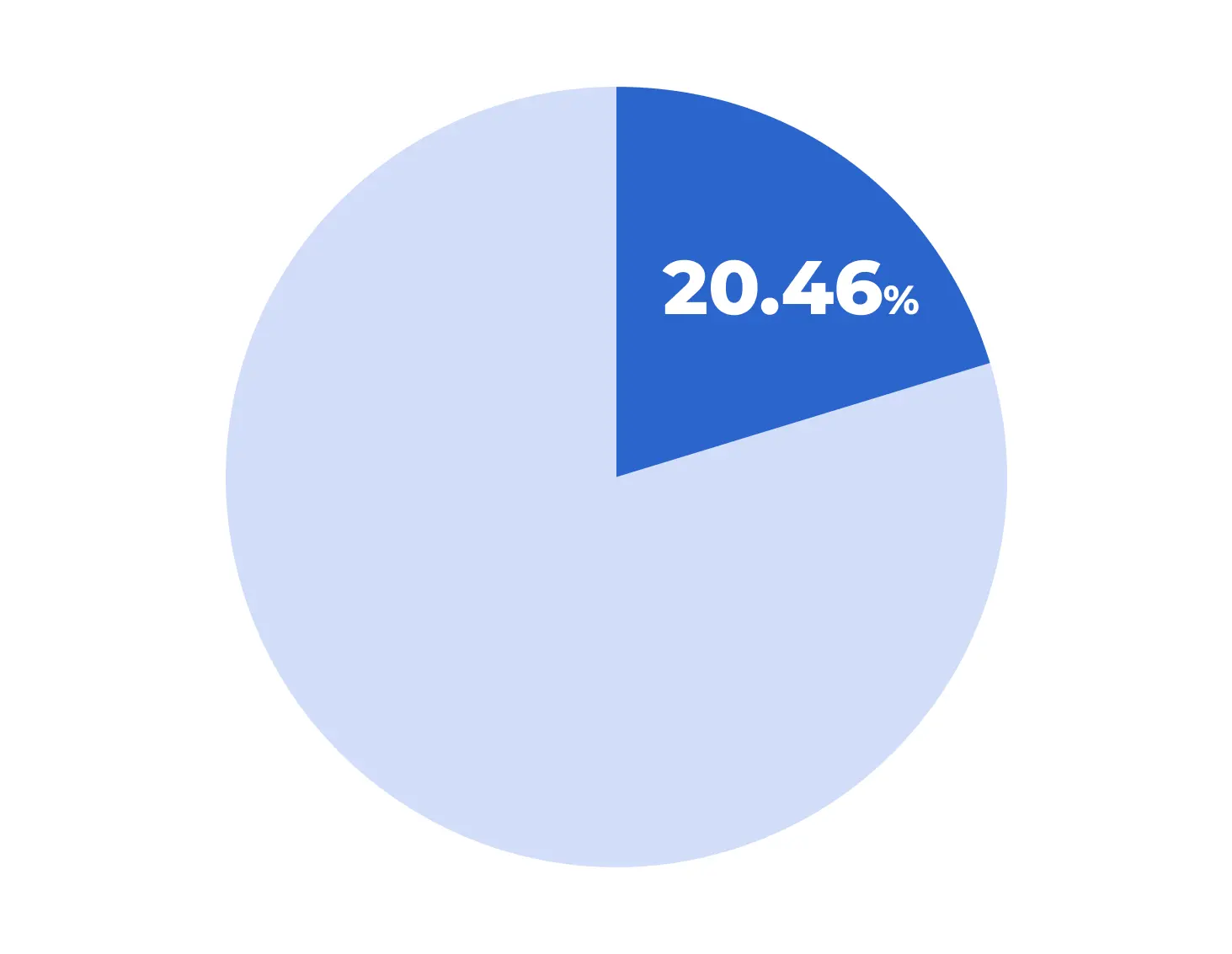
The share of revenue generated by the Abandoned Cart trigger campaign in relation to the total revenue from all campaigns in Project A amounted to 20.46%.
Omnichannel communication plays a key role in the overall effectiveness of this trigger.
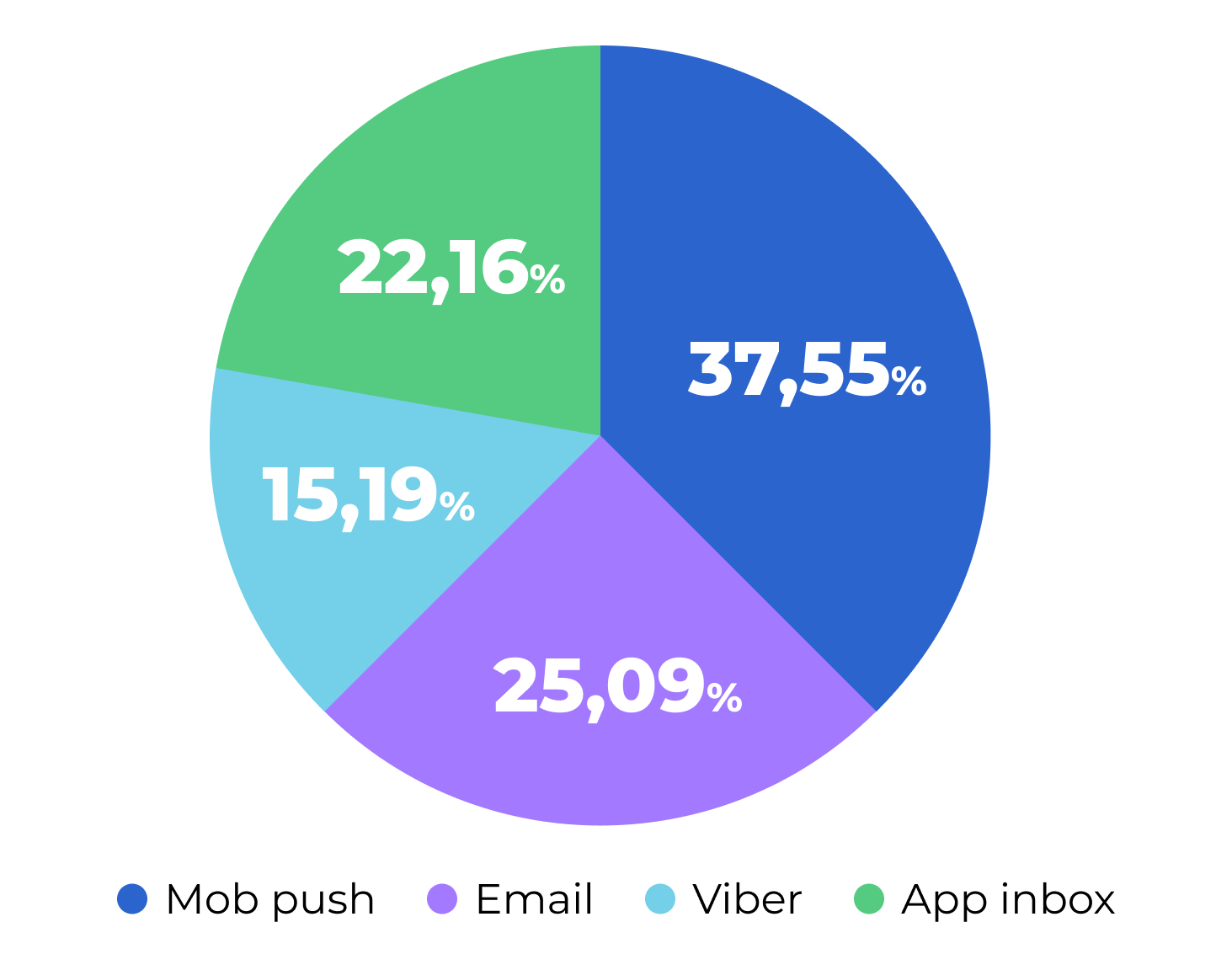
When analyzing the performance of each channel separately, we observed the following distribution:
- Mobile push notifications: 37.55% of total trigger-driven sales
- Email: 25.09% of total trigger-driven sales
- Viber messages: 15.19% of total trigger-driven sales
- App Inbox messages: 22.16% of total trigger-driven sales
Project В
Share of trigger sales in the Mobile Push channel – 17%
Share of trigger sales in the App Inbox channel of the total channel – 1.7%
No mass email campaigns were carried out in this project.
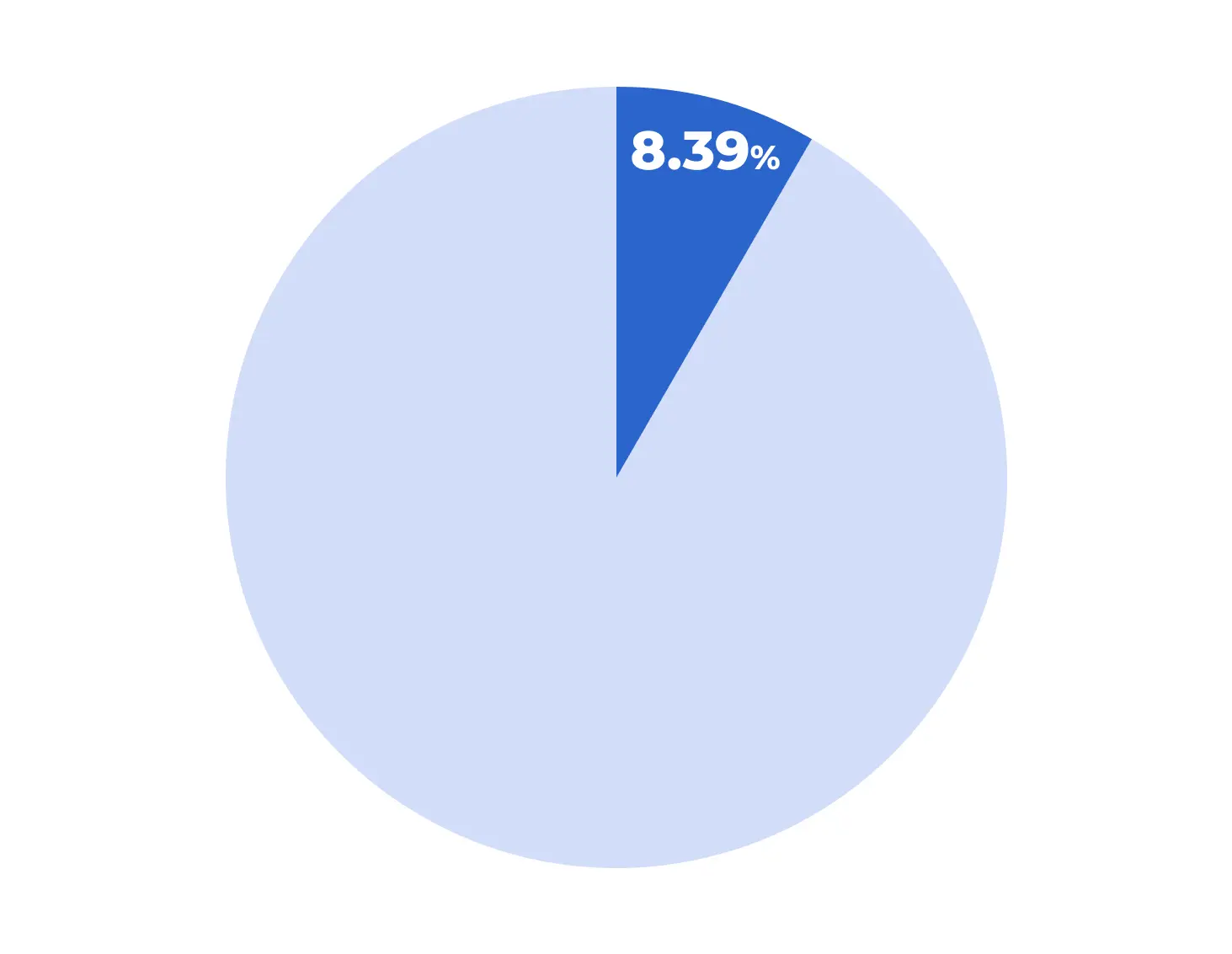
The share of sales from the Abandoned Cart trigger campaign in total revenue from all mailings in Project B was 8.39%.
Channel distribution within the Abandoned Cart trigger:
- Mobile Push: 70.01% of total trigger-driven sales
- Email: 16.40% of total trigger-driven sales
- App Inbox: 13.58% of total trigger-driven sales
Viber notifications were not part of the Abandoned Cart trigger workflow in Project B.
Project C
Share of trigger-driven sales by channel:
- Mobile Push: 28.5%
- Email: 60.2%
- App Inbox: 4.3%
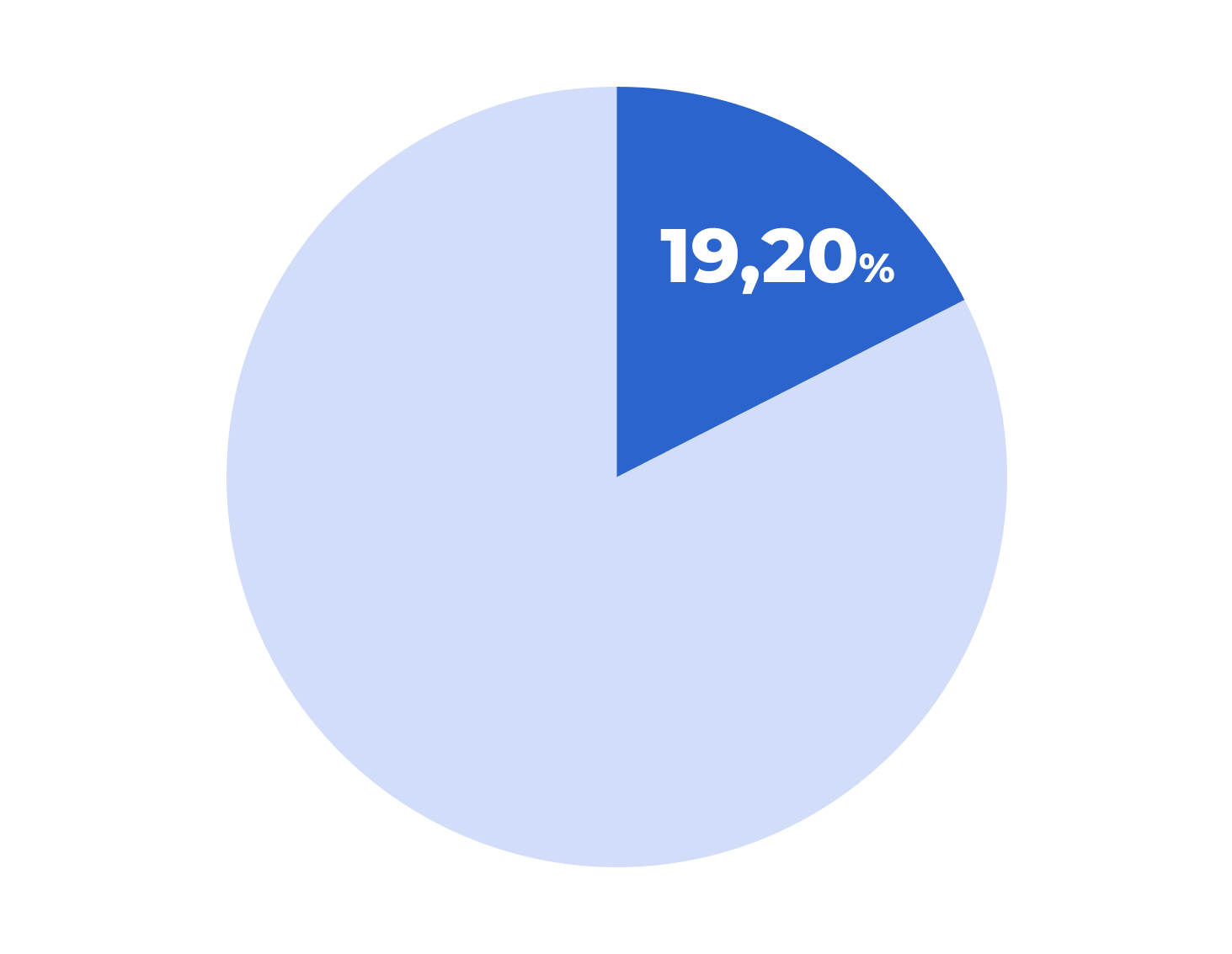
The share of sales from the Abandoned Cart trigger campaign in total revenue from all campaigns in Project C was 19.20%.
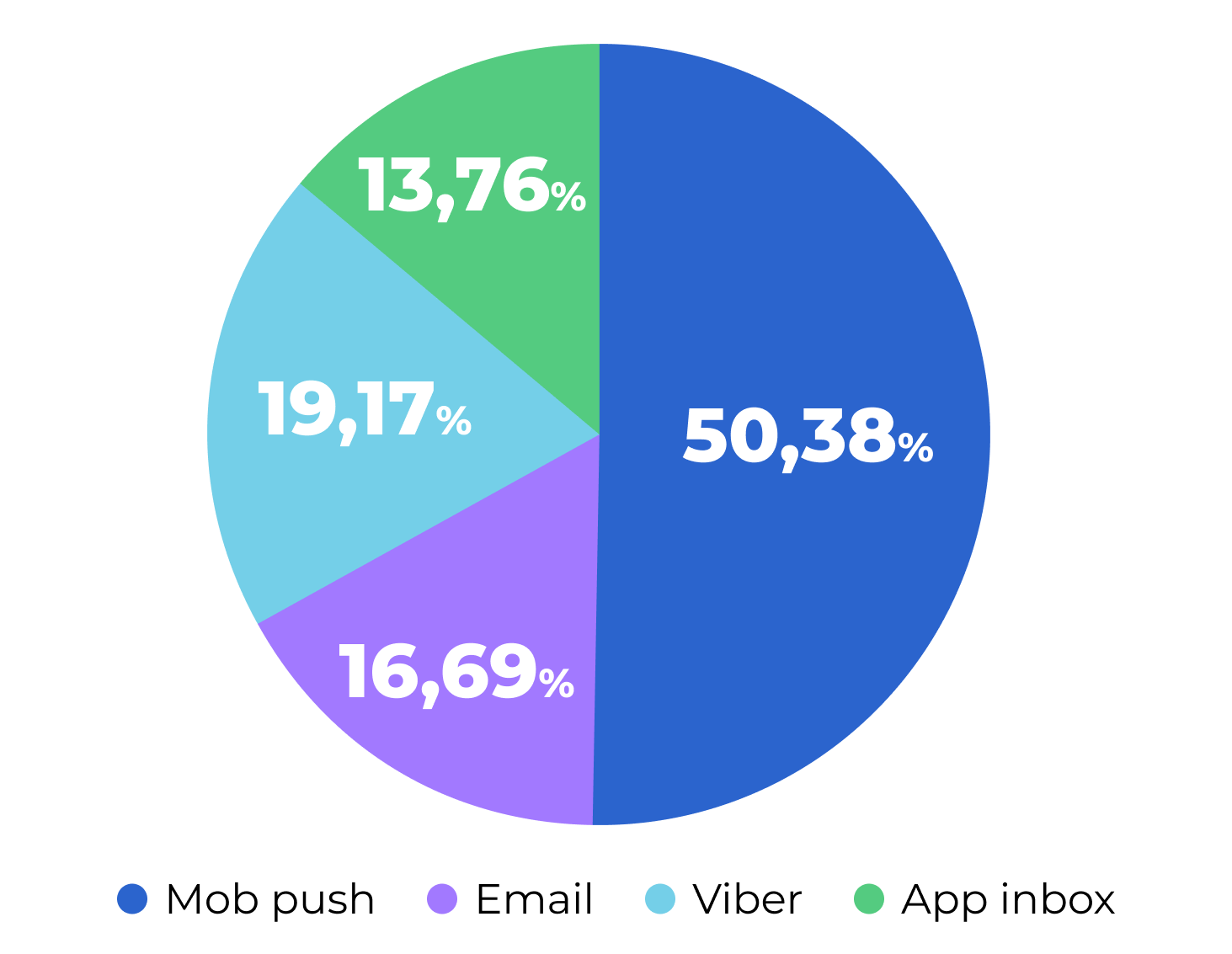
Channel distribution within the Abandoned Cart trigger:
- Mobile Push: 50.38% of total trigger-driven sales
- Email: 16.69% of total trigger-driven sales
- Viber: 19.17% of total trigger-driven sales
- App Inbox: 13.76% of total trigger-driven sales
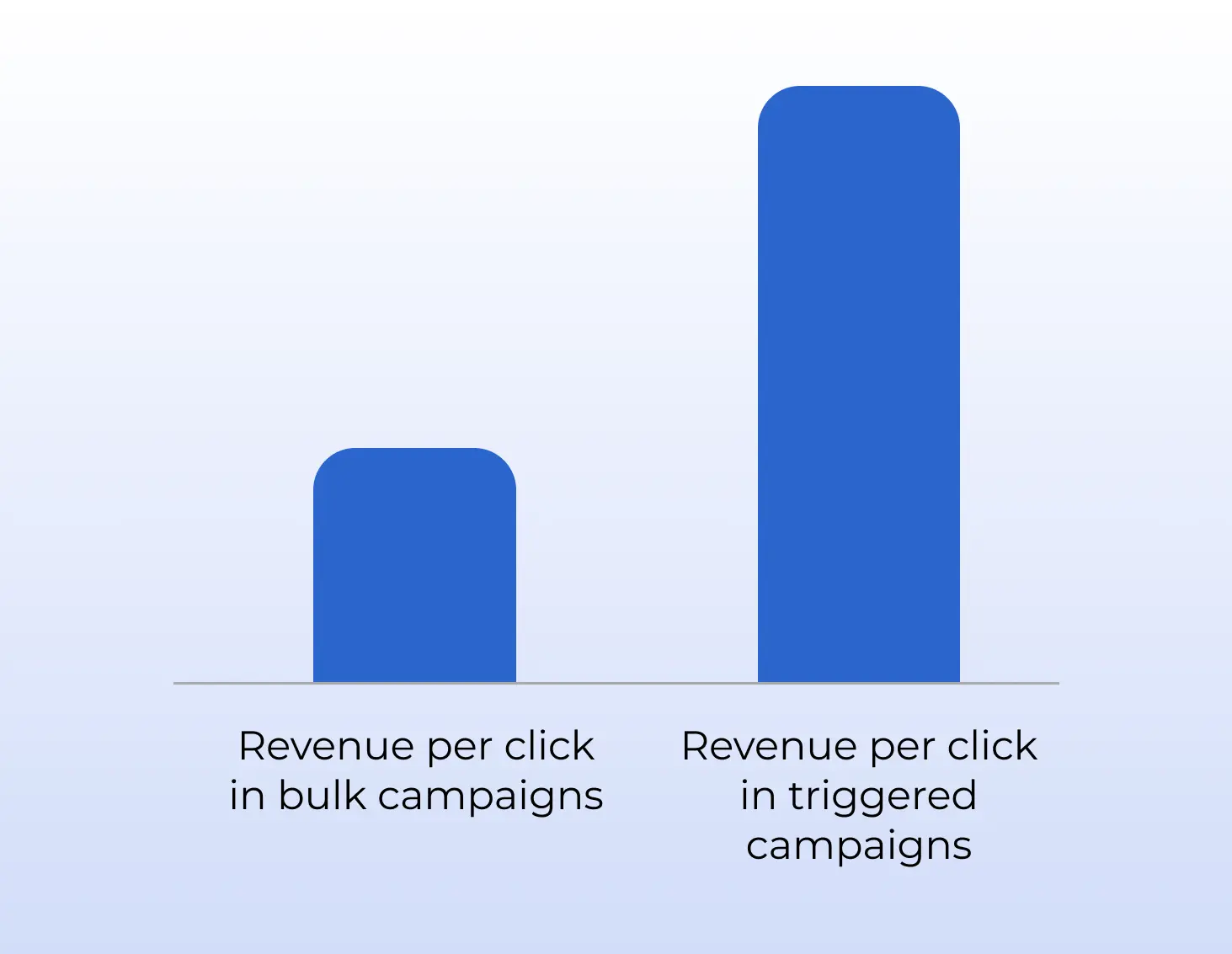
On average, trigger-based campaigns demonstrated a 180% higher click-to-conversion rate and a 185% higher revenue per click compared to bulk campaigns.
The Impact of an Omnichannel Approach on Campaign Results
It’s worth noting the effectiveness of the omnichannel approach used in the Abandoned Cart trigger campaign. As the results show, each communication channel contributed a noticeable share to the trigger’s total revenue. In Project B, where only three channels were used (compared to four in Projects A and C), the trigger’s revenue share was lower — 8.39% vs. 20.46% and 19.20%, respectively.
This suggests that additional notifications via Viber have a significant impact on increasing conversions from users who have ignored emails, mobile push notifications, and app inbox messages.
These results demonstrate that an omnichannel trigger is not merely an add-on to mass mailings but a truly effective method for driving more sales, especially in channels where users actively engage.
Future Plans
Following the successful launch of the Abandoned Cart trigger, the grocery delivery service team plans to expand its use of automated communications. The roadmap includes adding more triggers that respond to user actions. This will allow for even more precise audience targeting and higher customer retention.
Additionally, there are plans to revamp the mobile app integration and transition to an SDK-based solution. This will enable better tracking of in-app user behavior, faster response times, and more personalized messaging. Such an approach will unify web and mobile analytics, making communications even more effective.
Conclusion
This case proves that well-configured triggers can deliver 2–3 times better results compared to mass mailings, all while requiring significantly less effort.
We implemented the Abandoned Cart trigger across several client projects—and it proved effective in every case. Users actively returned, completed purchases, and companies gained additional revenue.
The Abandoned Cart workflow may seem simple and basic, but with the right approach — including omnichannel strategy, segmentation, and analytics — it delivers noticeable results automatically, without manual intervention.
Do you want to strengthen your communications with trigger-based workflows as well? Fill out the form below, and our experts will help you select a solution tailored to your business.