12 November 2026
21
11 min
0.00
How Budynok Ihrashok Achieved Up to 7x Higher Mobile Push Conversion Than Email

Mariia Natarova

Viktoriia Holiachenko
| Goal | Increase the number of purchases in the mobile app through personalized and timely communication with users |
| Solution | Set up product recommendations in the app, mobile push for promotional and trigger workflows, and App Inbox and In-App messages based on CDP data |
| Results |
|
| Resources | The Budynok Ihrashok team, a Yespo agency marketer, and a Yespo Customer Success Manager |
A mobile app gives a brand many signals about users’ interests: which products they view, what they add to the cart, and which items they return to. However, this data alone does not make communication personalized.
To use this data in marketing, it is important to connect in-app behavior with other user data and respond to these signals at the right moment. Otherwise, part of the context is lost, and communication remains less precise than it could be.
Budynok Ihrashok used this approach to develop communication in its mobile app: the team implemented personalized product recommendations, set up segmented and trigger-based mobile push notifications, and added App Inbox and In-App messages.
In this case study, we explain how these solutions work and what results they delivered.
About the Project
Budynok Ihrashok is a large children’s goods retail chain that combines offline stores, an online store, and a mobile app. The company interacts with thousands of parents every day, whose needs vary by their children’s age, interests, and past purchases.
In October 2025, the team began integrating the app with Yespo CDP. This way, data about users’ interactions with the website and the app could become part of a unified customer profile.
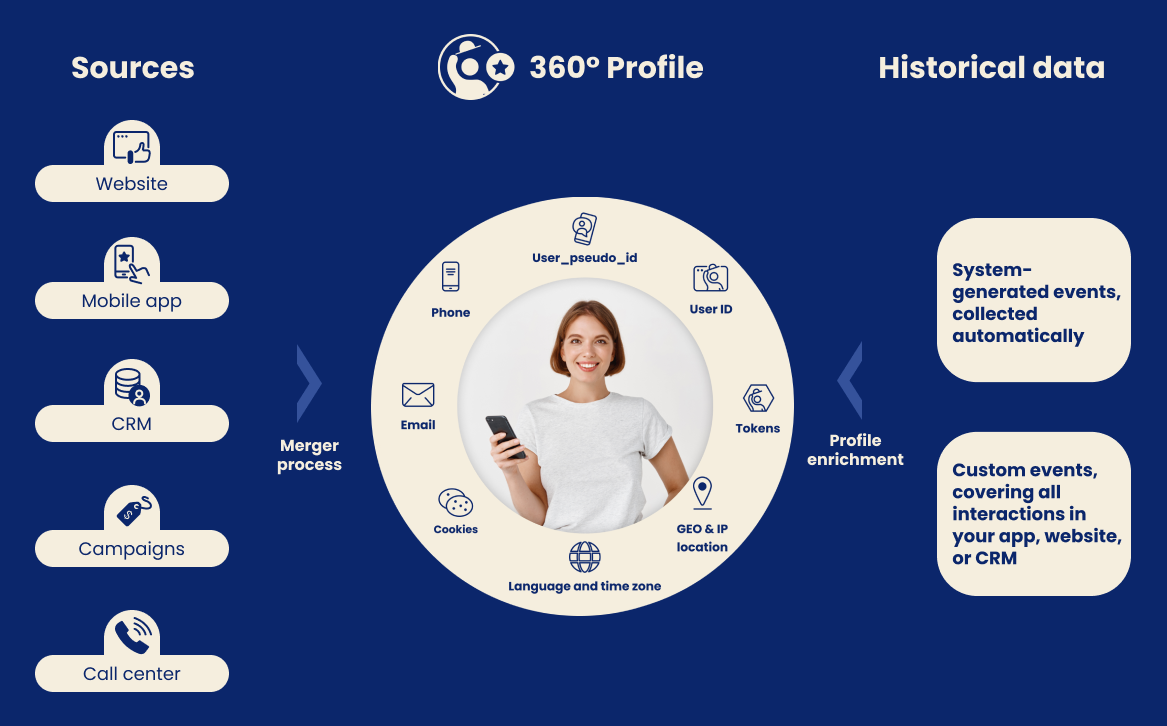
In Yespo CDP, this profile brings together available data about a specific user in one place: contact information, purchase history, behavior on the website and in the app, responses to messages, and other signals. This makes it possible to see the complete history of interactions with the customer and work with it.
Goal
The team wanted to use user behavior data in the mobile app more effectively and make interactions with users more personalized.
The main goals were to:
- better reflect users’ interests and behavior in product recommendations;
- respond to user actions in a timely manner and bring them back to complete a purchase;
- segment the audience more precisely for promotional campaigns;
- increase mobile app user engagement and improve communication effectiveness in this channel.
Solution
A Yespo agency marketer, a Yespo Customer Success Manager, and the Budynok Ihrashok team set up several types of personalized communication in the mobile app: product recommendations, segmented and trigger-based mobile push notifications, App Inbox, and In-App messages.
In each area, CDP capabilities are used differently: from creating personalized selections and segments to automatically launching messages in response to user actions.
Let’s look at them in more detail.
Product Recommendations in the App
The team implemented recommendation blocks in the mobile app that help users at different stages of choosing a product. This helps them find relevant items faster and continue browsing without returning to the catalog.
On the home screen, users see several types of selections:
- “New Arrivals” — products that have recently appeared in the catalog;
- “Bestsellers” — products purchased most often;
- “Popular Products” — products users are actively interested in, but that do not necessarily have high sales;
- “Just for you” — a personalized selection based on a specific user’s behavior.
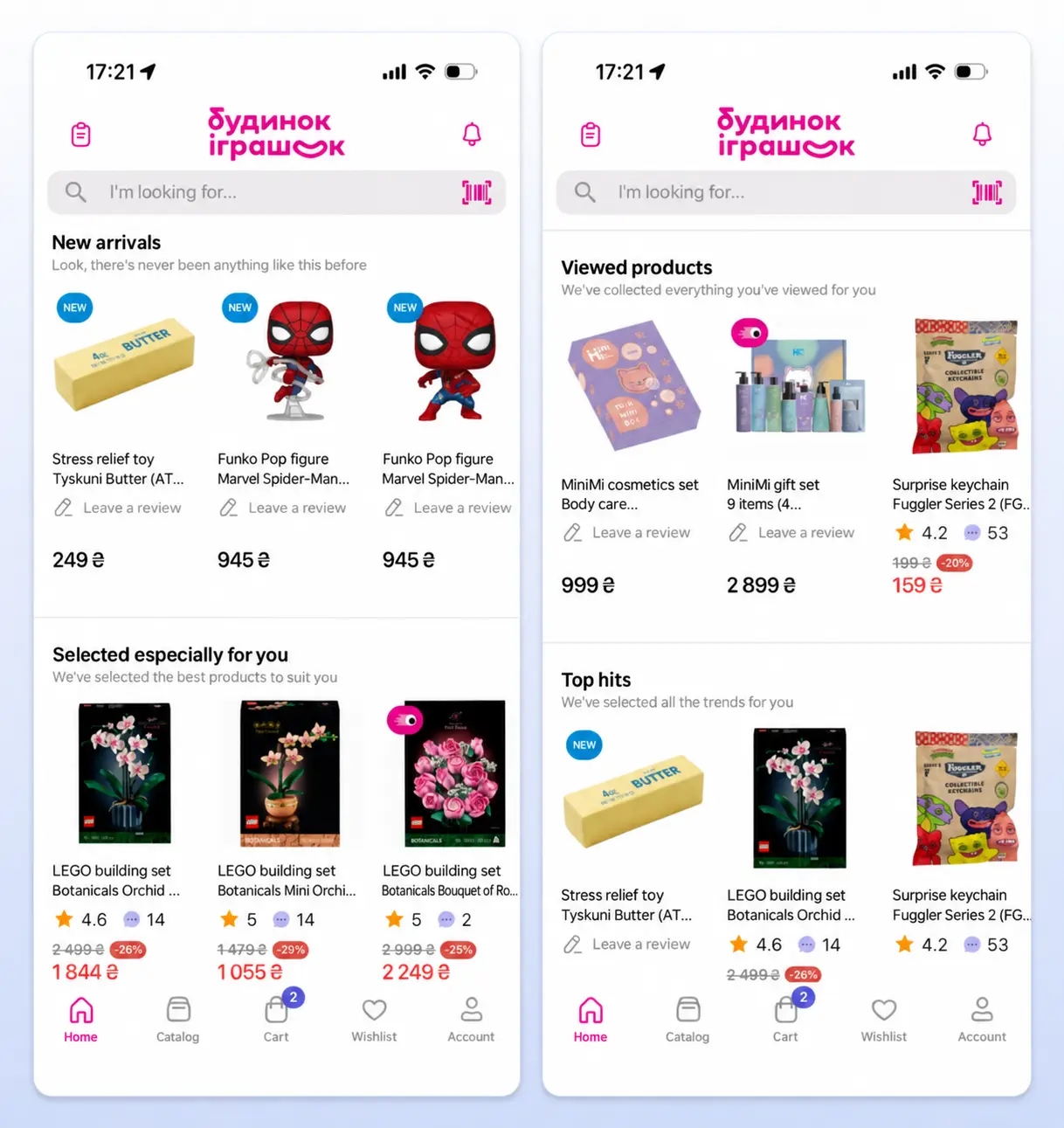
Product recommendations in Yespo
are generated based on user behavior data, purchases, and product characteristics. For personalized selections, the system can take into account, among other things, browsing, search, and purchase history, as well as other signals, to predict which products may interest a specific user.
On the product page, recommendations help users continue browsing. Two blocks are used here:
- “Similar Products” — alternative items that can be compared with the selected product;
- “Frequently Bought Together” — complementary products that are often chosen together.
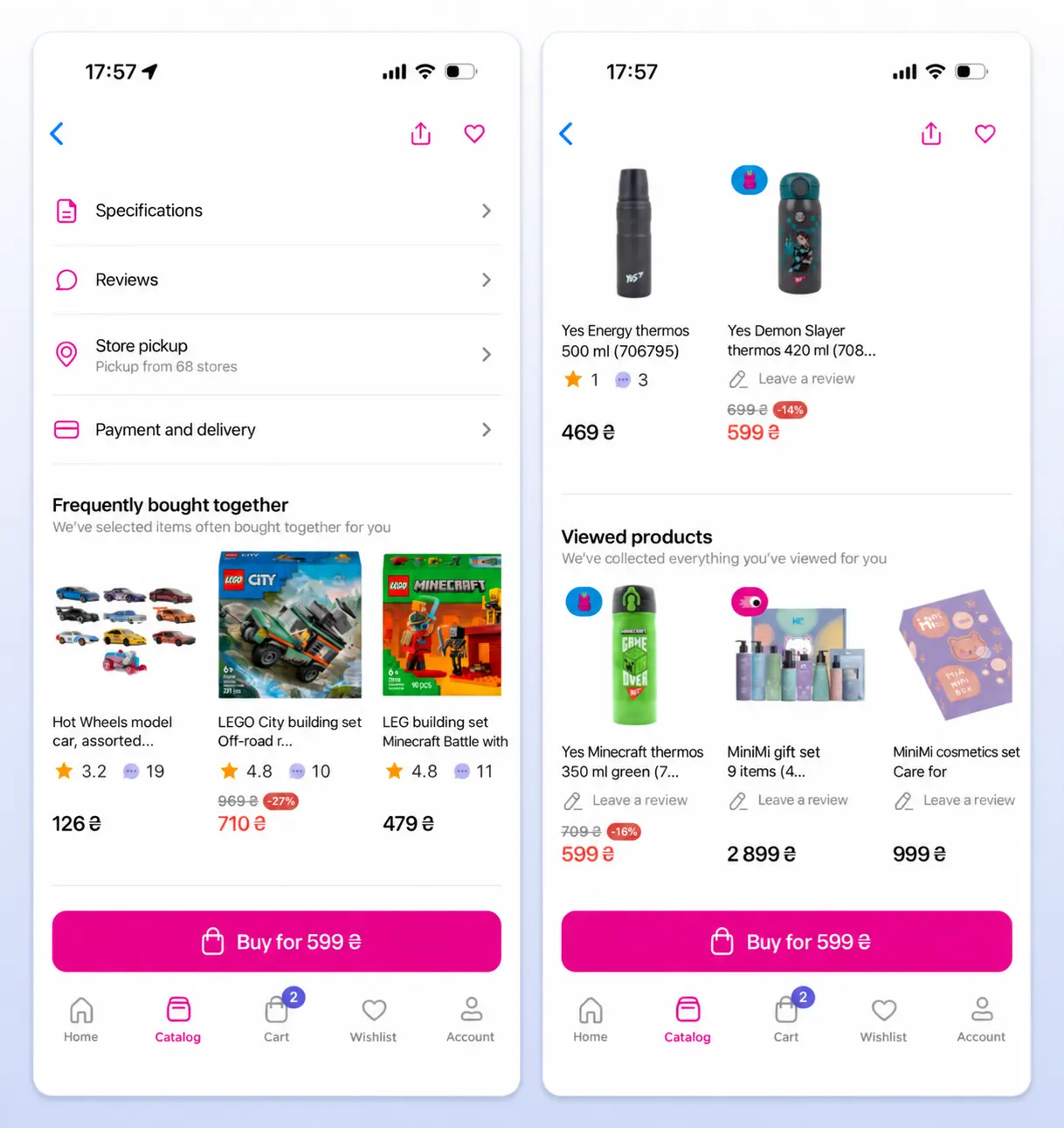
To evaluate their effectiveness, the Yespo agency marketer compared recommendations CTR in the app and on the website. From April to June 2026, the CTR of recommendations in the app was approximately twice as high.
Want to show customers relevant products? Discuss the possibilities of personalized recommendations for your business.
Mobile Push for Bulk and Trigger Workflows
Mobile push notifications make it possible to quickly deliver a message to a user and bring them back to the app at the right moment, even when they are not using it. The channel suits both scheduled promotional activities and communication in response to specific user actions or product-related changes.
At Budynok Ihrashok, mobile push is used in two ways: regular campaigns for specific audience segments and automated messages triggered by user behavior.
Segmented Promotional Campaigns
On average, Budynok Ihrashok launches about three promotional campaigns per week: for seasonal promotions, new collections, popular brands, and other activities from the marketing calendar.
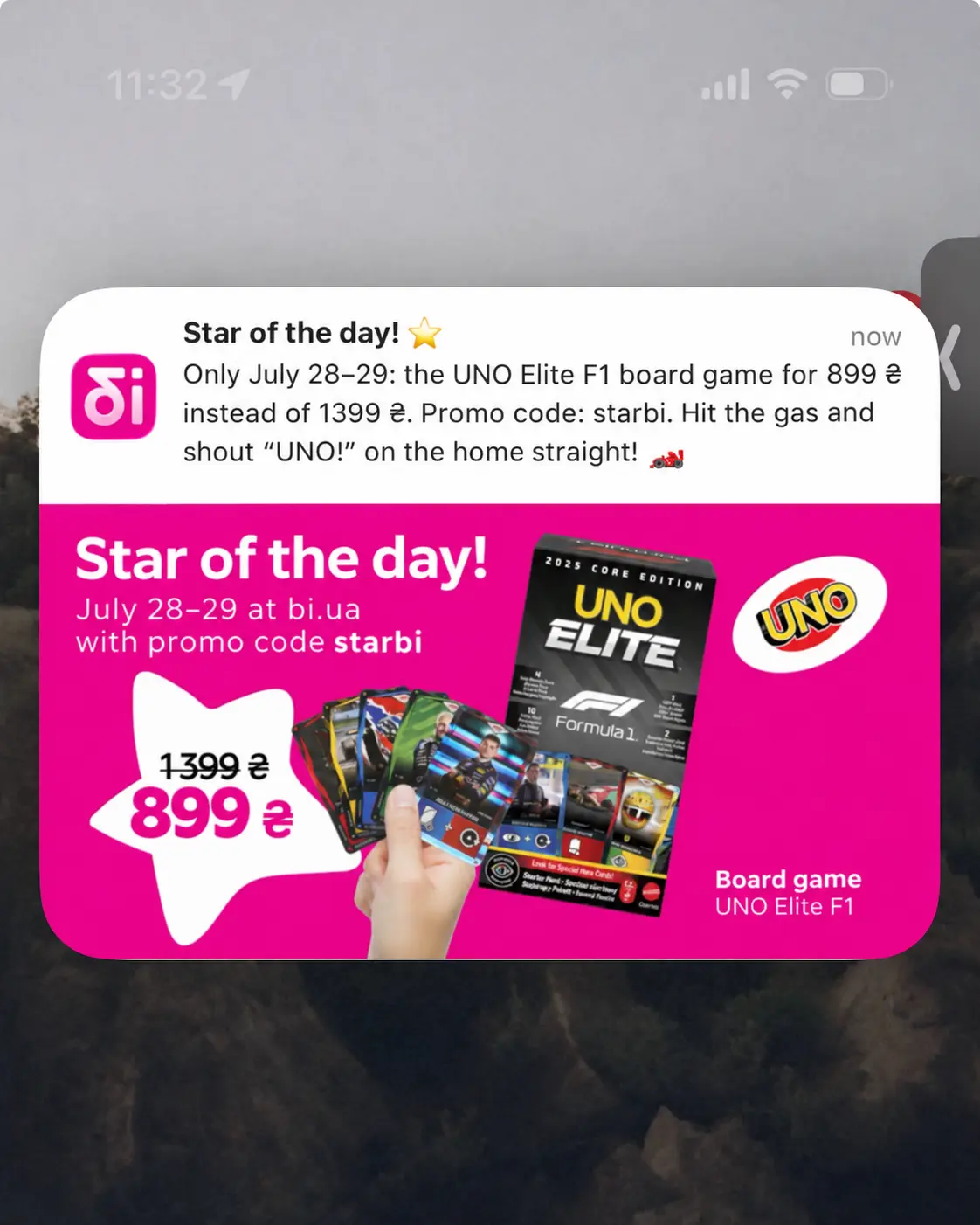
To make these messages more relevant, the team creates separate audience segments for each campaign. The criteria include:
- the child’s age and gender;
- purchase history;
- interactions with specific brands;
- activity in the app.
This allows the brand to narrow the audience for a specific offer instead of sending the same message to everyone. For example, a mobile push about a discount on Martinelia Candy sets was sent only to those who had purchased Martinelia products during the previous year.
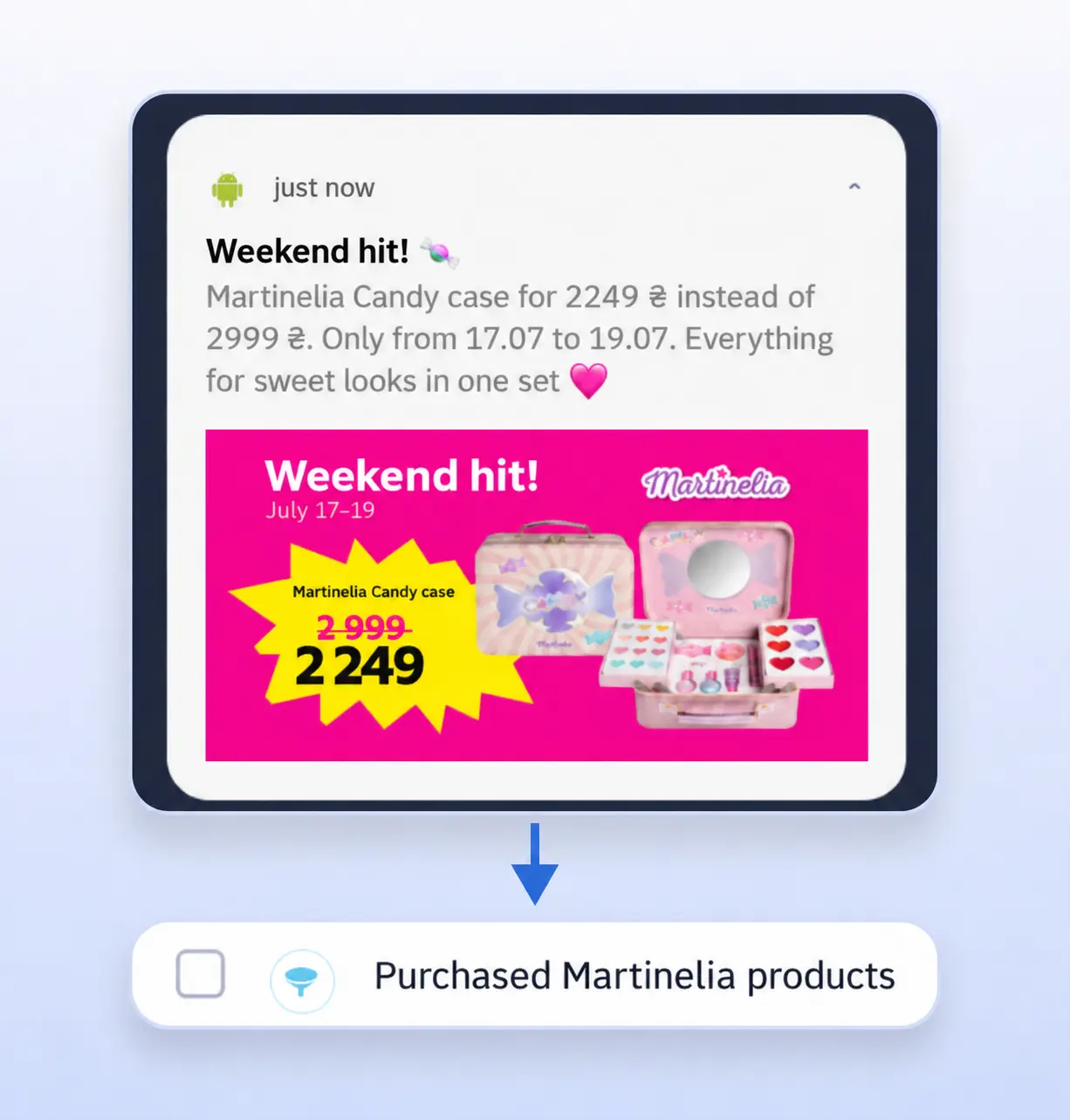
In Yespo CDP
segments are built not only using static characteristics but also behavioral data and events. Conditions can be combined, and individual contact groups can be included or excluded to define the audience for a specific offer more precisely.
Automated Trigger Messages
For the mobile app, the team set up automated workflows triggered by specific events — for example, after an abandoned browse or cart, a price drop, or a product coming back in stock.
This lets the brand respond to specific situations without manually launching a campaign and bring the user back to purchase at the right moment.
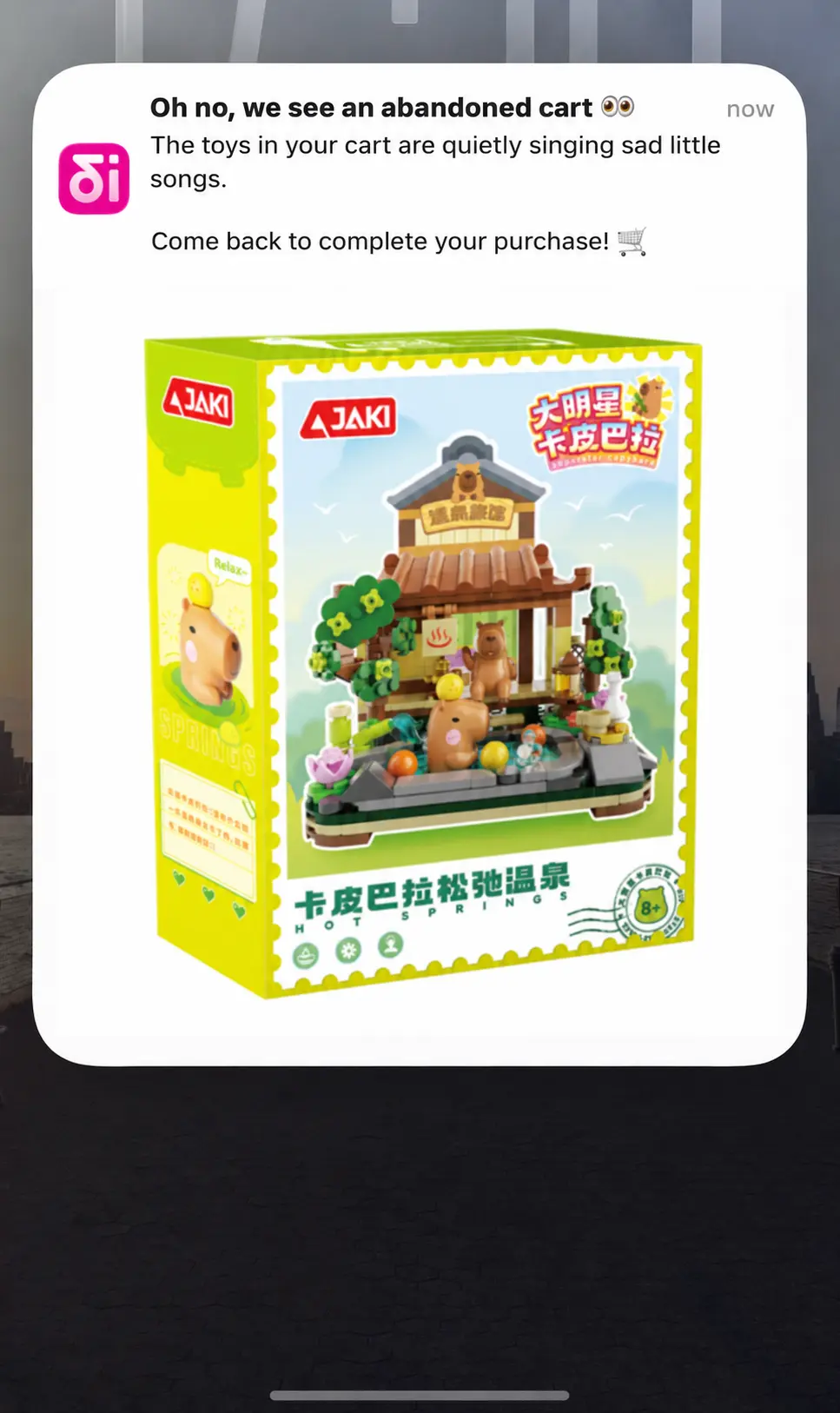
The workflows cover several common situations on the path to purchase, including:
|
Workflow |
Event |
Goal |
|
Abandoned browse |
The user viewed a product and left the app |
Bring attention back to the viewed product |
|
Abandoned cart |
A product was added to the cart, but the order was not completed |
Bring the user back to complete the purchase |
|
Price drop |
The product price decreased |
Notify the user about a better offer |
|
Back in stock |
The product became available again |
Notify the user that it can be ordered |
In Yespo CDP
each workflow can include not only a starting event but also additional conditions and a sequence of actions. For example, the system can check whether the user has already made a purchase before sending a reminder.
From April to June 2026, the conversion rate of automated mobile push notifications was 2–3 times higher than in similar email workflows. The best results were shown by all the messages mentioned above: abandoned cart and browse, price drop, and back-in-stock notifications.
Learn how to use mobile push to bring users back to purchase.
App Inbox for Saving Important Messages
Mobile push works well for quick communication, but some offers may remain relevant after users receive a notification. To let users return to these messages later, Budynok Ihrashok implemented App Inbox in the app — a separate section where selected marketing messages are stored.
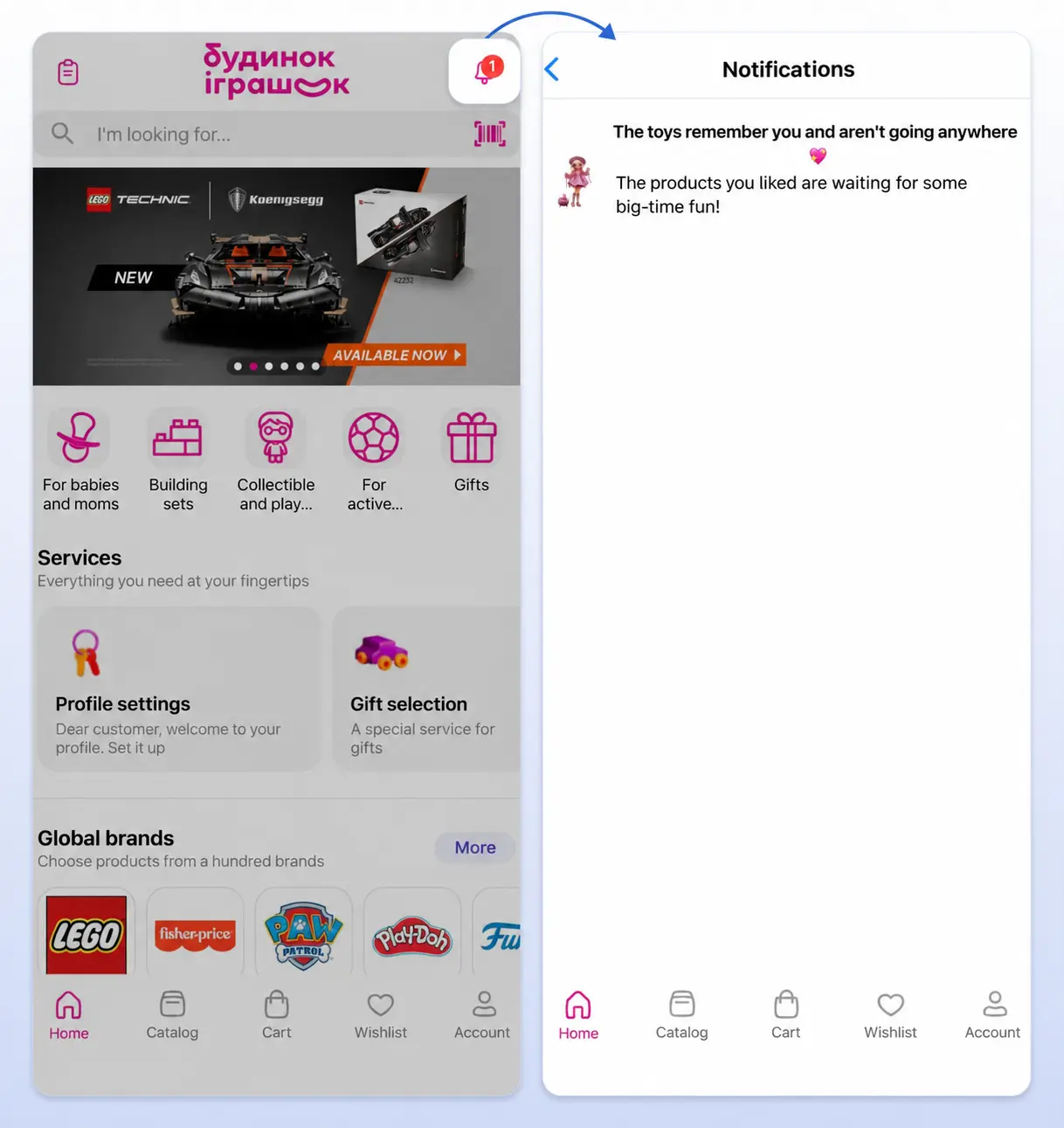
Users can view offers there even after receiving the notification. This is especially convenient for seasonal promotions, personalized offers, major sales, and brand campaigns when users may want to return to interesting offers later.
In this way, App Inbox complements mobile push and keeps important messages relevant inside the app.
In-App Messages for In-App Engagement
In-App messages make it possible to communicate with users while they are interacting with the app. The team set up one such workflow for Budynok Ihrashok to encourage unauthenticated users to sign in to their account.
Users see a message inviting them to sign in and receive 50 bonus points. After signing in, they gain access to the loyalty program, personalized recommendations, order history, and other app features.
Authentication is also important for the business: it helps identify the user and connect their subsequent behavior with the unified customer profile.
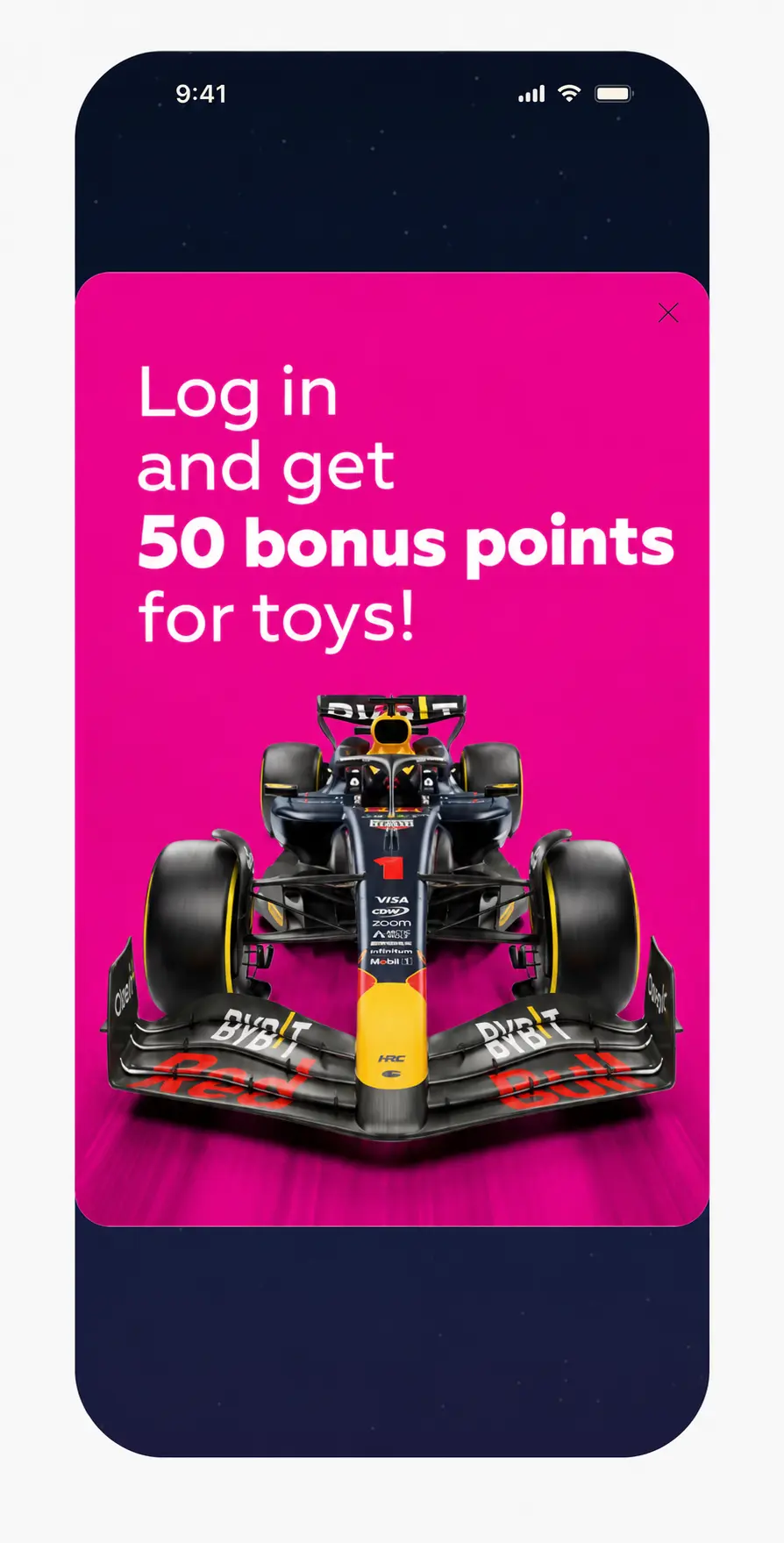
In Yespo CDP
In-App messages can be configured and updated without releasing a new version of the app. This allows marketers to launch new workflows faster and change content depending on current tasks.
Results
During the first six months of active in-app communication, almost 39,000 users agreed to receive mobile push notifications. At the same time, during the first four months after launch, almost one in three users with push tokens made a purchase.
Mobile push also delivered a higher conversion to orders compared with email. Depending on the campaign type, the difference ranged from 2x to 7x.
Separately, the Yespo agency marketer analyzed automated workflows. From April to June 2026, mobile push had a 2–3x higher conversion rate than similar email messages.
Product recommendations in the app also had a higher click-through rate: their CTR was approximately twice as high as on the website.
Summary
At Budynok Ihrashok, user data became the foundation for more precise in-app communication. Recommendations, segmentation, and automated workflows are built on this data, while different message formats help engage users at different moments of interaction.
This approach gives marketing teams more flexibility: they can respond to user actions faster, select offers more precisely, and make better use of the mobile channel’s capabilities.
As a result, the app becomes an important and effective part of the brand’s personalized communication with customers.
If you want to personalize communication in your mobile app, use customer data more effectively, and automate marketing workflows, Yespo CDP can help you achieve these goals. Book a free consultation to discuss solutions for your business.