Content
12 February 2026
3776
23 min
5.00

PUMA Case Study: How a Global Brand Built a Retention Strategy That Truly Drives Sales

Vladyslava Prykhodko

Ivan Diulai
Content
About the Project
PUMA is a globally recognized sports and casual wear brand with over 75 years of history. The company combines offline retail with an active focus on ecommerce development and invests heavily in personalizing the customer experience. The brand’s communications are strengthened by ambassadors from the worlds of sports and culture, including FC Shakhtar players, Yaroslava Mahuchikh, Nadya Dorofeeva, Anton Ptushkin, and others.
In 2022, PUMA chose Yespo as its partner for implementing personalized communications and retention strategies. Together with the platform, the team rapidly brings new ideas to life — from basic segmentation and trigger-based workflows to product recommendations and promotional emails with gamified mechanics.
About the Case Study
This case illustrates how selecting the right platform and implementing a strategic approach to retention marketing can drive revenue growth and enhance key performance metrics.
In this case study, you will learn:
- How PUMA Ukraine captures subscriptions.
- Which personalized triggers they activate at key stages (welcome, abandoned cart/view, back-in-stock, price drop, birthday).
- How product recommendations work in emails, on the website, and in the mobile app.
- How timely order notifications help customers stay in control and build greater trust.
- How often they need to run promotional campaigns with gamified elements to increase both sales and engagement.
How PUMA Creates a Comprehensive Retention Marketing System
Step 1: How to Communicate the Value of Email to Subscribers
The entire process starts with the foundation: attracting new subscribers and retaining them with valuable content and thoughtful service. Considering how overloaded communication channels are today, attracting a new subscriber can be a challenging task. Therefore, when building communication, it’s important to answer three questions that potential subscribers typically ask themselves:
- “Why should I subscribe to this newsletter?” – What is the overall value of the emails?
- “What do I get right now?” – What immediate benefit does the customer receive upon subscribing?
- “Why should I stay?” – What motivates the subscriber to remain and continue receiving future emails?
PUMA’s team believes that a subscription is not just “another email in the inbox,” but a truly valuable resource. They deliver this through five key approaches:
- Service. This includes order status updates, communication regarding exchanges, delivery, and more.
- Early access to discounts. Some promotional offers are initially available only to subscribers and are later made available to the general public.
- Access to exclusive sales. PUMA uses various mechanics to maintain loyalty. One of them is exclusive offers available only to subscribers — for example, a 10% discount on selected items that is not announced on the website or in stores.
- Promo codes. A classic tactic that consistently performs well in ecommerce.
- New arrivals and exclusive offers. This includes special offers for subscribers, news about new collections, or updates to the product range. Subscribers learn about everything earlier than others and therefore can act faster.
Step 2: What Tools Can Be Used to Grow the Subscriber Base
PUMA uses a variety of mechanisms to collect contacts and expand its customer base. The website is one of the key sources.
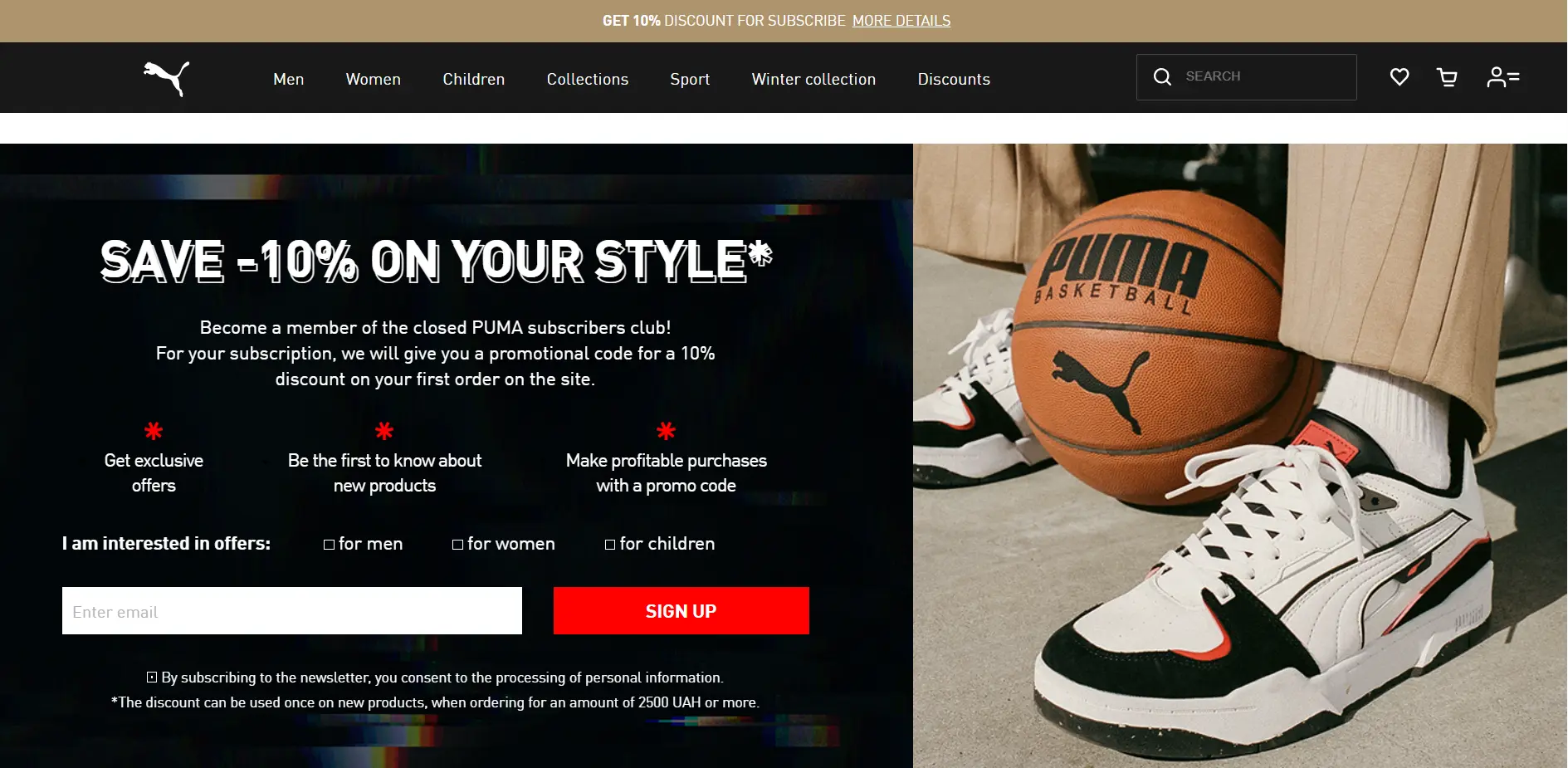
To start, PUMA’s marketers use a widget on the homepage. It offers a 10% discount while clearly communicating the benefits and value of subscribing.
Visitors can also immediately select categories that interest them, such as for men/for women/for children. This helps subscribers receive only relevant offers while providing the brand with additional data for personalization.
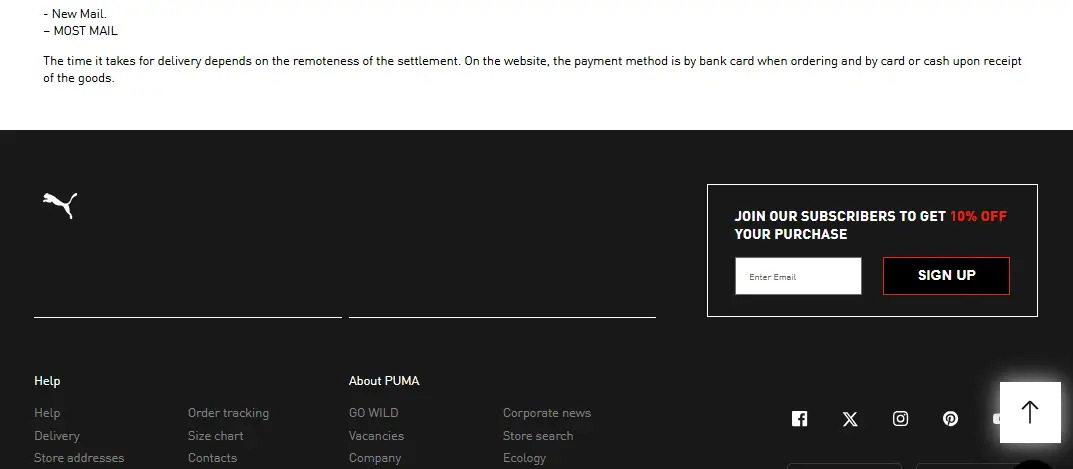
The next point for collecting contacts is the website footer. A simplified subscription form is placed there for those who closed the first widget and scrolled down. This embedded widget appears on every page and concisely encourages subscriptions with a 10% promo code.
Different Types of Widgets in Yespo
The Yespo platform offers a variety of widgets for any ecommerce need, from standard subscription forms and pop-up notifications to feedback collection forms (NPS) and age verification forms. But that’s not all. Yespo users also have access to a wide selection of the most conversion-driven engagement tools — gamified widgets.
Another mechanism is the homepage banner. Typically, such a banner includes a countdown timer and encourages users to leave their contact information in exchange for early access to promotional offers. This approach works particularly well for fixed-time campaigns, such as the New Year season or Black Friday.
Using a similar banner for Black Friday, the PUMA team achieved a +6% increase in their subscriber base in just one week.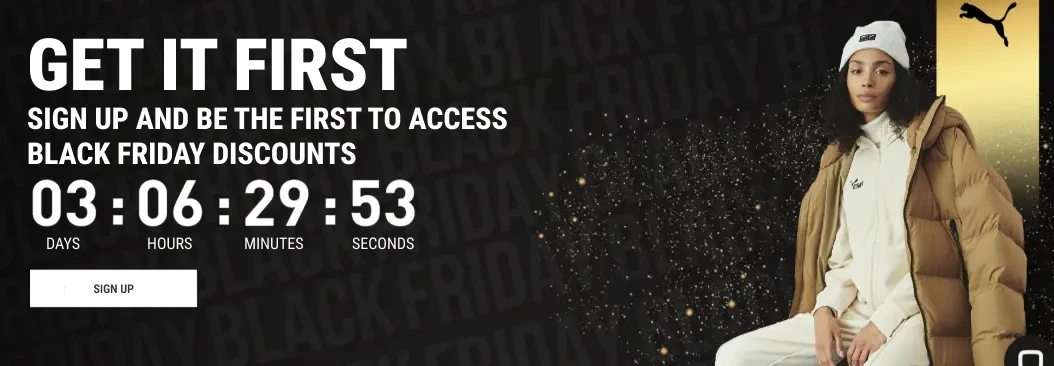
Another tool for growing the subscriber base is wishlists. They are extremely popular among online shoppers because they allow users to track price changes, availability, and new arrivals, making the process of deferred purchases more convenient. Wishlists are available only to registered users, which naturally encourages users to sign up.
For example, a user is looking for running shoes in size 42, but they are out of stock. The wishlist “catches” when the desired size is back in stock and, through a configured trigger, sends a notification via email, enhanced with additional product recommendations for the shoes — such as socks and a running jacket.
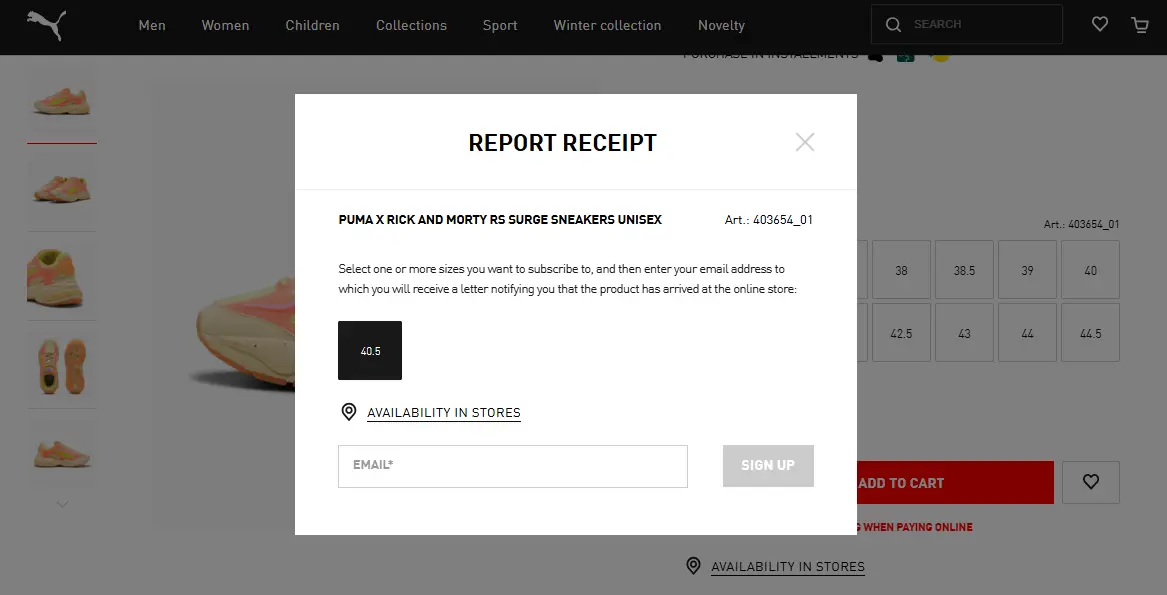
However, the company does not rely solely on online tools for collecting contacts. Since 2024, some PUMA physical stores have introduced self-service kiosks, allowing shoppers to browse the full online assortment directly on the sales floor. This innovative solution enables customers to see the entire catalog, not just what is available in that specific store, saving time on searching.
If the desired size is not available on the shelf, the customer can check availability in the online store via the kiosk and immediately subscribe to back-in-stock notifications for the required size. The company is currently working to expand the coverage of self-service kiosks.
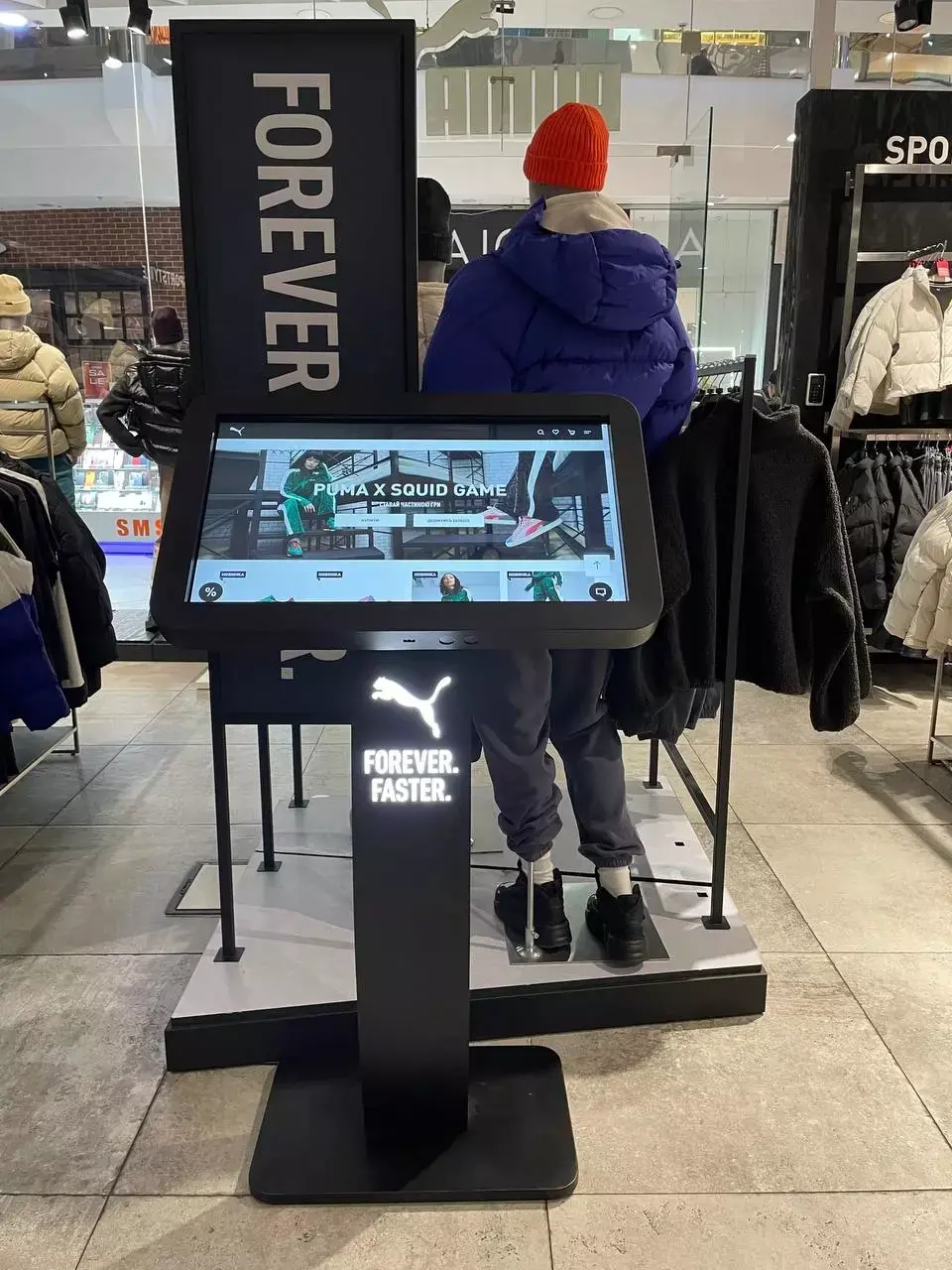
This is a proper omnichannel solution, as it combines offline and online experiences, expanding the shopper’s choices beyond a single store and helping the brand acquire new subscribers directly at physical points of sale.
Step 3: How to Build a Customer Engagement Funnel?
After a customer subscribes, the main work begins — building long-term relationships and creating truly valuable content. For PUMA, email is not just a reporting metric but a tool for strengthening loyalty and ensuring stable revenue growth.
The process consists of five sequential stages:
- Building the funnel. Clearly defining the key interaction points: first visit and welcome email, product views, adding to cart, purchasing, and repeat purchases.
- Developing content for each stage. Creating specific emails for every type of interaction: welcome series, follow-ups after product views, abandoned cart, back-in-stock/price-drop notifications, product recommendations, order status updates, NPS/reviews, etc.
- Analytics from open to purchase. Tracking OR/CTR/CR and other metrics: what people open, where they click, and what they buy after receiving the email. This is done both for individual triggers and for the entire account.
- Continuous strategy improvement. Based on analytical insights, subject lines, hooks, recommendation blocks, button placement, frequency, and sending time are optimized. Tests are run. If an idea doesn’t work, it’s discarded. If it works, it is scaled.
- Customer feedback. Regular short surveys are conducted to determine what is useful, what is missing, and which categories are more interesting. The responses influence the email plan and recommendation logic.
This cyclical approach enables continuous improvement of communication quality and enhances its effectiveness.

Yevheniia Chekhovska, Senior Performance Marketing Manager at PUMA Ukraine LLC
First and foremost, we must value our customers. It is essential to consider individual needs, including their favorite categories and whether they have children, to avoid overwhelming them with unnecessary information.
Step 4: How to Properly Structure Email Campaigns?
Fundamentally, email communication with subscribers is divided into three main groups: promotional emails, trigger-based emails, and product recommendations. PUMA’s marketers work closely with each of these groups, implementing everything using the omnichannel Yespo CDP tools.
Promotional Letters and How They Work
PUMA’s promotional emails go far beyond standard announcements about sales and discounts. Instead of simple product selections, the team creates diverse content that keeps the audience engaged and builds an emotional connection with the brand through every message.
New collections
The brand not only informs subscribers about new arrivals but also explains why they are interesting: how the collection was created, what inspired the designers, and how to style the pieces in everyday outfits. Examples featuring brand ambassadors are also used, helping subscribers visualize the look and make decisions more quickly.
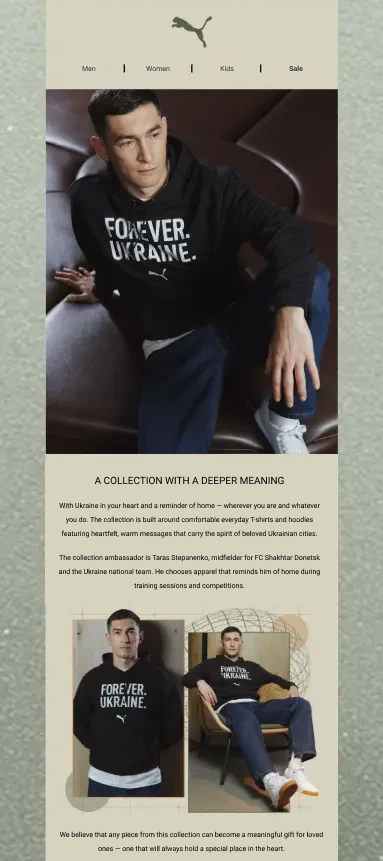
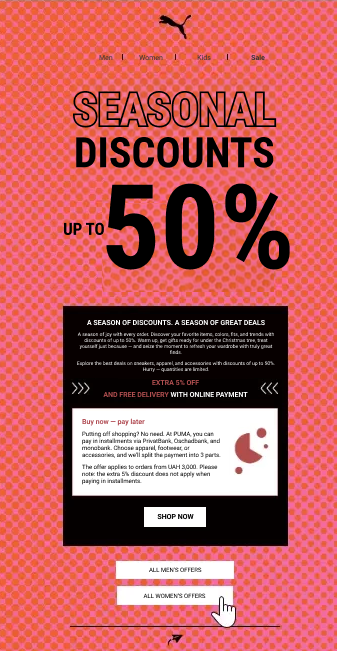
Promotional emails
These emails include announcements about sales launches, seasonal discounts, and special offers. In addition to the promotional information, the team often adds curated selections of looks and products tailored to different activities and lifestyles (work, training, leisure). The fewer choices “from scratch” for the customer — the more clicks and purchases.
Gamified mechanics
Interactive elements that encourage an extra click: small tasks, quizzes, holiday activities. For example, in a Christmas-themed game, users unlocked special curated selections for correct answers. This keeps attention, increases CTR, and gently guides users toward the cart.
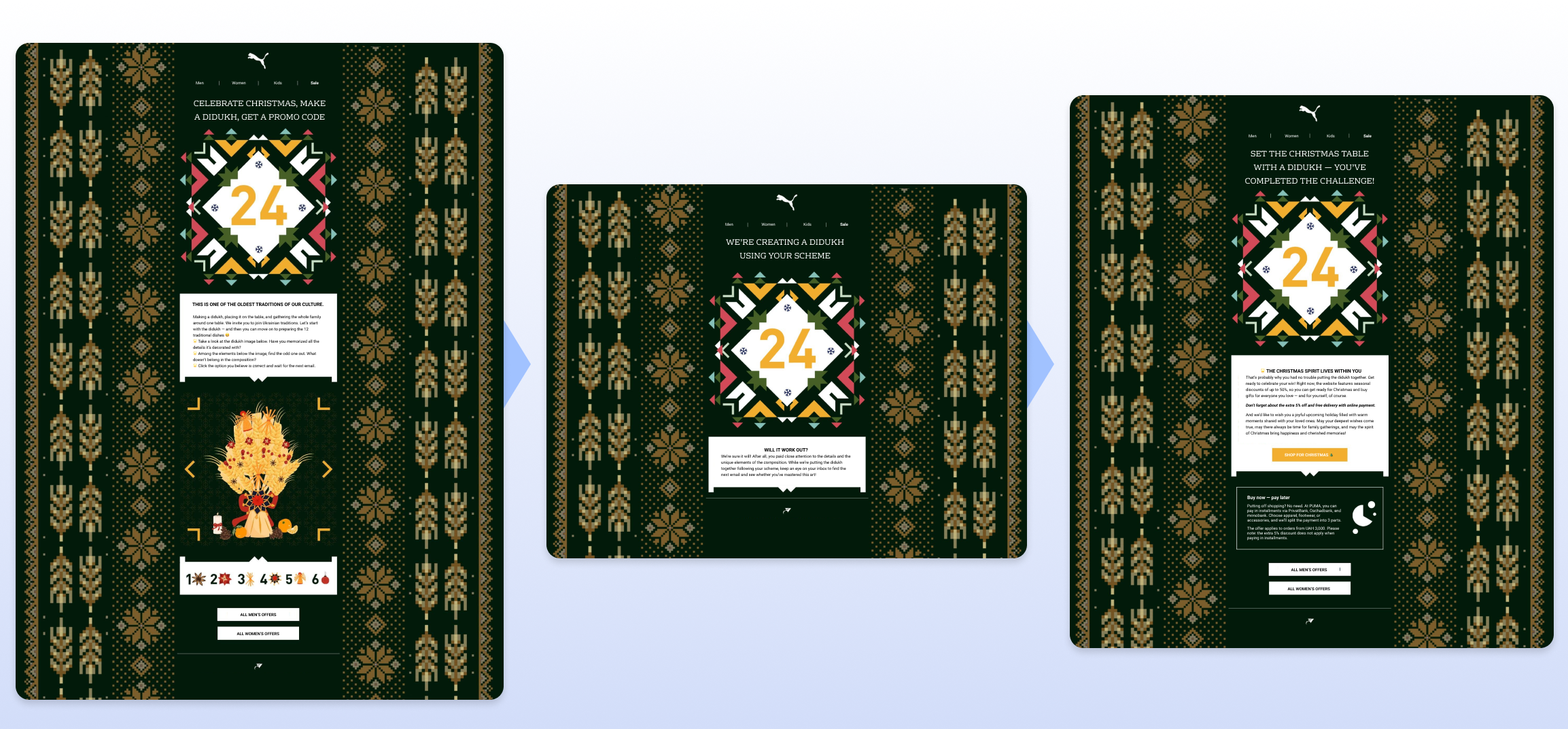
Gamified Mechanics in Emails Using AMP
AMP is a Google technology that enables the creation of interactive emails. The Yespo email editor allows users to create dynamic forms, carousels, and even full-fledged games using AMP. All of this is available directly in the inbox — there is no need to navigate to external websites.
Service improvement
Short emails highlighting useful features: installment payments, express delivery, and extended pickup options. For example, PUMA marketers offered subscribers a 3-hour express delivery at the end of the year, resulting in a significant increase in sales from customers who were rushing to buy last-minute gifts.
Entertaining content
Holiday greetings, news about ambassador achievements, themed mini-events (Humor Day, Hiking Day, Training Day). If a partner wins a trophy, the brand shares the excitement and launches discounts on the team’s collection. This creates a sense of belonging and strengthens the connection with the brand.
Ready to create professional email campaigns for your business?
Collaborations
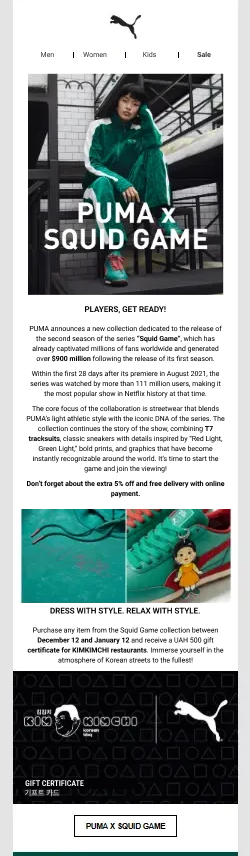
Collaborative projects with stars and popular franchises (Rihanna, A$AP Rocky, Dua Lipa, the “Squid Game” series) include announcements, pre-orders, and unconventional bonuses (for example, a promo code for a restaurant). For the most anticipated drops, pre-registration is activated — these collections sell out very quickly, so being first in line is advantageous.
Email Marketing Automation with Triggered Emails
The PUMA team also pays close attention to automated emails, as triggered workflows are an excellent source of additional sales. These emails are always logical, well-structured, not overloaded with information, and optimized to elicit customer responses.
Event-based triggers are set up once and require little ongoing attention, yet consistently generate results.
Triggered emails in PUMA’s strategy are divided into four main groups, each carefully developed.
Subscription and Registration (Welcome Series)
First impressions matter. The welcome series greets every new subscriber and immediately demonstrates value, including how to place an order quickly, available delivery/payment options, the benefits of having an account, and why subscribing offers more (early access, special offers, and personalized selections). Next comes a small push toward the first purchase: a promo code and several relevant products are selected based on basic preferences (men’s, women’s, and kids).
Service Emails (Order Status Updates)
“Order received,” “Shipped,” “Ready for pickup,” “Cancelled” — short, clear updates where the essential information is visible at a glance: order number, status, and next steps. For in-store pickup — address and opening hours. For delivery — tracking number and estimated arrival time. Emails are designed to be readable even on the lock screen; the subject line and first line should provide clarity without requiring the message to be opened.
Call to Action
“Abandoned Cart,” “Back in Stock,” “Abandoned Browse,” and “Price Drop on Viewed Items” are triggers that gently encourage the customer to make a purchase. Did the customer browse products but ultimately stop short of making a purchase? Relevant triggers remind them when discounts appear, or product recommendations suggest interesting and relevant alternatives. If the customer adds items to the cart but doesn’t complete the purchase, automated reminders guide them through the process of finishing what they started.
By using the “Back in Stock” trigger, the following results were achieved over two years:
- 55% of recipients opened the email;
- 29% of them clicked the link;
- 4% of those who clicked placed an order.
Birthday
A personal birthday or a child’s birthday is always a celebration. A warm greeting from the brand, accompanied by a small gift, such as extra loyalty program points, can also generate additional sales. Everyone wins.
Recommendation Letters – Marketing Personalisation with AI
Recommendation emails are a separate element of the strategy, utilizing artificial intelligence algorithms to analyze customer data. Product recommendations are not just another digest, but they are personalized selections tailored to each customer. Recommendations are designed to save the shopper’s time, suggest the best options, and gently convert interest into a purchase without overwhelming them with unnecessary information.
Personalized selections are created based on the user’s real actions and interests, ensuring high relevance. For personalization, data from viewed products, abandoned carts, wishlists, and favorite categories are used.
Surveys – How to Understand What to Improve Next
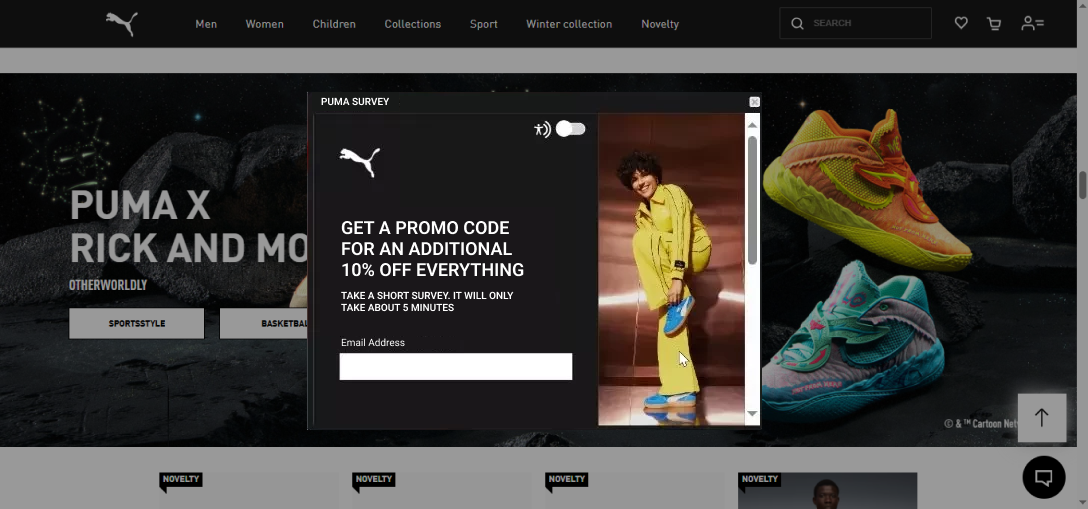
Every few months, PUMA asks its customers what they find truly useful in communication: what topics are missing, how often they would like to receive letters, and what categories are currently a priority. The format is quick and straightforward: a few questions, completed in up to 5 minutes, and a bonus for participation.
What to Use Besides Discounts?
PUMA marketers’ surveys have shown that promo codes and special offers do not always sufficiently motivate customers.
Sometimes, a selection of relevant complementary products or a curated outfit for specific occasions — “for a walk,” “for the gym,” or “for the weekend” — encourages purchases more effectively than a standard discount.
Personalized product recommendations are an excellent tool for this type of engagement.
Step 5: Omnichannel Use of Recommendations with Yespo’s Enhanced Algorithms
For PUMA, the use of recommendations is not limited to email campaigns. The brand actively employs recommendation blocks in messaging apps and the mobile app. Since 2024, the company has been using new, enhanced AI algorithms based on transformer models and LLMs.
In 2024, compared to 2023, the following metrics grew:
- Revenue from recommendations: +173%
- Number of orders: +195%
- Conversion rate: +194%
How does it work? The Yespo system collects customer data from various sources and unifies it into a single, unified customer profile. This allows each customer to see unique, personalized recommendations across all channels. These recommendations are generated based on the customer’s complete interaction history across all touchpoints and follow unified algorithms. For example, if a visitor clicks on a recommendation block on the website, it will influence the content of the recommendations they receive in promotional emails.
Yevheniia Chekhovska, Senior Performance Marketing Manager at PUMA Ukraine LLC
These are impressive results, and I am very grateful to the Yespo team for their effective collaboration. Of course, there is always room for growth, but the results achieved so far are already remarkable.
Among the most popular recommendation blocks on the PUMA website is:
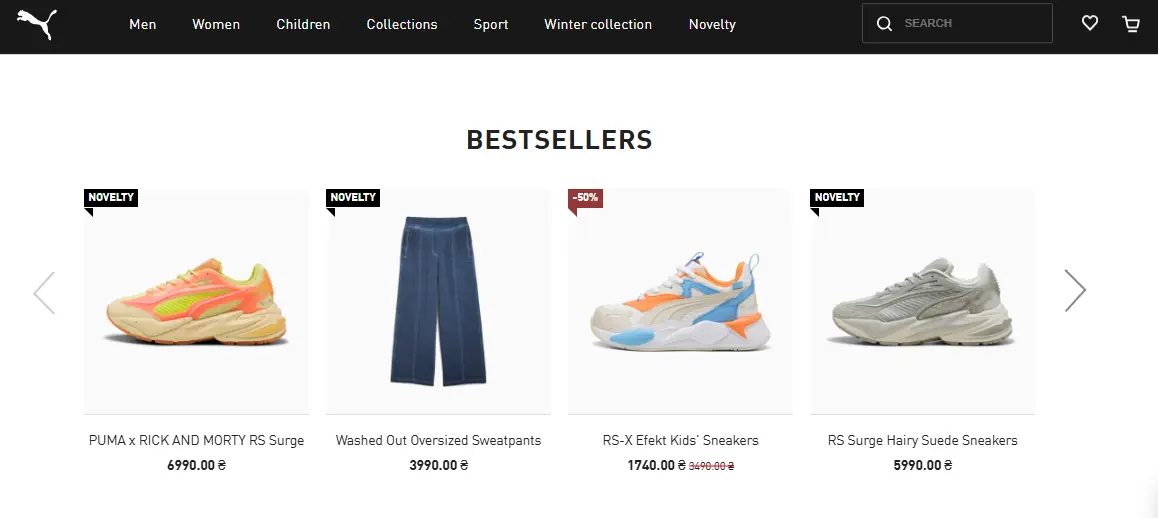
Bestsellers
This block is placed on the homepage and is built around the most popular products — those that sell the most. For example, in the fall, this might include tracksuits, sweatpants, and jackets. In the summer, it could feature shorts and T-shirts. This block is effective because it highlights popular items, allowing customers to “catch the trend.”
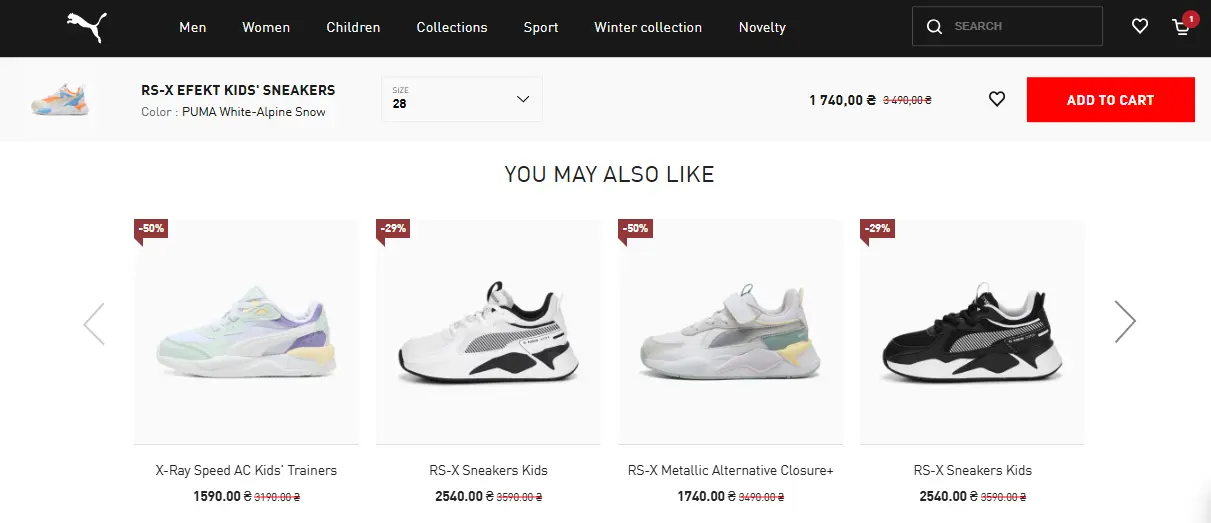
You may also like
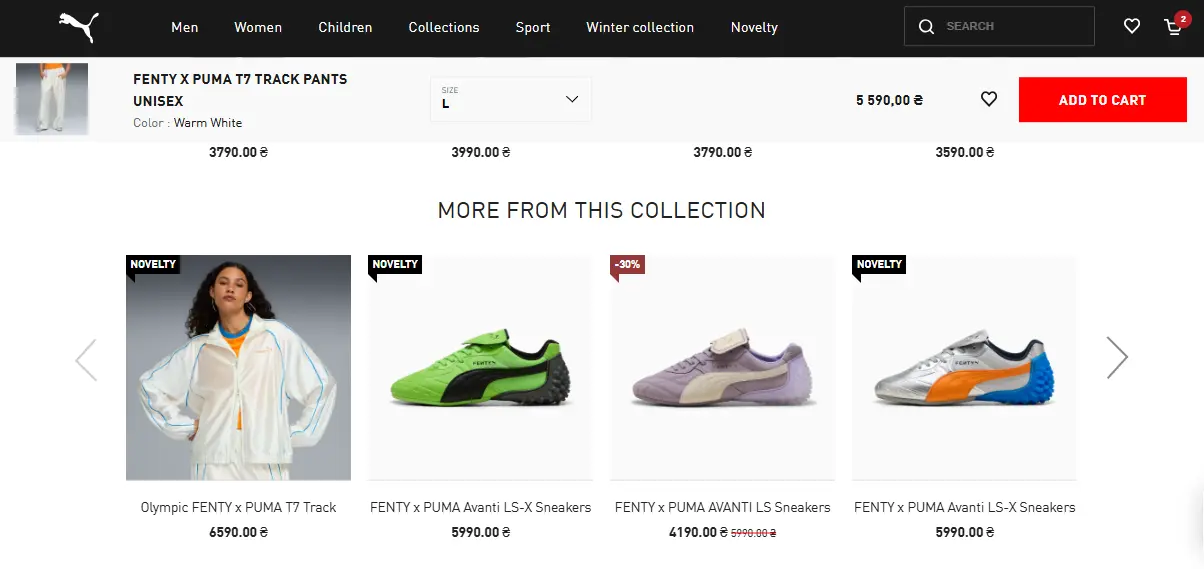
This block is located directly on the product page. For example, if a customer selects pants, the recommendation algorithm suggests other pants they might like. If a visitor views sneakers, the AI selects the most relevant and similar sneakers for recommendations. This is a simple and effective way to increase sales, as an alternative option can be more appealing if the visitor is not completely sure about a particular product.
Complete the look
Another block from the product page — and one of the most technically challenging to implement. Its functionality is reflected in the name: the algorithms select products that, when combined, create a complete look. For example, hoodies, sneakers, and jackets are suggested to complement a pair of pants. This approach creates an effective mechanism for upselling and increasing the average order value.
For the “Complete the Look” block, it is essential to align with customer expectations and train the algorithm to work specifically with PUMA’s products. The logic of this block is continuously improved — some parts are even manually fine-tuned to achieve the most relevant recommendations.
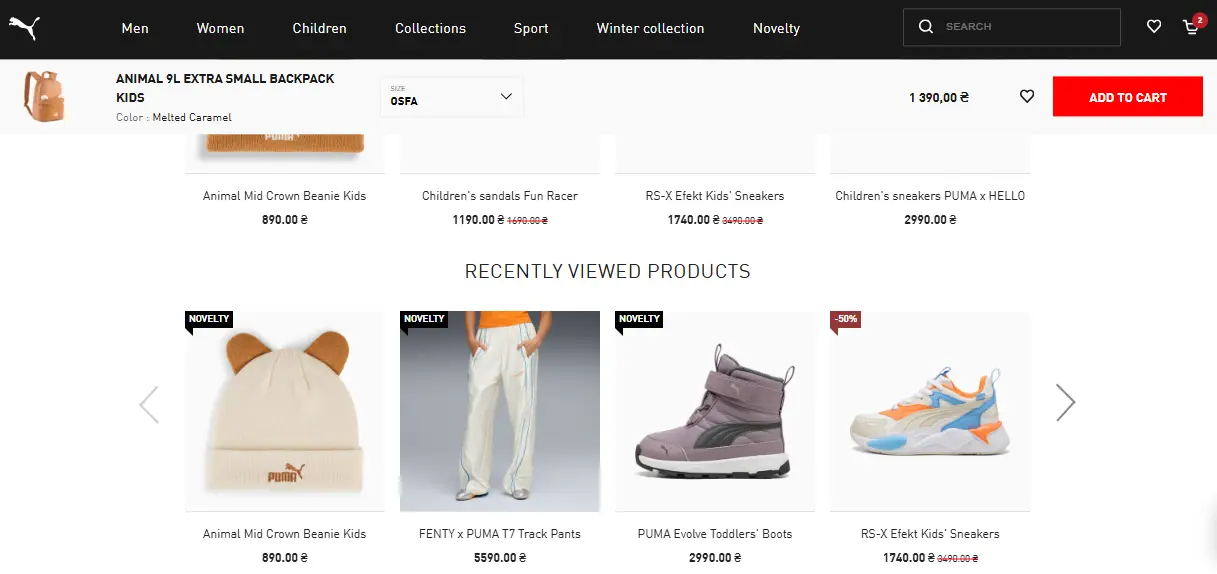
Recently viewed products
It is also used on the product page. This is a relatively new block, but it is already showing strong results with a high conversion rate. It serves as a continuation of the wishlist, helping customers remember and quickly return to a product they were interested in. This approach to reminders increases the likelihood of a sale for items that might otherwise have been forgotten.
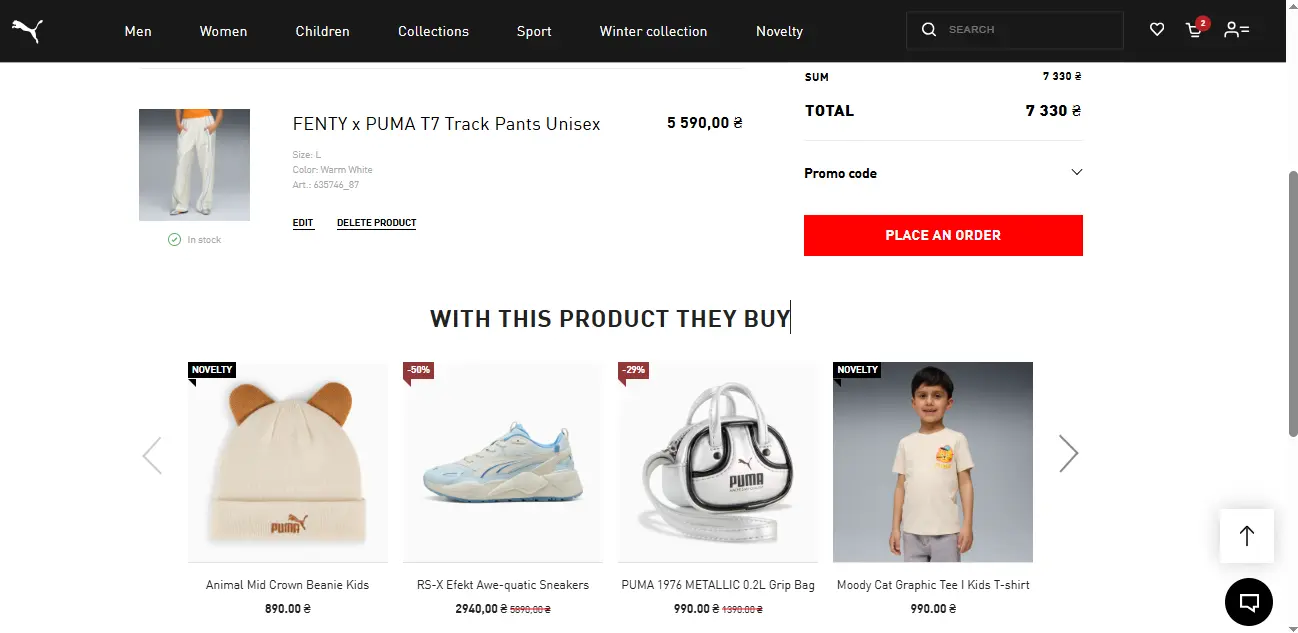
Customers also boughtWith this product they buy
This block appears on the cart page, before the checkout process. It is the most successful recommendation block on the website, with the highest conversion rate. It is so effective because once a visitor reaches the cart, they are already ready to make a purchase. For customers, it provides an additional way to review products, and for the brand, it is one of the most effective mechanisms for upselling and increasing the average order value.
Not Just Email but Other Successful Channels in PUMA's Strategy
No matter how successful the emails are, PUMA marketers don’t stop there. Here are a few channels that have proven highly effective in their strategy:
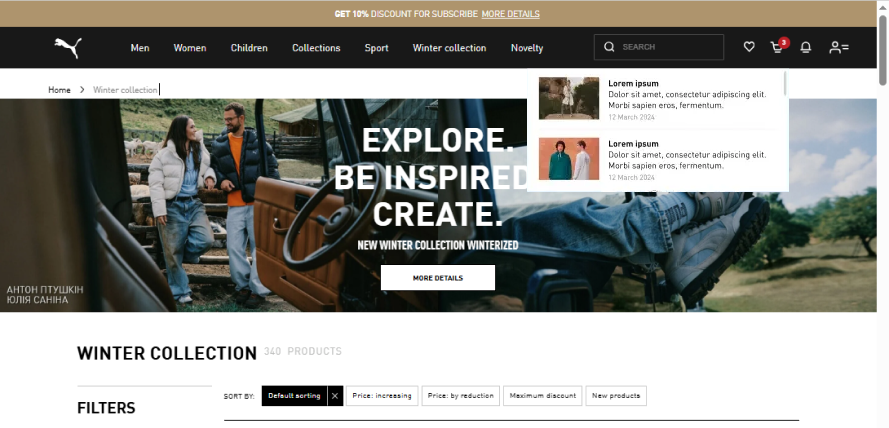
App Inbox
Embedded notifications directly on the website or in the app. These notifications appear as a bell in the header of the website or app and keep all important messages until the user views them (or until a specified time expires). This format is very convenient because the brand does not need to compete for attention with other messages in inboxes, as is often the case with emails or messengers. The customer knows that the most important information is always there, and no transition to another website or app is needed to view the notification.
I want to learn more about App Inbox features
App Inbox reminds you about unused promo codes, informs you that the desired size is back in stock, or that your order has already been shipped. A short, clear message with one action – "Apply", "Add to cart", "Track".
Gamified Widgets
A simple interactive mechanic that encourages user engagement. These widgets also serve as an effective tool for growing the subscriber base.
They entertain while guiding choices, collect contacts and interests (such as running, training, and lifestyle), and turn casual views into purchases.
The company used a gamified mechanic triggered by a widget for its Halloween campaign. A special cat-shaped banner appeared on the website, informing users about the opportunity to get a 5% discount. When a user clicked on the widget, they were invited to register and play a game — finding 10 cats. Upon successfully completing the game, the user received a promo code for a discount. Thanks to this mechanic, which simultaneously entertains and drives engagement, PUMA gained over 100 new subscribers in just 5 days.
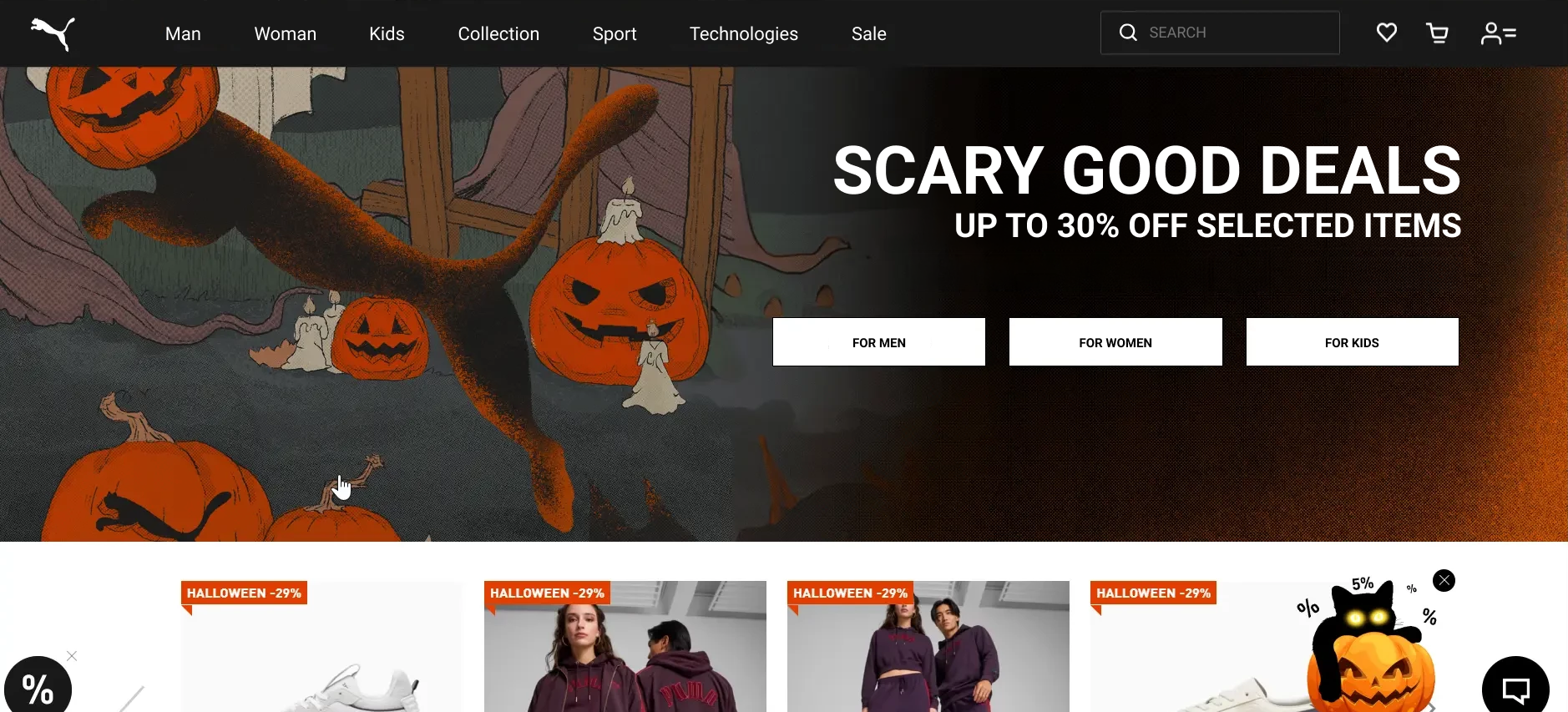
App Inbox handles immediate tasks without unnecessary redirection, while gamified widgets provide a simple reason to engage and leave contact information. Together, they shorten the path to purchase, enhance personalization, and consistently contribute to conversion.
Conclusion
This case study illustrates a simple truth: consistent growth doesn’t come from a single successful email, but from a cohesive system. PUMA systematically collects subscriptions, uses relevant triggers, synchronizes recommendations across all channels, and employs tools that simplify interactions — from order status updates to App Inbox. As a result, people find what they need faster, complete purchases more easily, and return more often thanks to simple yet precisely tuned mechanisms. The numbers confirm the effectiveness of this approach:
Website recommendations:
+173% revenue
+195% orders
+194% conversion rate
Early access banner:
+6% to the subscriber base in one week
“Back in Stock” trigger:
~55% open rate
~29% click-through rate
Want to learn how to build an effective retention strategy for your business? Fill out the form below, and Yespo experts will help you find a solution tailored to your specific needs.