Content
04 February 2026
1920
15 min
5.00
Gamification in Ecommerce: What It Is and How It Works

Valeriia Shudryk

Yulia Sadovska
Content
Both children and adults love to play. People enjoy surprises, the feeling of winning, and small joys in routine actions. And online shopping is no exception.
Is your business using the potential and power of play?
Gamification adds interactivity to emails or websites, improves user experience, increases customer loyalty, and brings additional sales.
In this article, we’ll look at how gamification works in ecommerce, show examples of games from Ukrainian brands, and explain how to implement these mechanics without developers using Yespo CDP.
What Is Gamification
Gamification is the application of game elements to non-game activities to encourage audience engagement. In ecommerce, gamification transforms familiar actions like browsing a site, choosing products, and making purchases into an interesting game. Instead of a static "Get a discount" form, users see dynamic pop-ups and then spin a wheel, scratch off a scratch card, guess where a gift is hidden, or complete a short quest.

Dmytro Kudrenko, co-founder and CEO of Yespo, Stripo, and Claspo
Gamification is an approach designed to simplify and make communication more natural, influencing the psychological characteristics of human thinking in a hectic, busy environment. A mandatory condition of gamification is the presence of fun: it’s always easier for a person to perform an action if they get positive emotions.
The result – more interactions, higher conversions, and LTV growth without additional discounts.
In Yespo clients’ cases, gamified campaigns showed CTR 2–3 times higher than standard forms, and average order value increased by 10–15%.
Gamification works because it relies on basic psychological triggers:
- Sense of ownership. When a user earns a bonus in a game themselves, the benefit is perceived as earned. This enhances the prize’s value and increases the likelihood of using it.
- Dopamine loop. Anticipation of a prize, the moment of winning, even a short animation, trigger a dopamine spike – a positive reaction that people want to repeat.
- Social effect. Phrases like "238 users have already won today" or "7 scratch cards left" create a sense of community, trust, and a slight urgency effect.
- Curiosity. Hidden gifts, limited number of attempts, or new levels maintain attention. People want to know the result, and the entire process creates a vivid interaction experience.
Gamification isn’t just entertainment – it’s a tool for specific business tasks, aimed at motivating users to take certain actions: leave an email, make a purchase, or share content, receiving a reward for it.
Let’s look at how game mechanics help businesses at each stage of the marketing funnel.
The Role of Gamification in Marketing
Constant sales fatigue consumers, so businesses are looking for formats where a discount isn’t given freely – it needs to be "won" or "found." Such mechanics activate the same ownership effect we mentioned earlier and allow brands to stimulate action without mass-distributing maximum discounts.
At the same time, gamification doesn’t replace marketing. It enhances it where attention needs to be grabbed, something explained, or a nudge toward action given.
Acquisition and Lead Generation
The goal of this stage – grab attention, collect contacts, and prevent quick page closure.
It’s important for businesses to stand out from competitors and attract new customers, but a static "Subscribe and get" pop-up is often closed automatically. It’s a different story when an interactive element appears – the brain gets interested: "Oh, what’s this?" Gamified widgets (pop-ups) transform the standard subscription process into a game, and about 60% of respondents say they’re more likely to make a purchase after interacting with gamified content.
Mechanics used:
- Fortune wheel with prizes
- Scratch card with surprises
- Gift box with prize options
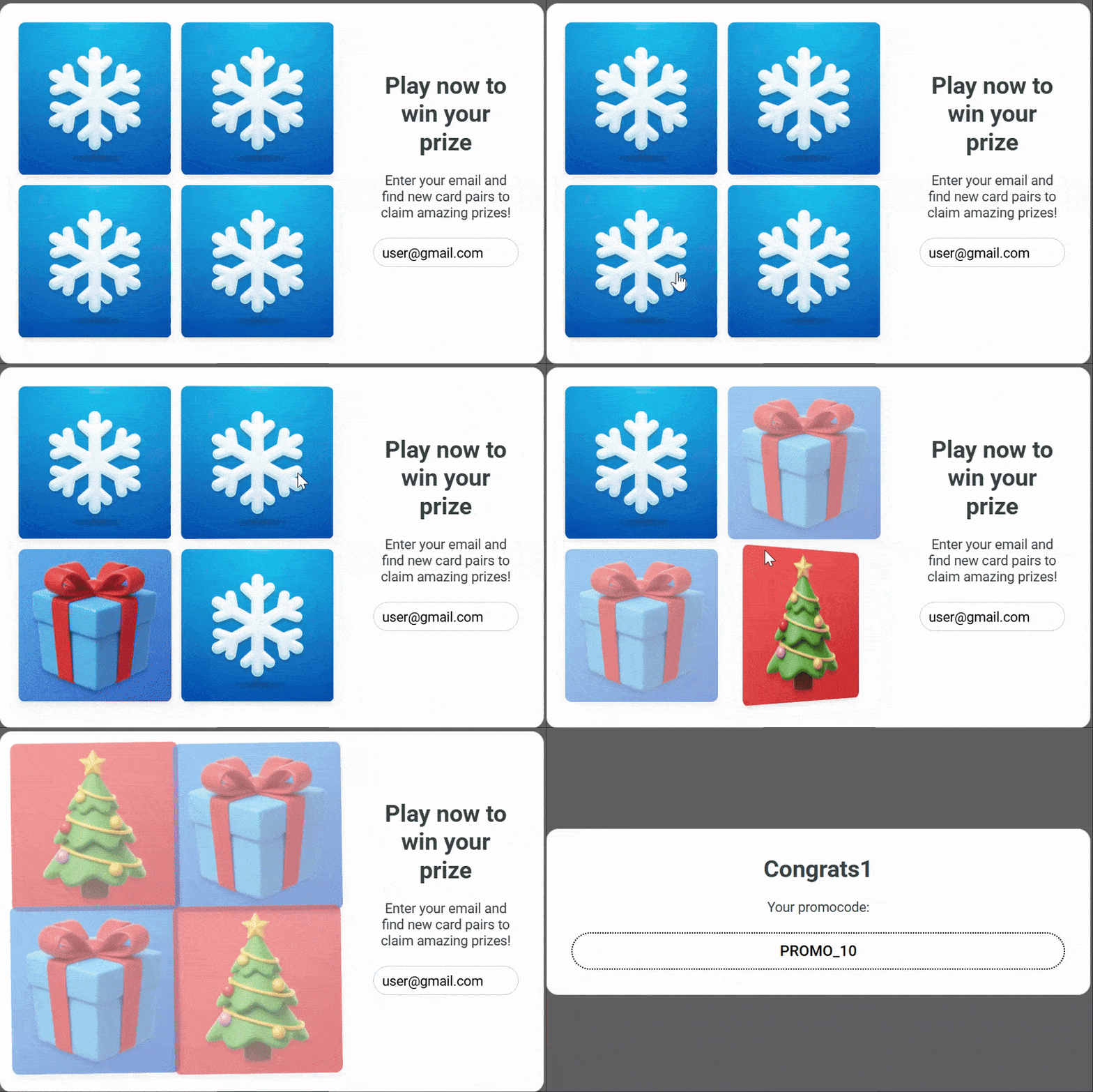
- Find a pair, etc.
Case Example
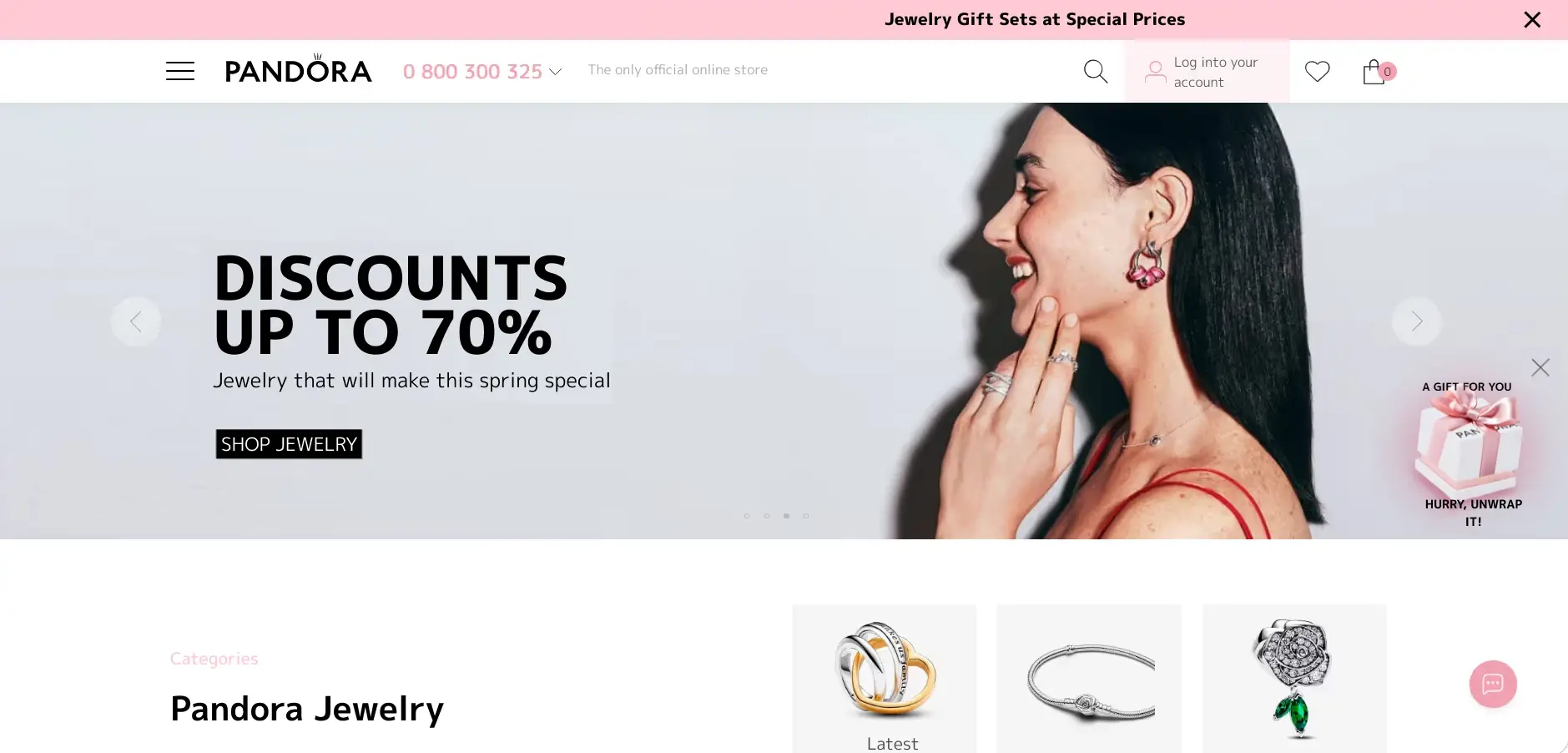
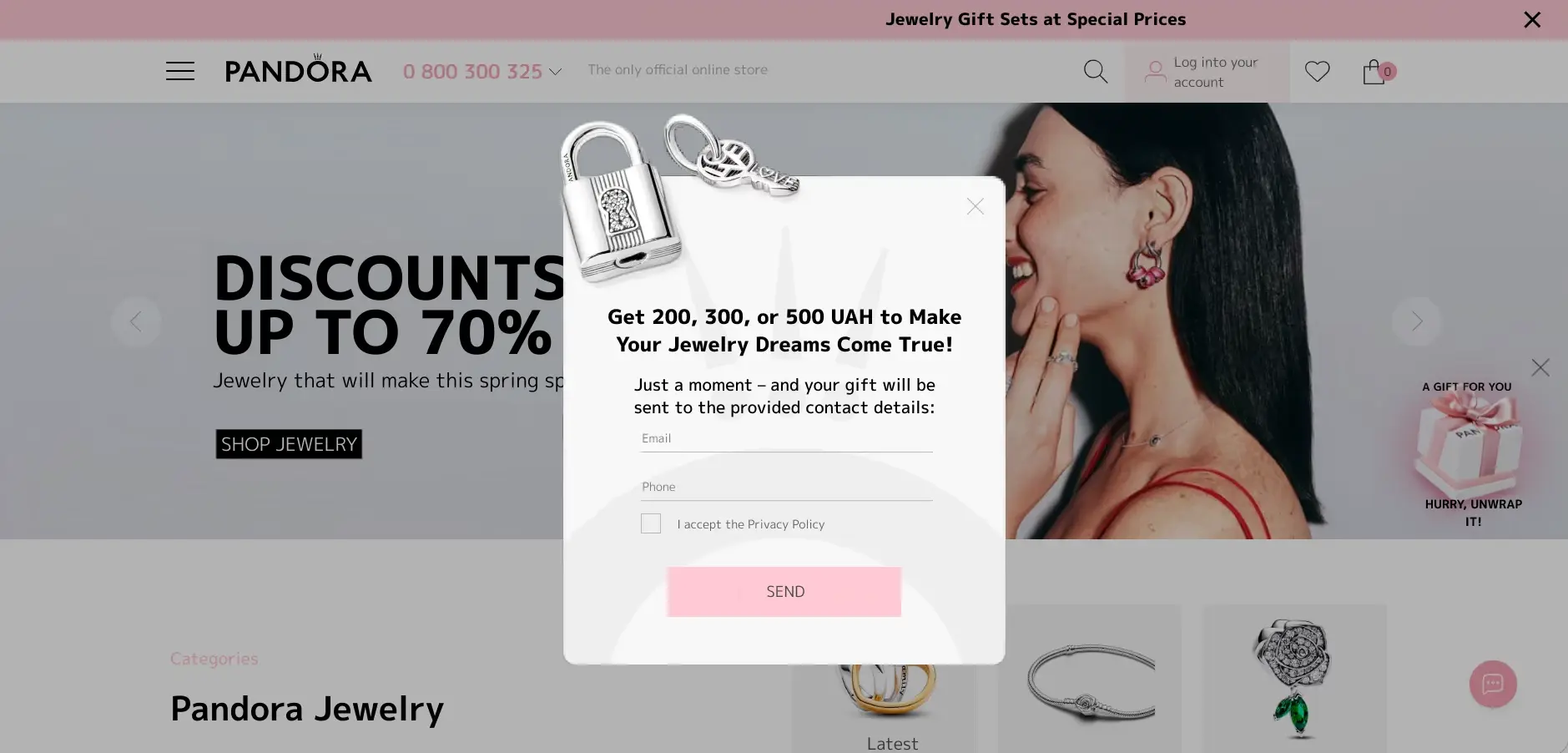
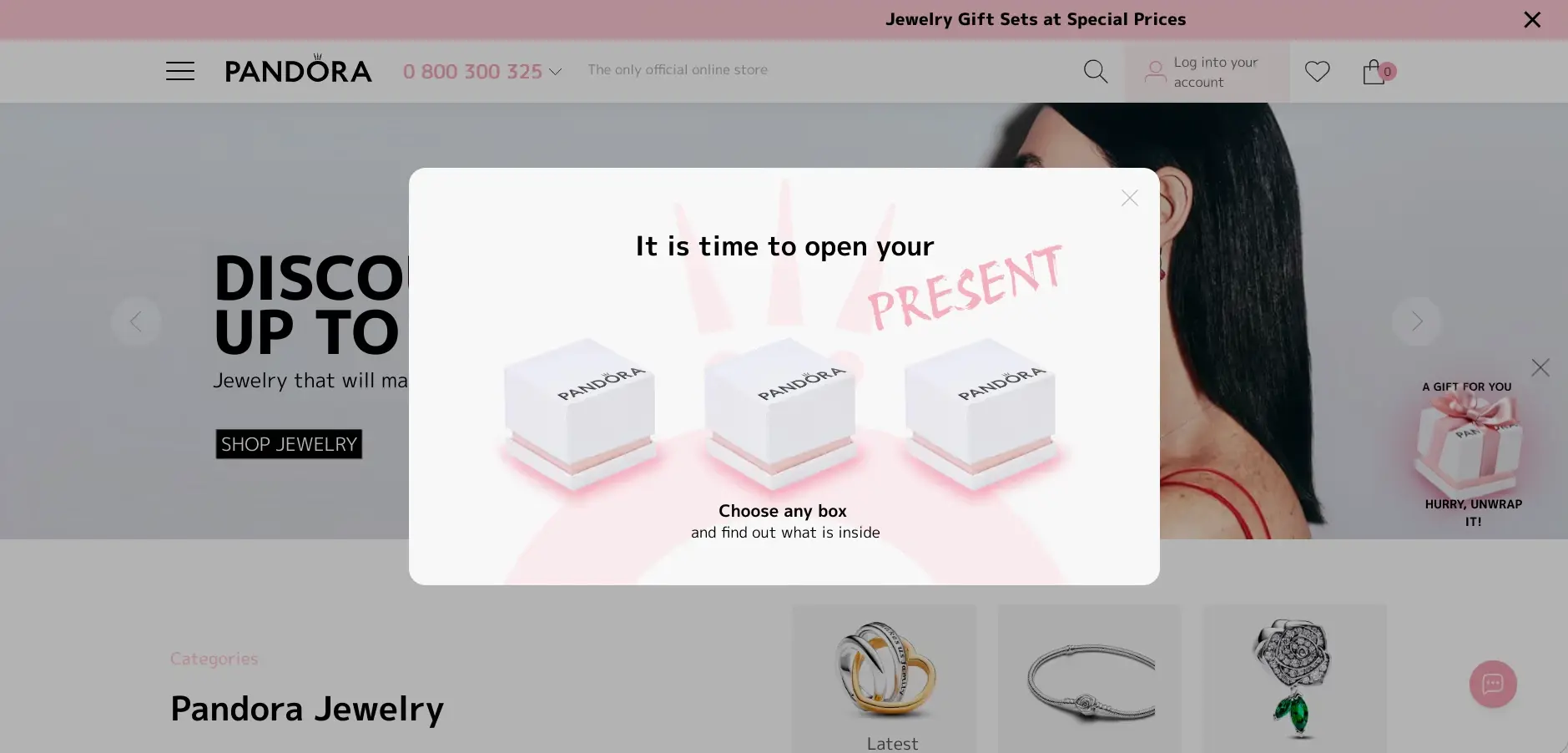
Jewelry brand Pandora replaced the standard subscription pop-up with a gamified "Gift" widget. Users filled out a contact form, chose one of three mystery boxes, and guaranteed to receive a discount promo code.
Result: In 3 weeks of the campaign, subscriptions increased 7 times compared to the previous static widget, and they collected as many new contacts as they usually would in 3 months. The campaign brought +200% new leads, +46% active base, and +190% revenue from the retention channel.
Interest and Consideration
Stage goal – maintain customer attention, help navigate the assortment, and make a choice.
The user is already on the site, browsing products or categories, but hesitating. At this moment, a standard catalog doesn’t always help make a decision. An alternative – add a gamified element, for example, a quiz that suggests relevant products.
Mechanics used:
- Quizzes like "Which product is right for you?"
- Interactive surveys
- Product knowledge games
Interaction time: 2–5 minutes – enough to introduce the product without tiring.
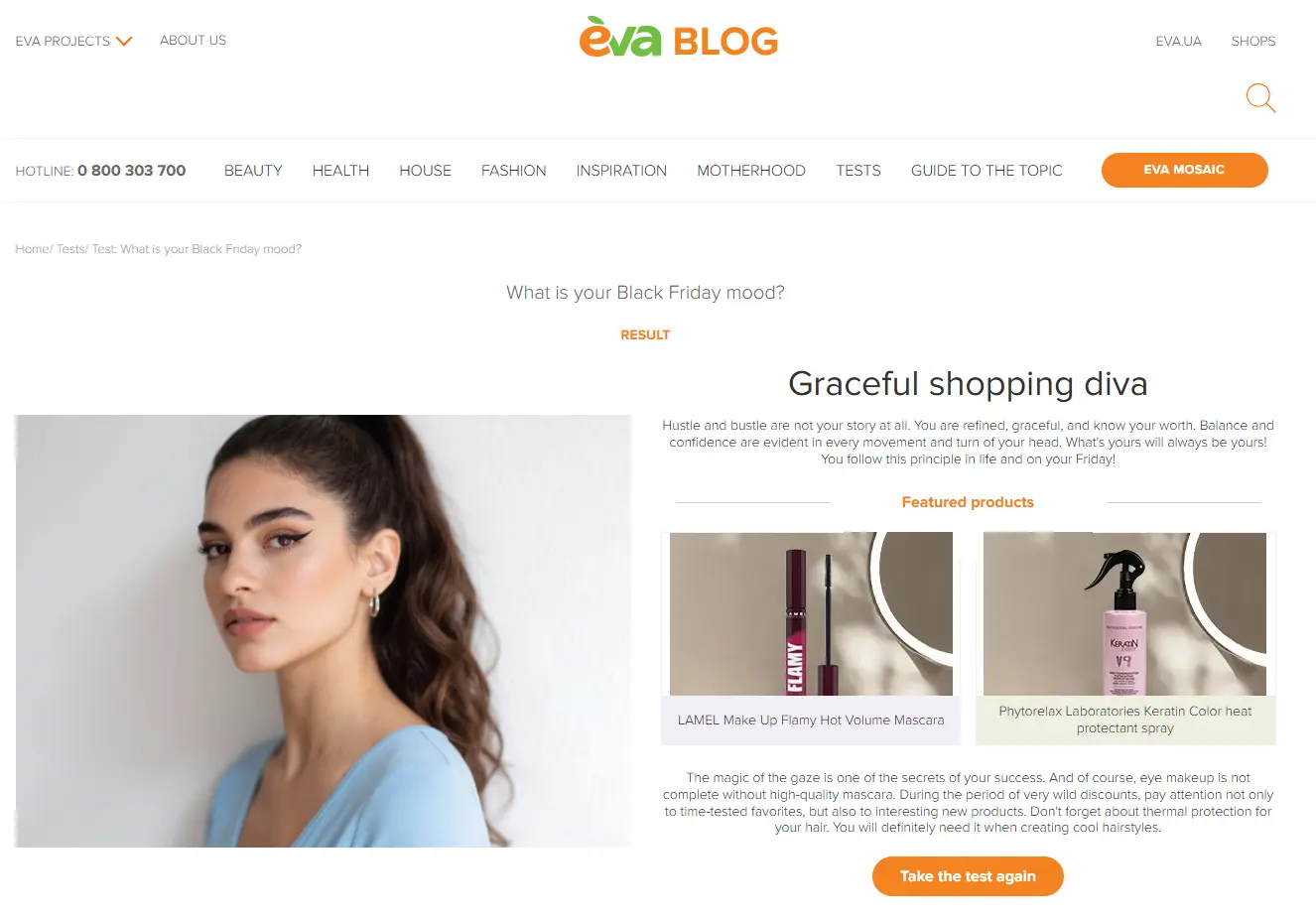
For example, on the EVA website, users can take a test and get a "Perfume Prediction" and product recommendations.
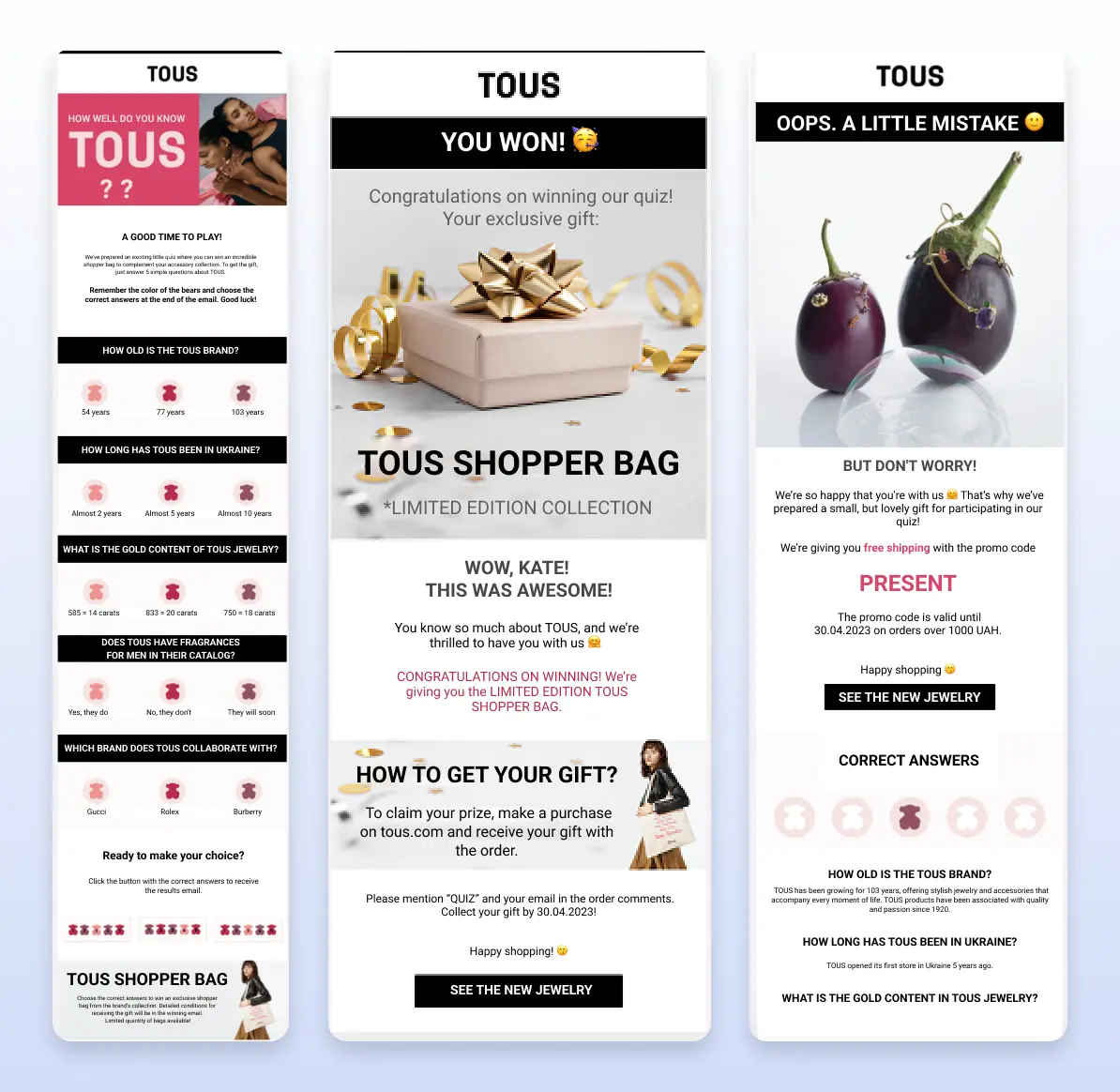
Gamified scenarios at the consideration stage work not only on the site but also in email communications. For instance, a jewelry brand used a quiz about their brand with a gift to engage customers.
Case Example
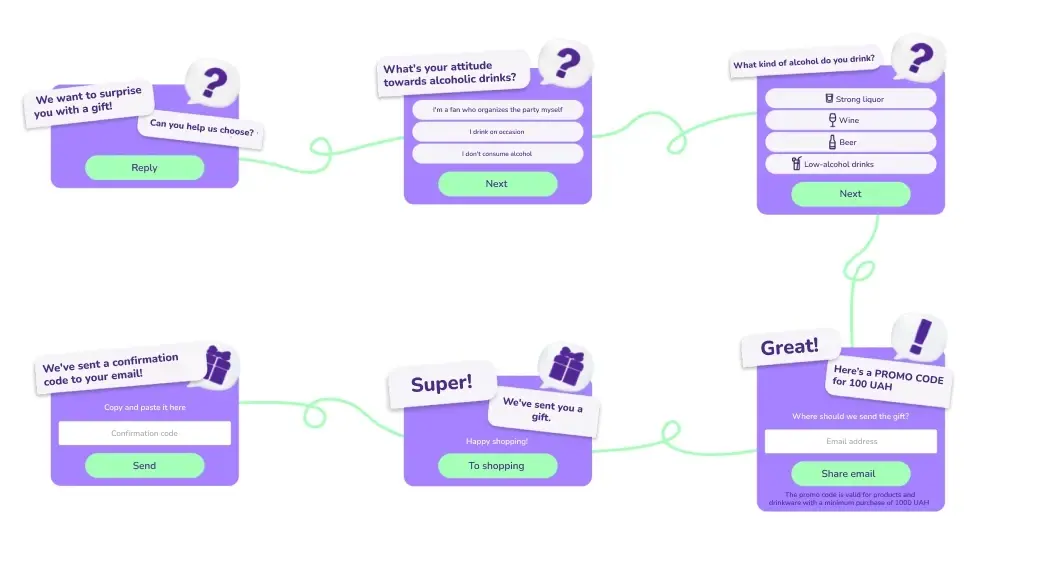
Online supermarket MAUDAU offered visitors to answer a few questions in exchange for a gift. As a result, the brand segmented the audience by interests and got sales: 52% of new subscribers immediately placed an order.
Conversion
Stage goal: turn "thinking" into "buying," increase average order value.
The user has already selected products and added them to the cart, but hasn’t proceeded to checkout. At this moment, it’s important to remove doubts and give an additional incentive to complete the purchase.
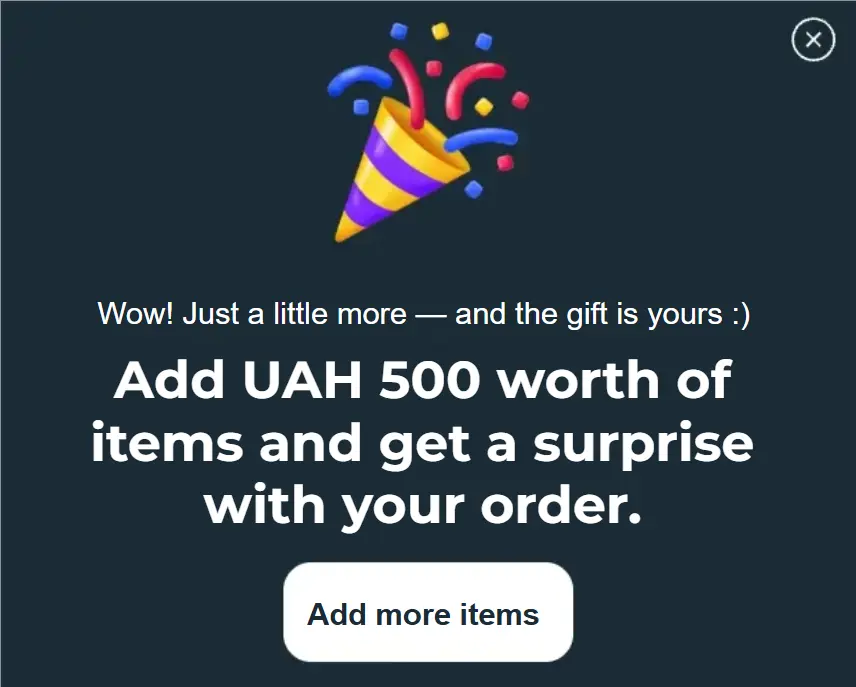
Gamified mechanics with a clear condition are used for this: for example, offering to receive a bonus or discount after reaching a certain cart amount.
"You have 900 UAH worth of products in your cart. Add another 100 UAH – and you can spin the fortune wheel for a special discount or gift."
Mechanics that work:
- Countdown timers
- Time-limited game attempts
- Progress bars "X UAH until free delivery"
- Rewards for exceeding cart threshold
- Gift box available after adding N products
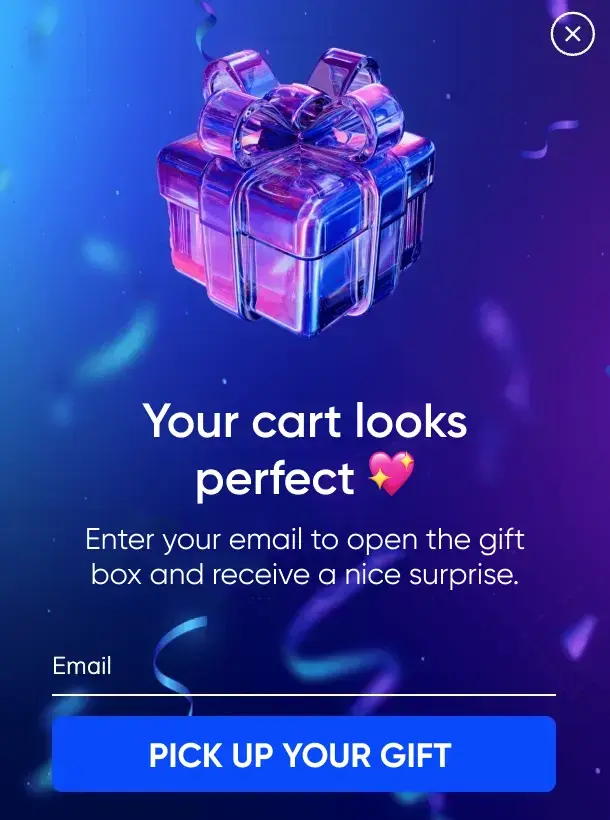
A benefit that activates only at a certain check size works as a soft incentive: to get the promised reward, the user must fulfill a simple, clear condition.
Case Example
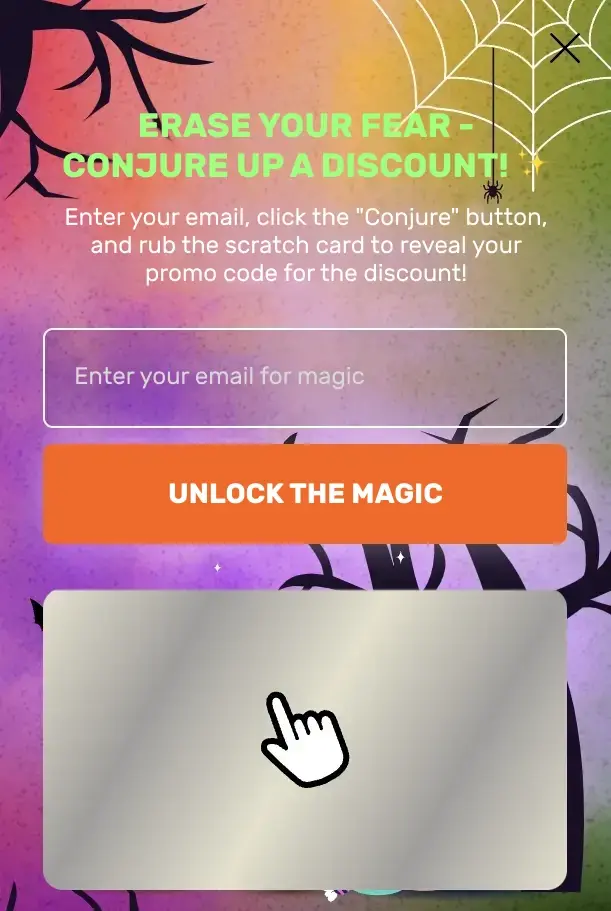
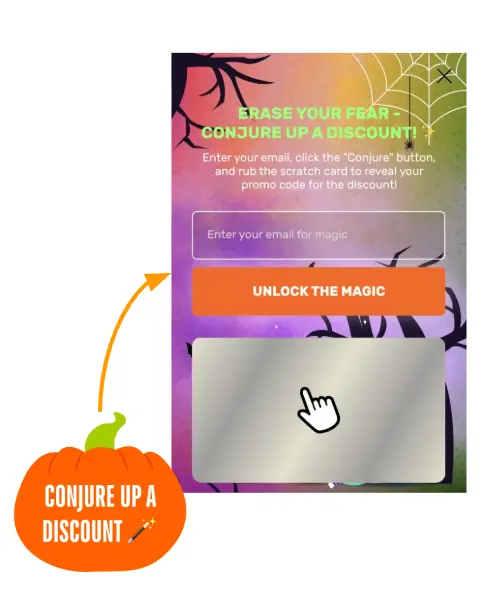
Before Halloween, VARUS.UA added a "Scratch Card" widget to their site. Users scratched it and received a discount that could only be used for orders over 500 UAH.
As a result, 55% of those who saw the widget interacted with it, and an average order value grew by 8%.
Retention
Stage goal: motivate repeat orders and build an emotional connection with the brand.
After the first purchase, most brands simply send a promo code for the next order. Gamification makes standard customer-company interaction similar to a game – users return to collect additional points, level up, or spend accumulated bonuses.
Such regular micro-actions form a habit, and the brand gets loyalty without constantly attracting attention with discounts and promotions.
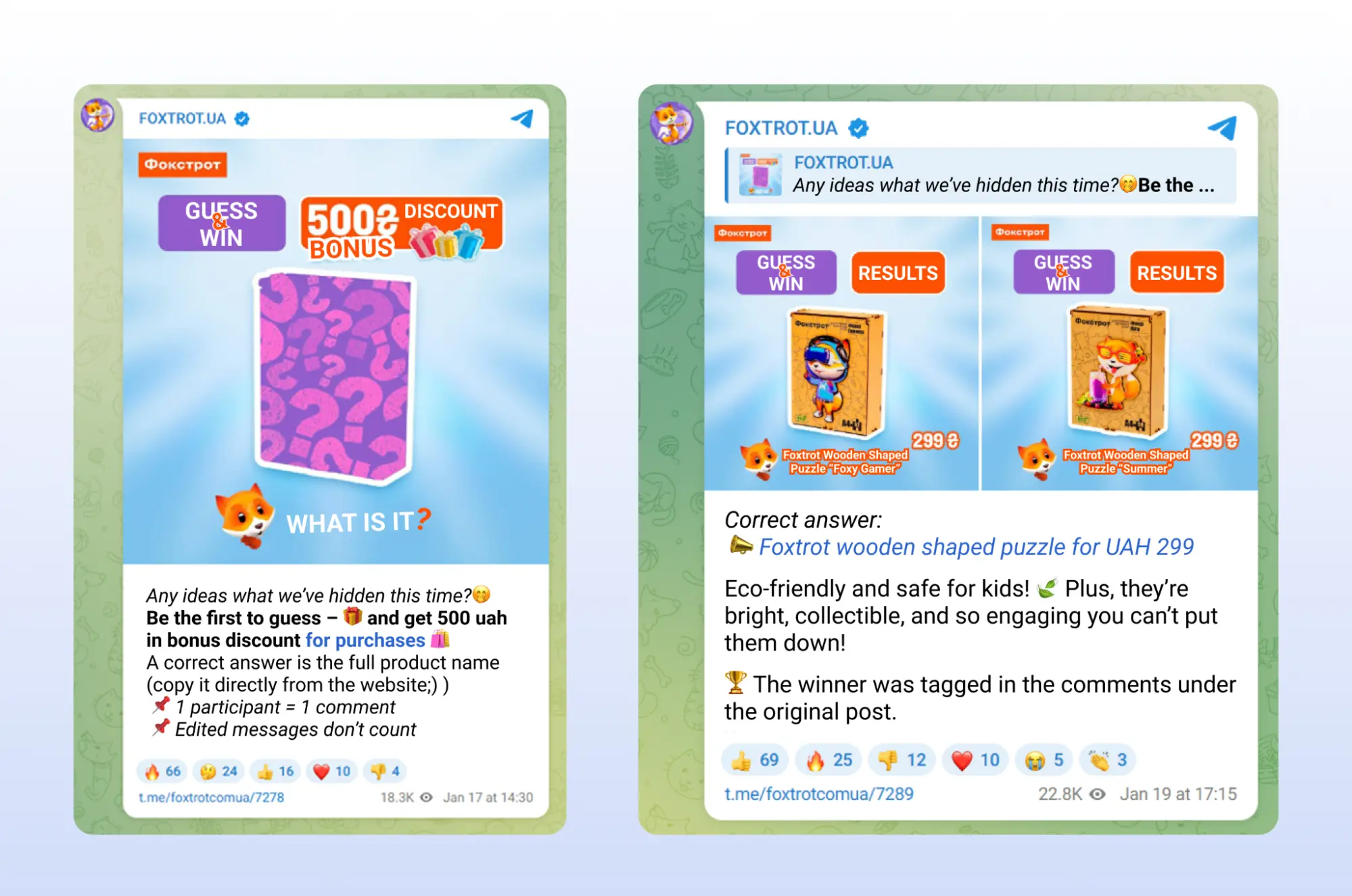
Mechanics that work:
- Daily tasks with rewards
- Leaderboards
- Achievement badges
- Seasonal games
Case Example
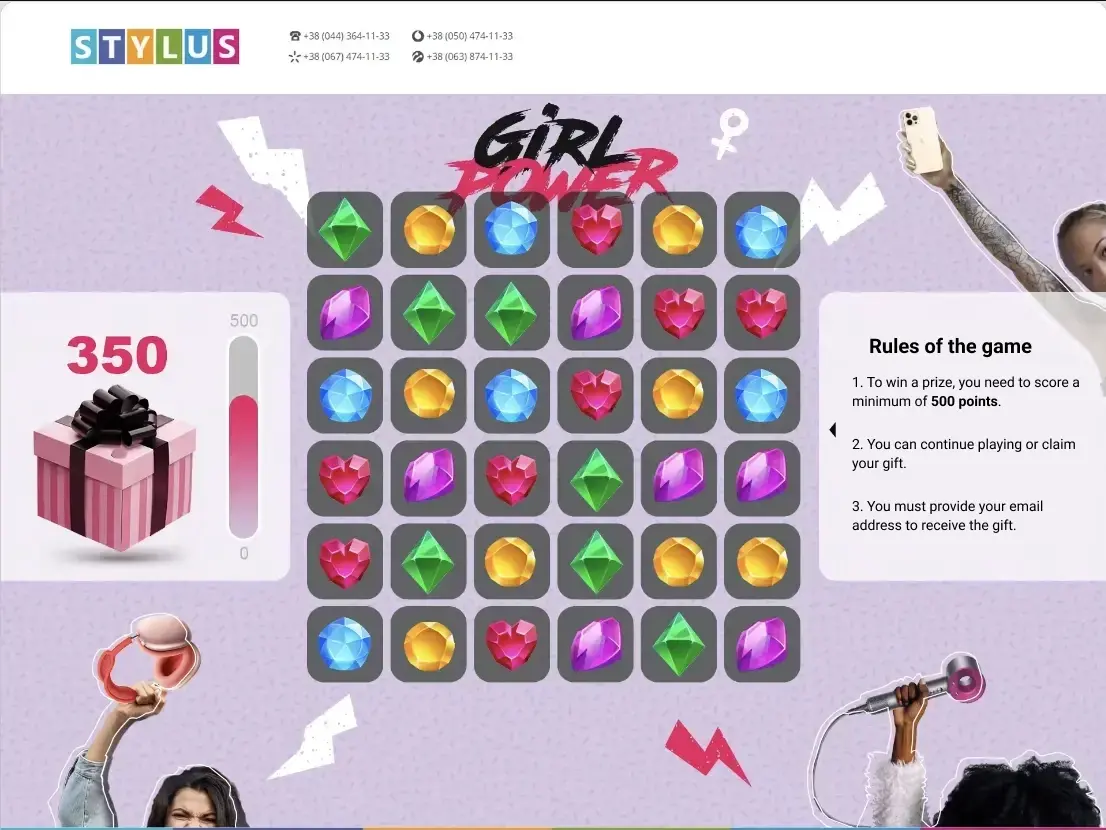
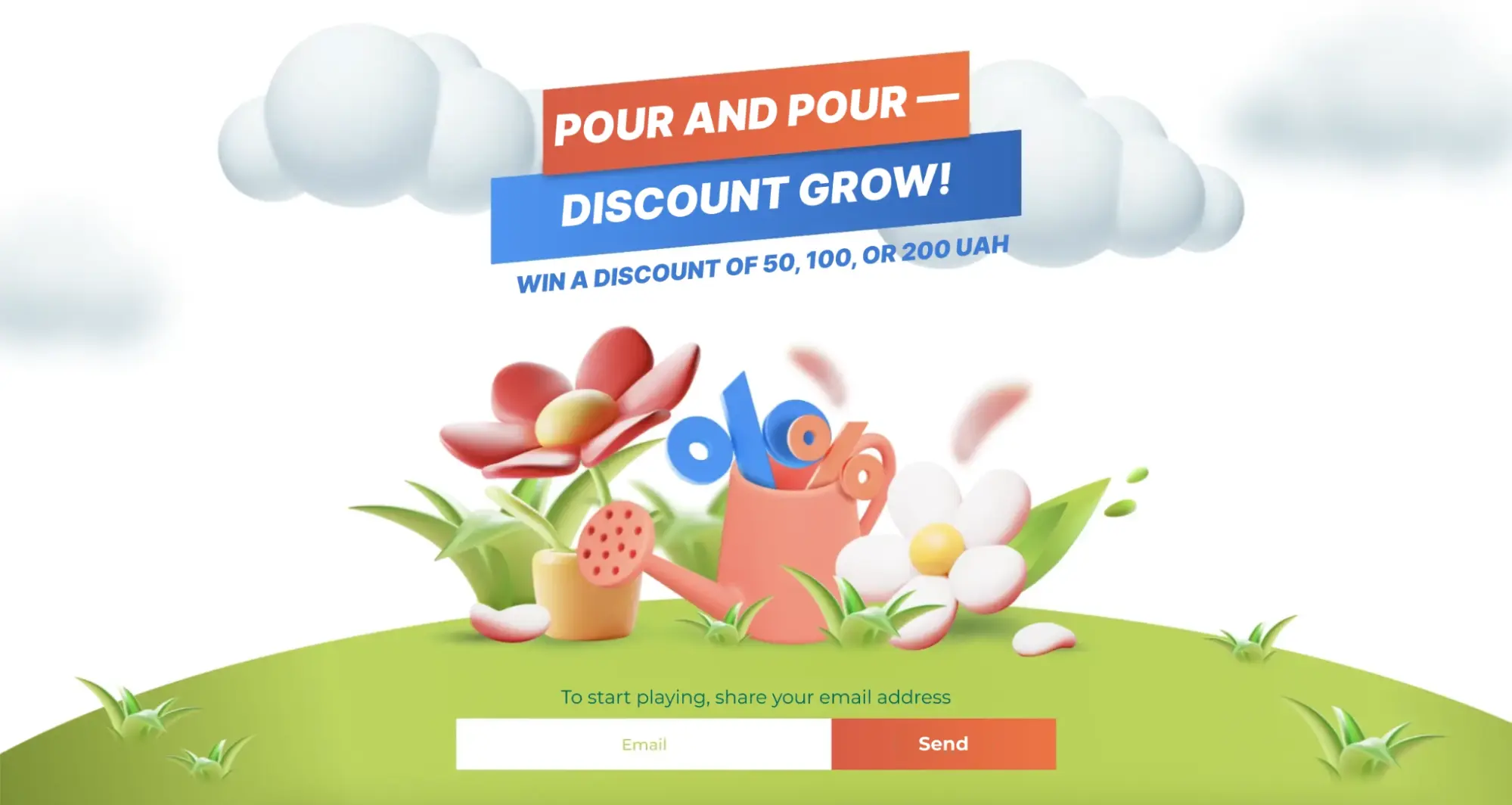
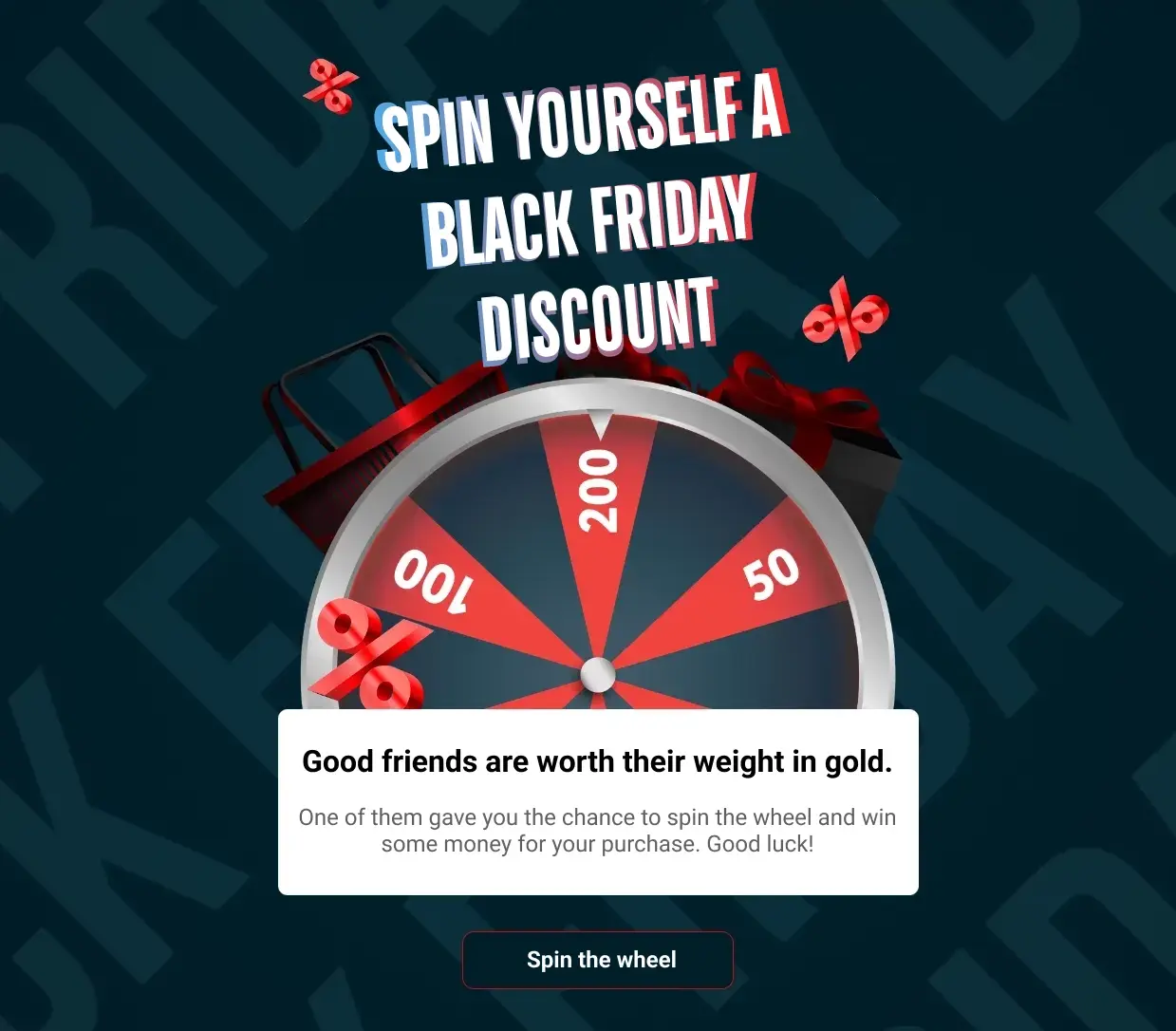
Stylus, an electronics retailer, tested three gamified mechanics over the year: "Three in a Row," "Giftbox," and "Roulette." The most complex was "Three in a Row" (had to arrange elements for points, then exchange for prizes). The simplest is "Roulette" (one click and win).
As a result, during the gamification activity period, monthly revenue grew by 150%.
Gamification Trends 2025–2026
The gamification market is growing rapidly: according to forecasts, its volume will increase from $22.01 billion in 2024 to $72.17 billion in 2029. Brands are actively implementing game mechanics because users have learned to ignore static formats, even if they promise discounts. According to Claspo data, 86% of consumers exhibit banner blindness.
Game mechanics replace passive viewing with interactive engagement. This format helps grab attention and engage users emotionally. In 2025–2026, gamification established itself as a standard marketing communications tool: for many brands, it’s no longer a question of "whether to use" but how exactly and for what purpose.
Gamification as a Business Tool
One key trend – rethinking gamification’s role – it’s no longer perceived exclusively as a way to "entertain the audience."
According to research, gamified mechanics can increase ROI up to 300% and boost conversion rates 4–6 times – provided they’re tied to specific campaign goals and not used chaotically.
That’s why brands apply gamification to solve business tasks:
- Lead generation
- Collecting and updating customer data
- Audience retention
- Sales stimulation
An important component of this trend is measurability. Game mechanics are designed from the outset so results can be tracked, from game participation to purchases.
Is gamification right for your audience?
AMP in Email: When Interactivity Makes Sense
AMP technology has been present in email marketing for several years, but in 2026, it’s used more selectively. Brands apply AMP not as a universal solution but for specific scenarios where quick action without going to the site is important.
Using AMP technology allows completing surveys, playing games, and solving tasks directly in email without needing to go to the site.
Important
AMP technology enables content updates when the email is opened. This means customers always see the current price, product availability, or available booking slots, which is critically important for ecommerce and service sectors.

For complex games, they often lead users from the email to the game page, but AMP remains a useful tool for short interactives and for collecting data directly in the email.
Environmental and Social Focus
A strong trend: integrating company values into game mechanics. Users not only receive a prize but also contribute to a good cause.
Examples:
- "For every purchase over X UAH, we plant a tree. Make 5 purchases – get Eco Hero status"
- "Win the game – we’ll transfer 5% of your order to charity (you choose the fund)"
- Challenges like "Give up plastic packaging for a month – get a bonus"
Creating Games Without Developers
Demand for no-code solutions is growing, with marketers independently launching and testing mechanics without involving developers.
Using ready-made templates allows marketers to quickly launch campaigns and reuse games by simply changing visual elements, rules, and goals to keep the game always relevant.
For example, in the Yespo editor, you can use gamification pop-up templates or build your own version using individual elements from the editor panel.
How to Apply Gamification in Ecommerce: 5 Actionable Tips
1. Start with the Goal, Not the Mechanic
Looking to increase the number of leads? Choose a lead generation mechanic, for example, "Fortune Wheel." Planning to raise average order value – set up the game so the bonus works from a certain order amount, etc.
2. Keep Rules Simple
Users should understand in a few seconds what’s expected of them. Complex rules kill conversion. Optimal scheme: "Enter email – Spin – Get prize."
3. Ensure Technical Accessibility (Fallback)
Not all email clients support games, so be sure to set up a backup version: if the AMP game doesn’t load, users should see an interactive HTML version or an image with a link to the web version of the game, so they don’t lose the opportunity to participate.
4. Test and Change
Don’t stop at one mechanic. Conduct A/B testing of colors, calls to action (CTAs), and game types. Even changing the button name from "Play" to "Win a discount" can significantly impact results.
5. Use Teasers
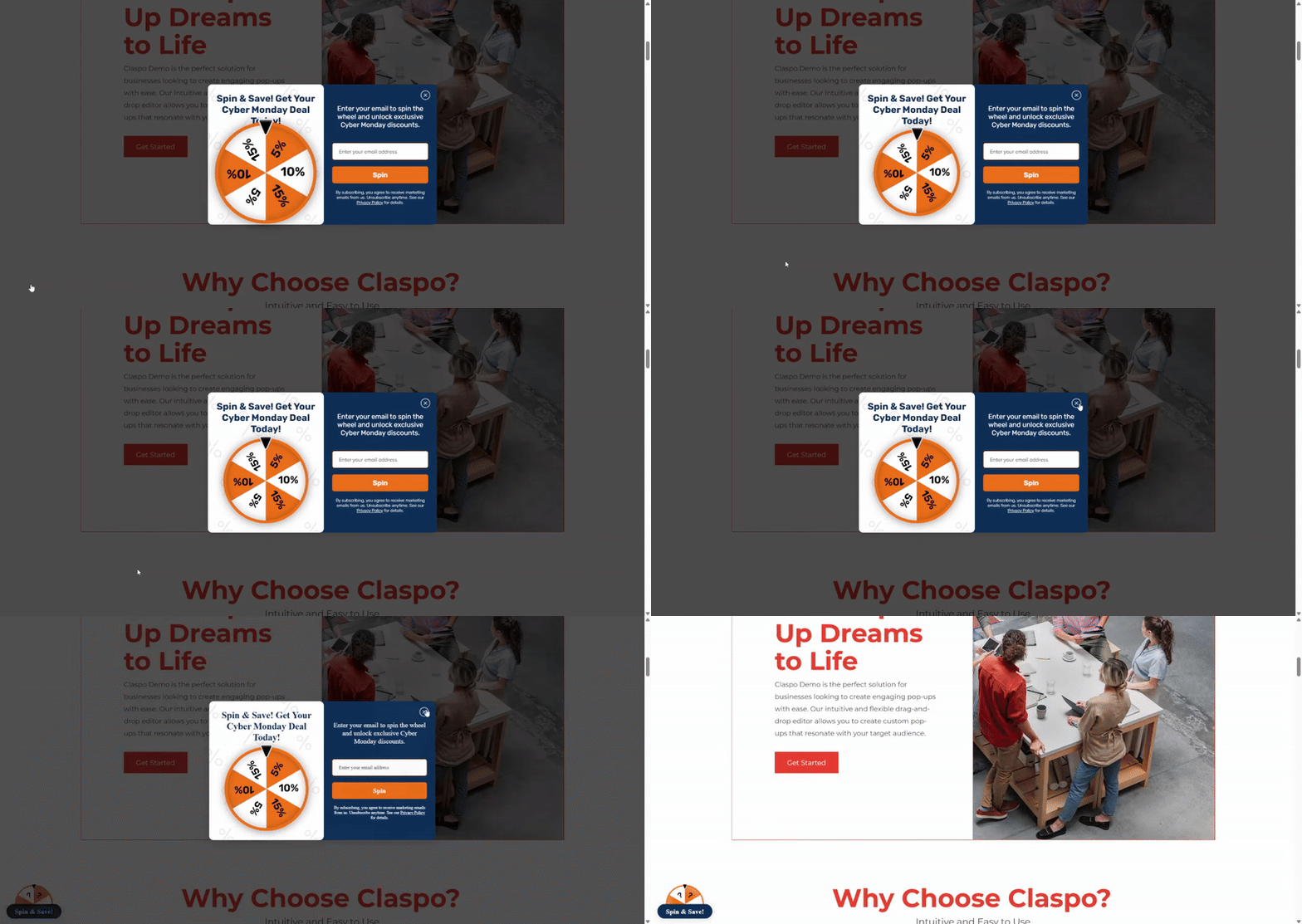
A teaser is a small icon or badge located at the edge of the screen. When a user closes the widget, the teaser remains. After clicking the teaser, the game activates again. This is critically important for maintaining conversion on smartphones, where users often close large widgets due to inconvenience.
Business Perspective Game Quality Checklist
- Measurability. You must be able to clearly track results: how many people started the game, how many finished, what percentage converted to purchase. A game without analytics is a blind budget waste.
- Implementation speed. Good mechanics shouldn’t take months to develop. Using ready-made templates and builders (no-code solutions) allows launching campaigns in hours.
- Independence from developers. Marketers should be able to set up, launch, and change the game independently through the UI interface, without involving programmers for every edit.
- Scalability. A quality game can be easily adapted for different occasions (for example, change the design from New Year to Easter) without rewriting code from scratch.
- Economic feasibility. Resource costs for creating the game should be commensurate with expected profit. That’s why reusable templates are a priority.
Looking for a gamification plan for your specific business?
Summary
Gamification in ecommerce has moved beyond experimentation and has become a proven marketing tool. It helps businesses work with customers throughout the entire journey – from first contact to repeat purchases and loyalty.
In this article, we covered:
- How gamification works and why it’s effective from a user psychology perspective
- Which game mechanics suit different funnel stages – attraction, selection, conversion, and retention
- Key gamification trends in 2025–2026
- Practical principles of applying gamification in ecommerce to make it work for results
The key conclusion is simple: gamification delivers results when it’s tied to a specific business goal and used as part of a marketing strategy, not a one-time promotion.
We’ve compiled practical examples of gamification mechanics, use cases, and implementation tools in the following article: Gamification in Ecommerce: Mechanics, Examples, and Implementation Tools.
If you want to understand which games suit your specific business, at which funnel stage they’ll give maximum effect, and how to launch this without complex development, schedule a consultation. During the meeting, we’ll show how gamification can work in your business.